a repost: Canada’s single-payer healthcare system is imploding due to skyrocketing costs

Nothing in THIS life, IN THIS PARDIGM, IS EVER FREE!! Always remember that fam!

-The Melanin Man


Originally posted on Natural News


Image: Canada’s single-payer healthcare system is imploding due to skyrocketing costs

By Tracey Watson August 9, 2017


We are all immensely grateful that advances in medical treatment mean that people no longer die from easily treatable diseases. Most likely you or someone close to you has had to obtain medical treatment for a serious condition which could have resulted in their death. Indeed, access to healthcare is no longer viewed as a privilege but as a right by modern 21st century people. Two countries that are upheld as examples of free healthcare being made available to every citizen are Canada and the United Kingdom. These countries promise easy access to necessary treatment at no charge. A shocking new report from the conservative think-tank The Fraser Institute, has just revealed, however, that the healthcare system in Canada is imploding, and treatment is anything but “free.” The situation is almost exactly the same in the U.K.

The Daily Caller is reporting that a “typical” Canadian family of four with an annual income of $127,814, will pay around $12,057 for healthcare each year – albeit indirectly; the money is derived from taxes.

Bacchus Barua, senior economist with the Fraser Institute’s Centre for Health Policy Studies, and lead author of the study noted, “Health care in Canada isn’t free—Canadians actually pay a substantial amount for health care through their taxes, even if they don’t pay directly for medical services.”

You might be thinking that even $12,057 a year is acceptable for comprehensive medical treatment, but that’s only half the story. The reality is that many procedures are excluded, and Canadians must provide for their own dental care, eye exams and glasses, and a host of other treatments. A shocking shortage of healthcare providers means a Canadian family can wait years to be accepted by a family practitioner. And, as the Caller noted, those who need either routine or urgent surgery have to wait their turn on a very long waiting list. (Related: Keep up with the latest developments and changes that impact your family at Medicine.news)

Back in 2010, Michael Tennant of The New American noted:

The Canadian healthcare system has been slowly but surely collapsing of its own weight, as all socialist systems eventually do, for years. … What is needed is not more government involvement in the healthcare sector but less.

According to an earlier Natural News article, in the United Kingdom, where the socialist National Healthcare System (NHS) has been collapsing for years, the latest solution is to punish those whose lifestyles put them at increased risk for illness, like smokers and the obese, by denying them necessary surgical procedures to cut back on costs. Instead, they will be referred to a health program for six months – by which time some of them could be dead.

Those with a body mass index (BMI) of 30 or more will be “offered a referral to either a weight management program or stop smoking service for a six-month period of health optimization before being considered for surgery.”

To add insult to injury, while being denied the coverage to which every U.K. citizen is supposed to be entitled, these patients will still have to continue sacrificing a portion of their earnings to the healthcare system.

While it is, of course, always best to make the necessary lifestyle changes to get to the root causes of serious illnesses like diabetes, high blood pressure and heart disease, and nobody should be smoking anymore, this policy just goes to prove that “free” healthcare is never really free, and it is hardly ever available to everybody.

The best course of action is to get your health issues under control now, before you need expensive medical treatment. Maintaining a healthy weight, eliminating processed foods, eating plenty of non-GMO, organic fruits and veggies, and incorporating daily exercise into your lifestyle are the steps that will put you on the road to real health and longevity

a repost: Humans have already manufactured 8.3 billion tons of plastic with no end in sight… landfill galore

Originally posted on Natural News

Image: Humans have already manufactured 8.3 billion tons of plastic with no end in sight… landfill galore

By Rhonda Johansson August 6, 2017

In less than a generation, we have managed to successfully pollute our planet by discarding more than 8.3 billion metric tons of plastics; 6.3 billion tons of which has become waste. This was the condemning conclusion made in a new study published in Science Advances. Researchers from the University of Georgia studied data on the amount of plastic waste thrown away since the synthetic material was mass produced during the early 1950s. They found that not only have billions of toxic waste been carelessly thrown into the natural environment, the rate of escalation has only been increasing in the last few years. From 1950 to 2015, half of the waste was produced in just the last 13 years.

Speaking to Science Daily, co-author of the study, Jenna Jambeck, said, “most plastics don’t biodegrade in any meaningful sense, so the plastic waste humans have generated could be with us for hundreds or even thousands of years.”

Jambeck and her team found that of the total waste recorded, only nine percent was recycled, while 12 percent was incinerated and 79 percent was left to rot in landfills or in the environment. Should current trends continue, the authors believe that 12 billion metric tons of plastic waste would be left in landfills by 2050. Translated another way, this amount is 35,000 times as heavy as the Empire State Building.

“Our estimates underscore the need to think critically about the materials we use and our waste management practices,” Jambeck concluded.

The scientists also reported that of the varied synthetic products produced on a large scale since 1950, plastics remained the most popular. Global production of plastics jumped from two million metric tons in 1950 to more than 400 million tons in 2015. This exceeds the numbers for other materials such as resins, fibers, and other additives used by a variety of industries. The only notable materials to even compete with plastic were steel and cement which are used by the construction industry.

However, the team noted that steel and cement are more efficiently used than plastics. These materials are incorporated into buildings and different structures, which can last for years. Plastics, on the other hand, are used mostly for packaging. People typically only use them once and then throw them away. The way we are currently using plastics is not sustainable and is contributing to the ever-increasing concern of environmental damage.

This same team published a similar study in 2015, this time in Science. Jambeck and the other co-authors noted that eight million metric tons of plastic had been left in the oceans since 2010. This number, they warned, would only increase unless safety and management guidelines are made now. (Related: Microplastic pollution is the REAL threat to our oceans, warn scientists.)

The team did caution that their conclusions are not a call to absolutely eliminate the production of plastics in society. These materials do serve a function and are critical in some markets, especially those that are dependent on working with durable materials. Nonetheless, the researchers say that policies should be examined or made regarding plastic use and their end-of-life value.

“I think we need to take a careful look at our expansive use of plastics and ask when the use of these materials does or does not make sense,” said Kara Lavender Law, another co-author.

Plastics, like diamonds, are forever

This synthetic material is a double-edged sword. Industries use them because they are strong and have a long shelf-life. But these same qualities also make them dangerous to nature. Plastics do not decompose normally, and even when (or if) they do, they release toxic chemicals in the air or soil that damage organisms. Unfortunately, we have not helped this situation. According to The World Counts, the U.S. alone throws out enough plastic bottles in a week to encircle our planet five times.

There are ways to mitigate this though. Remember to recycle as much plastic materials as possible. Speak with your local recycling plant to know more about how you can help.


a repost: Combining surgary drinks with protein found to accelerate the body’s storage with fat

Originally posted on Natural News


Image: Combining sugary drinks with protein found to accelerate the body’s storage of fat

By Rhonda Johansson by August 4, 2017

As if we needed another reason to change our diet. Scientists are now saying that washing down that cheeseburger with a cold soda changes the way your body burns fat. In analyzing the direct impact that sugary drinks have on body metabolism when paired with a high-protein meal, researchers observed an amplified effect in weight gain. Not only were these meals typically calorie-rich, but the combination also slowed down the fat-burning process all the while not adding anything to satiety. In essence, the typical American diet makes us fatter because we feel hungry easier while not burning anything off.

This small study, published in BMC Nutrition, concluded that around a third of the additional calories found in sugary drinks were not spent while reducing metabolism. This, the study’s authors said, “primed” the body to store more fat. The effect was particularly evident when the drinks were paired with a protein-rich meal. On average, metabolism was slowed by eight percent when a sugar-sweetened drink was taken with a meal that was 15 percent protein. This rate was further exacerbated when protein content was increased. Taking a 30 percent protein meal with a sugary drink, for example, decreased metabolism by 12.6 percent. The researchers also noted that while sugary drinks increased the amount of energy used to metabolize meals, the increase was not enough to even out the additional calories found in the drink.

Lead author of the study, Dr. Shanon Casperson, wrote on Science Daily, “We were surprised by the impact that the sugar-sweetened drinks had on metabolism when they were paired with higher-protein meals. This combination also increased study subjects’ desire to eat savory and salty foods for four hours after eating.”

These results are interesting, to say the least. Previous studies have implicated a higher protein intake to an increase in the body’s fat-burning abilities. However, this effect may become negligible when taken along with a sugary drink. (Related: These 15 sugary drinks are almost as bad as soda.)

For the purposes of this study, the researchers recruited 27 healthy-weight adults (13 male, 14 female) who were, on average, 23-year-olds. Participants were given special meals and placed in special isolated rooms called “room calorimeters”. The rooms were calibrated to measure the oxygen and carbon dioxide levels as well as the temperature and air pressure. These data would allow the researchers to determine how specific meals affected the participant’s metabolism, including how many calories they burned and how fat, protein, and carbohydrates were broken down.

Participants spent two 24-hour periods in these rooms. Each period began at 4 p.m., with dinner being served at 5 p.m. There was then a fasting period until breakfast the next morning.

During one of their stays in the room calorimeter, participants were served breakfast and lunch meals that contained 15 percent protein. Each meal was paired with a sugary drink sweetened either with sugar or artificial sweetener. If the sugar-drink was served at breakfast, the participant had the artificially sweetened beverage at lunch and vice versa.

Participants were observed for four hours after each meal.

During the other time that they stayed in the room, participants were served a breakfast-lunch combo with meals that contained 30 percent protein.

Consolidating the data, researchers said that the fat-burning ability of participants who took a sugary drink decreased by eight percent. Additionally, these same drinks added more calories to the meals without making the participants feel fuller for longer.

These findings “provide further insight into the potential role of sugar-sweetened drinks — the largest single source of sugar in the American diet — in weight gain and obesity,” Casperson concluded.

a repost: 5 mistakes most people make when they get diagnosed with CANCER

Originally posted on Natural News


Image: 5 mistakes most people make when they get diagnosed with CANCER

By Isabelle Z. on August 3, 2017


There are a lot of things you might do when you’re diagnosed with cancer: worry incessantly, research nonstop, talk to family and friends, and probably do your fair share of crying. However, there are also several things you should be careful not to do when you’re first diagnosed if you want to give yourself a fighting chance of beating this illness. Inspired by Juicing for Health, here is a list of five of the top mistakes people make immediately after getting a cancer diagnosis.

1. Going directly into mainstream treatment

It’s a perfectly natural reaction when you’re facing a deadly disease to tell your doctors to fix it as fast as they can. Perhaps you even made an appointment for the next step before leaving the office the day you got the bad news. Time might not be on your side, but you can still afford to take an hour or two to research your options and find out if you could be a candidate for safer alternatives before committing to chemotherapy, for example. You’ll also want to be careful about getting too many diagnostic tests. A second opinion on your diagnosis isn’t a bad idea, but you don’t want to subject yourself a lot of tests that use radiation, which can contribute to cancer and even cause it.

2. Sticking to just one protocol

Recognize that more than one approach might be useful or necessary. Don’t fall into the trap of thinking that merely juicing carrots will solve all your problems. It may help, but taking cannabinoids and doing yoga, for example, might give you even greater benefits.

However, that is not to say that mixing protocols with radiation or chemotherapy is advisable; research very carefully before mixing these types of treatments.

3. Ignoring the importance of diet

If you rush into anything at all after your cancer diagnosis, it should be dietary changes. This cannot be emphasized enough: cancer cells feed and thrive on refined sugar and refined carbohydrates. Cut them out completely and avoid them as though your life depends on it – it does! Your diet should now focus on organic plant foods, and you should also cut out red and processed meats.

Studies have shown that a ketogenic diet has some potential to slow the progression of cancer, including cancer that has metastasized. Its ability to reduce blood sugar could be behind its ability to slow the growth of tumors, but more studies are needed.

4. Failing to detox

Destroying cancer cells is a good thing, but you also need to get them out of your body because they create a big burden on your liver. If you’re eating a purely organic diet based on plants and juicing, you’ll get some detoxing effects, but some people might need further detoxification.

5. Overlooking emotional, mental and spiritual healing

Cancer treatment, particularly in conventional medicine, tends to focus solely on the physical body. This is certainly where a lot of effort should be concentrated, but ignoring the value of the mind and spirit is a huge mistake you don’t want to make.

Did you know that mindfulness-based art therapy can help improve stress levels and the quality of life in cancer patients? This uses expressive art activities in conjunction with breathing, walking and yoga. Reducing distress in women with breast cancer has been shown to improve immune function, and it’s likely useful for other types of cancer as well.

In fact, yoga is extremely powerful and has been show in studies to help emotionally as well as physically, making it a very valuable tool in your cancer fight. Even if you go the conventional route, you’ll find that yoga can reduce your fatigue, inflammation, depression, anxiety and pain. Some yoga centers even specialize in helping cancer patients.

A cancer diagnosis is devastating, and how you choose to proceed is a very personal decision that will depend on your beliefs about what is best for you. It’s important to get as much information as possible from dependable sources before committing to anything, and always be sure to listen to your body!

The Folly of Big-Time Sports P.6- a repost: ‘I’ll Die for This Damn Sport’: Football, Concussions and Why African-Americans Continue to Brave the Risk

Originally article posted on Atlanta Blackstar

By D. Amari Jackson 7/31/2017

On an episode of the current season of the popular Netflix reality docuseries “Last Chance U,” Isaiah Wright — star sophomore running back for East Mississippi Community College — gets pulled from a game in the first half for precautionary measures, having sustained a concussion the week prior. During a dramatic halftime exchange with a coach who explains they are trying to protect him, an irate and desperate Wright shouts, “I don’t care about me, I wanna play football! I’ll die for this damn sport!”

Wright’s precarious affinity for football is motivated as much by economics as his passion for the game. A foster youth abandoned by his single mother, the talented Tennessee native sees the violent sport as his one chance at “making it” in life and realizing a more fortunate existence for himself and his loved ones.

Wright is not alone. For numerous young African-Americans and their families across the country, football is commonly viewed as their “one shot” at changing their impoverished reality. Despite the daunting odds — a mere 3.9 percent of Division I draft-eligible collegians of all races were chosen in the 2016 NFL draft — the potential rewards of a lucrative NFL contract often outweigh the inherent dangers of a brutal game.

Unlike the mental fog suffered by a concussed baller, these dangers have recently become clear. In a new study by Boston University researcher Dr. Ann McKee, Mckee examined the brains of 202 deceased football players and discovered 110 of the 111 brains of NFL players had chronic traumatic encephalopathy (CTE), a degenerative brain disease caused by head trauma. To make matters worse, 56 percent of the brains of collegiate players studied had severe CTE, and 44 percent had mild cases, as did the brains of three high school players. Even mild cases are known to present a troubling array of progressive symptoms, including depression, behavioral abnormalities, anxiety, memory loss, impulsivity, explosive anger, cognitive issues, suicidal tendencies and abuse, both chemical and physical. The study further revealed the most common cause of death among those with mild CTE to be suicide. Such recent and revealing data has caused a number of players to walk away from the game.

“When you’re running down the field full-speed on kickoff team, they relate the impact to that of a car accident,” says Michael Peterson, an Atlanta-based entrepreneur and former defensive back and special teams player for the Georgia Tech Yellow Jackets. A member of Tech’s 2009 ACC Championship team, the talented painter and conceptual artist has drawn attention to the violence and toll football takes on players through artwork exhibited at museums and galleries across the country. “In the late ’60s or early ’70s, there was an article in Life magazine on football, and the title of it was ‘Suicide Squad,’” says Peterson, who, during research for an art project, found that the moniker was what players of previous generations commonly used to call the kickoff team. “It kind of blows my mind that they were forecasting what’s transpiring today.”

African-Americans comprise 70 percent of current NFL players. Given that a third of white NFL players occupy such low-collision positions as kicker, punter or quarterback, Black pros are far more likely to sustain concussions. While the NFL has gone to great lengths to keep a lid on the link between repetitive head trauma and progressive brain disease, its more recent commitment to minimizing such injuries can only do so much in an inherently violent sport.

Especially since the trauma need not be repetitive. “When you suffer a blow — a single blow or repetitive — you may have immediate symptoms or may not have immediate symptoms,” explained Dr. Bennett Omalu in a December 2015 interview with Vice Sports. Omalu, the forensic pathologist and neuropathologist portrayed by Will Smith in the film “Concussion,” first recognized CTE as a serious concern for sports involving head trauma. “The absence of symptoms does not mean you haven’t suffered cellular injury,” he said. “CTE is neurodegenerative. It gets worse. Concussion is part of the spectrum, but it is not the underlying cause. The underlying cause is [brain trauma], the factor that initiated the cascade of events.”

Still, while many acknowledge the risk, American dreams die hard. An estimated two-thirds of Black boys believe they can be professional athletes, and African-American parents are four times more likely than white parents to believe the same. Such dreams are fostered by years of propaganda, in outdated Horatio Alger references and endlessly looped depictions of urban lotto winners. They have little relation to the infinitesimal chances and stark realities they obscure. Even when presented with the grim reality of the odds they face, that athletes are exponentially more likely to get head trauma than an NFL contract, many cling to these dreams, as they are unwilling to face the spirit-breaking economics of their absence.

“A lot of folks in sports are using it as their ticket out of their circumstances,” says Peterson, noting the competitive edge of teammates playing “for a way bigger reason.” For such players, concussions are mere and expected bumps on their field of dreams.

“I haven’t had any recorded concussions,” offers Peterson, intoning about how head trauma commonly goes untreated at all levels of the game. “But I have had my bell rung, I have seen stars, I have been dizzy and I have had the little ones.” These are unlike a normal injury, he says, where “Someone is going to cart you off the field or you’re going to limp off. With concussions, you don’t really recognize them, especially the small ones.” In addition, says Peterson, football is “a very masculine sport, and its hard sometimes to say that you are in pain when a limb is not dangling.”

Even so, football isn’t all about pain, trauma or impossible dreams. Beyond the brutality lies power, speed, strategy, technique, intellect and, yes, even beauty and grace. Those who doubt this have likely never played the game, never fully recognized its artistry, or never truly appreciated the gridiron’s storied past, nor its fast-paced present, as represented by the ballet-like fluidity of a Gale Sayers, a Lynn Swann or an Odell Beckham; the power and drive of a Jim Brown, a Walter Payton or a Marshawn Lynch; the awe-inspiring dominance of a Lawrence Taylor or a Reggie White; the skill, precision and intellect of a Warren Moon, a Steve McNair or a Cam Newton; the symphonic movement of a Barry Sanders; and the once-in-a-lifetime instincts and ability of a Sean Taylor.

Undoubtedly, the game imparts its many lessons, ones particularly valuable for less fortunate youth regardless of whether they play for a year or two decades. It offers all the components of a compelling metaphor for life — active awareness, situational analysis, intense preparation, discipline, decision making under pressure, mental and physical toughness, teamwork, strategy, effective management of fear, and mastery of self.

That said, it is a sport of contrasts, one as destructive as it is constructive, as expressive as it is debilitating. Outside of the kickers who occasionally prance upon the field to apply their specialty at little risk, and the zebra-striped whistle-toters who dot the field just out of harm’s way, no one can escape its violence. Make no mistake, the game has a cost, one far more pricey than the admission paid by legions of rabid weekend groupies to witness the punishing spectacle.

Peterson is ever reminded of this. One of the reasons he portrays the cost and violence of the game in his art is his connection to an NFL idol who succumbed to the sport’s dark side. “I did have people that I grew up with that committed suicide because of football,” he says, citing the shocking July 2012 suicide of NFL defensive back and fellow Tampa native O.J. Murdock. Murdock’s brain was one of those subsequently studied by CTE researchers. Noting he played football with Murdock’s little brother in Tampa, Peterson details how the tragedy inspired his 2014 artwork “Pursuit of Vanity: Pistol Formation,” which consists of the jersey nameplates of famous NFL players who have committed suicide. The nameplates, including that of late All-Pro linebacker Junior Seau, are hung in the shape of a pistol.

“When I added O.J. to the list, it felt surreal, it felt awkward,” acknowledges Peterson. “These things are continuing to occur, so I’m honoring these guys but also shedding light onto the severity of the situation.”

Still, despite the established dangers, there is ever that slim chance, one steeped in the passion for and the economics of a violent-yet-lucrative sport, that a kid from the lowest socioeconomic rung of our society can separate from the pile, break free from those trying to pull him down, and win at the larger game of life. In a recent segment for “The United States of Football” — a documentary exploring the cumulative effect of repetitive head trauma and based on a father’s uncertainty over allowing his son to play — Pro Football Hall of Fame member and current commentator Cris Carter spoke openly about the inherent health hazards of his beloved game. Responding to the need for the NFL and related media to promote an awareness of these hazards, Carter clarified why many, like Isaiah Wright, will continue to brave the risk.

“I believe,” said Carter, “it is also our responsibility to convey to kids that they have the right to have the same dream that I did.”

Celebrating the Beauty of Black Melanin-Dominant Women!!

“This is a sight to behold. Almost made me shed a tear.

Don’t care too much about the fact they’re a part of with a sorority. It is what it is. Nevertheless, they are attractive, presumably intelligent young women. This was the most beautiful thing (besides my wife and two daughters lol), that I’ve seen today.

To all of my Black sistas, no matter the shape or size, no matter the struggles you are going through in your life, YOU ARE THE MOST BEAUTIFUL CREATURES CREATED BY THE CREATOR! I have mad love for all of you!

Be encouraged and keep fighting, ladies!”

-The Melanin Man


Article originally posted on Atlanta Blackstar (click link for original)


By Kiersten Willis

Florida A&M University alumnae and sorority sisters are making waves for their photographic beach celebration of the beauty of Black women.

“We wanted to do something that celebrated not just ourselves, but Black excellence, beauty and womanhood,” Amanda Bryd of the Beta Alpha chapter of Delta Sigma Theta told NBC Miami Wednesday, July 26, of the shoot.

Deemed “Melanin Illustrated,” the viral Instagram photo shoot features 28 line sisters posing in nude bikinis against the blue ocean and white sands of Costa Rica. While soaking up the sun for a three-day celebration of a decade of sisterhood, the business professionals bonded by relaxing in pure-water hot springs and mud baths, and going zip-lining and horseback riding, according to NBC.

“Black women are often overlooked in beauty,” said LaToya Owens, who organized the trip, to Yahoo Style. “This was our way to shine a light on all types of Black beauty.”

(First picture is a slideshow)

https://www.instagram.com/p/BW-ljnVgot7/


https://www.instagram.com/p/BW5QCISDCgs/

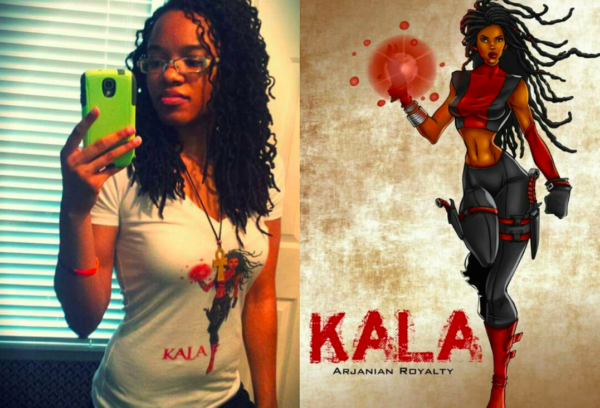
a repost: Black Woman Creates Comics Universe Where all the Superheroes are Women of Color

“Do your thing, sista! Lovin’ it”


Article posted on Atlanta Blackstar (click link for original)

kala.png
By Gabrielle Clark
Truesdale’s pitch rings with an upbeat optimism. Like many Black women with backgrounds in the corporate sector, her assertive personality reflects experiences that have required her to be more competent than those around her just to gain a seat at the table.

In a strong, yet humble tone, Truesdale paints the picture of a society where the media is filled with complex images of brown people, reaffirming their humanity and a sense of pride in their diverse cultures. Thanks to her imagination, an entire literary universe of empowerment now exists where the superheroes are nonwhite women.

Truesdale’s path to becoming the owner of AZA Comics, a Black-owned comic imprint, was anything but a straight one. Although DC Comics had planted the seeds of storytelling in her childhood, Truesdale was on course to becoming a doctor while attending the University of North Carolina. After realizing her passion was not in health care, but in business, the undergraduate shifted her focus to finance.

“At that point, I envisioned myself as the chief financial officer of a corporation,” Truesdale reflects. After amassing an impressive amount of experience interning at various companies, Truesdale found herself overqualified for the job market. It was then that she felt the itch of entrepreneurship.

Being a boss is often romanticized, especially in the Black community where Black enterprise is viewed as a solution to upward mobility. The first few years of a small business are the most crucial to determining its success. According to the Small Business Association, 67.2 percent of businesses survive their first two years in operation, but only about half are still in operation at the five-year mark. Truesdale’s first attempt at starting a business was not a rousing success,but it provided her with valuable information and solidified her desire to be an entrepreneur.

“It was the best internship of my life. … I thought, ‘Now that I know what failure is like and I’m okay with it, I can do something I always wanted to do,’ which was storytelling, particularly superheroes.”

The AZA Universe Is Born

It was 2013. Armed with little knowledge of the comic business, the long-loced writer got to work contacting as many experts in the field as she could. Networking earned her knowledgeable mentors who passed on invaluable advice gleaned from years of experience and Truesdale absorbed as much as she could. Although she did not yet know it, her background in business training had prepared her to manage a team of creatives, and her love of storytelling insisted she become an author. Truesdale knew she could create an imprint of her own, so she went to work researching the comic industry to find her niche.

The writer quickly observed that not much had changed since her Wonder Woman fangirl days. There were still few comics catering to women, specifically nonwhite women. “I wanted to create something that women could have for themselves, something they could have a voice in,” Truesdale said. “A lot of the things I write and the characters that I develop are what women tell me they want to see.”

Truesdale said she was deeply touched by an email from an Afro-Latina supporter who made a strong case for a Latina character in the AZA Universe. The letter inspired the creation of Ixchel, a technological prodigy raised in Bogota, Colombia.

The entire AZA Universe, down to the publishing format, is designed with nonwhite women in mind. Unlike most comics, which are issued weekly or monthly, Truesdale’s superhero novels are full-length books with illustrated action scenes dispersed throughout. Her readers, many of them working women and mothers with limited time, appreciate being able to hold onto a book and read it at their own pace. Illustrated scenes provide an engaging visual experience that attracts comic lovers.

“The Keepers” series centers around a group of gifted superheroes who, because of danger in their own realm, migrate to Earth and stick around to save humans from themselves.

The Keepers’ leader, Kala, was the deciding factor in whether Truesdale would weave illustrated action scenes into the novel or deliver it purely in prose. Apparently, finding an illustrator who could do justice to Black women’s bodies was no easy task. Truesdale envisioned Kala, an unrivaled warrior and heir to the Arjana realm, having smooth cocoa brown skin and endless locs. She was inspired by the African warrior women of Dahomey and the abundance of historical female leaders in Africa. Truesdale knew that Kala’s look had to be just as precise as the legacy she represents. Fittingly, the hero bears a striking resemblance to Truesdale.

“When it came down to Kala, [the illustrators] were essentially giving her Eurocentric features and putting brown skin on her,” Truesdale said. “They did not have a concept of what Black women’s bodies look like.”

While scrolling on Instagram, Truesdale found Remero Colston, a Canada-based graphic artist from Detroit. Colston and Truesdale bonded over their shared interest in strong female characters and a desire to see nonwhite people better represented in comics. When asked for a sketch of Kala, Colston sent it over in an hour and was hired the same day. In January 2016, Truesdale rolled out the first edition, “The Keepers: Origins.”

Truesdale and Colston began with an idea, three interns and a website. Now, on the heels of its’ two-year anniversary, the AZA Comics Universe is still thriving. The CEO reports that book and merchandise sales are steadily growing between 25-30 percent each month. Still, growth can be sporadic at times. Truesdale notes that things may slow down, but after every speaking engagement, article or press coverage, new orders for Kala T-shirts fly in about a month later. Word-of-mouth referrals also play a big role in the company’s development.

“Right now, we’re trying to put the word out and make a name for AZA Comics,”  she said.

Saving the World One Young Entrepreneur at a Time

Truesdale’s trials and successes with entrepreneurship exposed her to how difficult it can be for Black people to gain access to the resources necessary to build a successful startup. While working as a consultant for a group of venture capitalists, the superhero creator was given an opportunity to assess business plans for hopeful entrepreneurs. She was the only nonwhite person and the only woman with a seat at the table. When the group decided to create programs to build business skills for young people, Truesdale was excited. It was an idea she had nurtured on her own for a long time. During a focus group for the program, Truesdale suggested that the venture capitalists engage students at North Carolina Central University. She was immediately met with resistance.

“To actually see firsthand the level of racism, how we’re literally excluded from discussions at the table … it really hit home for me,” she said. Truesdale knew that in order to encourage more young people of color to become entrepreneurs, she would have to do it herself.

From that aha! moment, the Dare to Be Legendary program was conceived. Launched in May 2017, Dare to Be Legendary is a free, online-based learning lab that teaches business basics to young people who want to start their own companies. Truesdale narrowed in on nonwhite youths and schools in urban communities to pilot the program. She was astonished by the large amount of feedback and the willingness of other entrepreneurs to contribute lesson plans to the program. (For those interested, DBL is currently accepting interested schools and students. Entrepreneurs and investors interesting in volunteering their time, talents and donations are encouraged to contact Jazmin Truesdale.)

Truesdale’s mission for Dare to Be Legendary fit right in with the vision of AZA Comics: that youth can grow up in a multicultural, diverse world where nonwhites have a sense of mutual respect and support for each other, like she was raised.

“A lot of the oppression we face, especially as women of color … overlaps,” Truesdale said. “With ‘The Keepers,’ I just wanted to show that these girls are sisters.

“They respect each other’s differences and struggles, they listen to each other and support each other.”

Black is Invalid (Part 2)- A Bittersweet Opportunity

bittersweet

From The Melanin Man:

It’s been about four months since the incident I went through in reference to my endeavors to sit for the Professional Engineering exam, which I discussed in detail in Having a Moment- Black is Not Valid (Part 1). Alot has happened in that time frame from a personal perspective. I had planned a followup even before I posted Part 1, wanting Part 2 posted no more than a week after Part 1. I had many, many premises and ideas I could have gone with (that would have been good!) just to have Part 2 posted within that time frame. I put it on the back-burner in lieu of other tasks (i.e. my memoir), and I totally forgotten about it.

But I’m glad I did.

Recent developments and experiences in my life have given Part 2 new life, and I feel it is the perfect time to post it.

If you remember, for those of you who have read Part 1, I was denied the opportunity to sit for the Professional Engineering (PE) license in Alabama, due to the “insufficient experience” I received through my employer, an small Black civil engineering consultant firm. I detailed my feelings and thoughts thoroughly on the fact that Blacks, no matter the career, must be validated and approved through the lens of white supremacy in some capacity before, recalling The Jeffersons theme song, “move on up!”

It seemed following that unfortunate experience I was done, so to speak. Not that I couldn’t continue working in the field, more than likely change employers, and get the remaining 18 months I needed to sit for the PE exam. Deep down, though, I didn’t want to play that game. I believed my previous work experience was, is, valid and should have been afforded the opportunity to take the exam, in spite of the fact I had no references of the Caucasian persuasion to give me the seal of approval to their fellow brethren who dominate the Board.

“Why must I be validated even though I fulfilled their requirements?” I asked myself.

Tough titty! It’s their system, their rules. Deal with it, my subconscious responded.

I was exploring the possibility of giving up civil engineering. It wasn’t just because of being to denied to take the exam either. In the last four years though, I never got any bite from other companies in my field to hire me when I would apply from time to time. The incident with the Board was just the straw that broke the camel’s back.

Maybe I wasn’t cut out for this engineering thing, I would think time to time. Plus, I knew I had more to offer besides practicing civil engineering. Undergoing my transformation, I realized that working in the civil engineering field was now only an option amongst the many skills/talents I had but neglected to develop in my adolescence (e.g. writing.)

But…

At the same time, I have a family to take of even if my wife (whose in the eight months of medical residency, thank goodness!) can support me and my daughters without financial assistance from me.

What if she has to stop working for whatever reason? WHOSE gonna have to pick up the slack???

My girls are getting older and smarter by the day, and I’m realizing they don’t need me like they used to as newborns and budding toddlers ( I’m boohooing inside!!!) Plus, for any man’s mental and spiritual stability, especially Black Melanin-Dominant men, it’s IMPERATIVE that he knows that he has the ability to take care of himself and family in a financial capacity. And at this current stage in my life, my degree and background in civil engineering is my most stable and feasible option to do just that.

I just wasn’t getting any bites from other companies who had the ability to pay me a living wage! It got to the point where I was entertaining the idea of truck driving to accomplish this. Then out of nowhere, the “perfect” opportunity, within my field no doubt, fell flat in my lap.

A recruiter came across an old resume of mine I had posted on her company’s website a couple years prior. She had matched it with a job opening for a large consultant firm  (albeit majority ran by those of the Caucasian, European flavor of course), in conjunction with the Georgia DOT, that offered everything that I wanted:

-an opportunity to work with the Georgia DOT located smack-dabbed in Downtown Atlanta, 

the opportunity to be a part of a roadway design team…

and last but not least…

…a paying salary!!! And a decent one at that! I threw my name in the hat, and needless to say, the firm and the DOT representative I interviewed were thoroughly impressed with me and the skills I brought to the table and…

…you know the rest. It is on a six-month to  hire contract, so I have to come correct to stay on a permanent basis.

Life is funny. As I kid from Mobile, Alabama, it was my ambition, my dream, to live and work in a city like Atlanta, building and designing highways and byways with/for the DOT. After everything I’ve been through, to almost succumb to the idea of giving up that dream, I making another step toward that reality. I still in shock.

And yet…

I’m a little disappointed. If any of you are familiar with the new me or have read What Sparked My Transformation series, as mentioned a moment ago, I am not the same as I once was in the past. Besides the trying task of dropping over 100 pounds, I have become whole within myself like never before.

I eat the foods that are natural and nutritious to my temple when necessary. I have become disengaged from the hoopla of this material paradigm, choosing to seek what is actually real and THE TRUTH!  And now more than ever I have an insatiable love for my Black Melanin-Dominant skin, and my Black Melanin-Dominant peoples, no matter their lot in this life…

which is why it breaks my heart to leave my employer and the only firm I’ve been associated with for the last seven years.

I’ve learned alot from the founder/my supervisor (aptly named Terry in my memoir), professionally and personally, during my association with his firm. I am indeed very grateful to him. I entered in the beginning stages of this budding black-owned business, and was excited with the potential it could reach. Long story short, (this part is mentioned in the Transformation series and my memoir, which hopefully will be published sometime next year) the firm hit some pretty big speed bumps and it has taken longer than expected to get back on its feet. I stayed attached to the firm, probably longer than I should have from a professional standpoint, on little to no pay, hoping that fortunes would turn back promising once more.

This is a Black civil engineering firm, one of the very few of its kind in this country I’m pretty sure. At times I waffled back in forth with leaving the firm, knowing I had a wife in medical school and two newborn daughters to care for. Yet at the same time, I wanted to fight through the fire with my supervisor Terry. I didn’t want to quit on him or the firm either. Unbelievably, my wife was supportive no matter what direction I chose to walk and I am truly thankful for her being understanding (I love you so much, babe!)

Finally, and unfortunately to some degree, some time after the Board’s decision, it occurred to me that the firm possibly may never reach its true potential. I began to think this in part that Terry began to lack a clear vision and plan for the firm, taking  projects on a whim to make ends meet without a certified guarantee that we’d get paid. The other reason is that the environment was/is of course currently constructed against true Black business advancement and sustainable success, especially in the STEM and construction fields. In my opinion it is a insult to be labelled a Disadvantaged Business Enterprise (DBE) or Minority Business Enterprise (MBE), to settle for the scraps from the larger white, Caucasian firms and contractors who basically have a monopoly on the system because they practically created it that way.

Damn, white supremacy.

But on a whole as a people, that’s what we  have resolved ourselves to accepting. And regardless if we owned a business or not, all in all, we’re still perpetuating a existence that is ABNORMAL to our TRUE NATURE. We have no voice, no unity, no true vision collectively as a people.  The majority are just doing what we have to do to survive. If we only knew our TRUE HISTORY, maybe, just maybe, things will change for the better. We’ll decide that this  current parasitic paradigm is not for us and we’ll seek to destroy it for good. And I believe at some point in the distant, or maybe near, future that will happen.

But I know I have to take care of my own personal affairs. Ultimately it is my responsibility to take care of my family at the end of the day. I wasn’t able to do that working for Terry, and like so many other of my ilk have said…

“I gotta to do what gotta do.”

But trust, I will continue to do my part to educate my Black brothers and sisters through my blog and other means necessary so one day our current reality can truly change. Besides, I don’t envision myself continuing in the engineering field exclusively too much longer; I am just taking advantage of an opportunity to fulfill this childhood dream of mine. I have bigger ideas and plans that are more beneficial to my newfound goal of freeing the physical, mental, and spiritual shackles from my people.

And if I was able to visualize myself at a young age becoming a civil engineer designing highways and byways, I’m pretty sure I can do the same with

…possibly owning a farmers market selling reasonably-priced healthy foods grown from my farm to the peoples I wish to help…

Or starting a publishing company that promotes authors and material who seek to enlighten the Black Melanin-Dominant masses…

Or…I have countless ideas. I’m just vetting a few of them.

I truly understand that dreams can come true if you set your MIND TO IT!

I DREAM OF A RETURN TRUE BLACK MELANIN-DOMINANT GLORY!!!


Let’s make it happen, fam!


Peace and Love to my melanated family,

The Melanin Man



a repost: Colleges and universities increasingly seen as scams that fail to prepare students for the real economy

Article posted on Collective-Evolution (click link for original)


Image: Colleges and universities increasingly seen as scams that fail to prepare students for the real economy

By Ethan Huff


To many, it serves as a shiny badge of upward mobility – a milestone that someone took their education seriously and is now ready for the next level of responsibility in the world. But a college degree doesn’t always deliver on its promises anymore, as many graduates today are learning the hard way. Not only are many of these freshly-minted degree holders discovering that they can’t just waltz into their dream jobs simply because they hold a piece of paper. Some of them are also coming to the stark realization that they were duped by their alma maters, which failed to teach them the necessary life skill for facing the “real world” post-commencement.

Depending upon which school a student attended and the primary subject he specialized in, a degree admittedly holds varying degrees of value. A computer scientist, for instance, will have more than likely interned at a large company prior to graduating, after which time he’ll take up a full-time position for great pay. A women’s studies major, on the other hand, will find that she basically shelled out several hundred thousand dollars for a four-year safe space, and now has no marketable skills to find a real job.

There are various other factors that determine whether or not a college degree is valuable, of course. But the main point is this: College isn’t for everyone. For many young people coming out of high school, community college or technical school is a much better and typically more affordable option that offers real-life training in actual skilled work. But how many students are being told this by their guidance counselors before they sign right up for traditional college or university, a.k.a. agreeing to ratchet up huge debt unless they’re independently wealthy?

“Colleges have convinced nearly everyone that you need a degree to be an effective employee or higher-income adult, but this is just not true,” writes Daniel Ameduri from FutureMoneyTrends.com (as published in an article by SHTFplan.com).

“I can tell you as an employer that I’ve never asked a single person what their grades were and I’ve never asked to see a degree. The ugly truth is the ones with college degrees usually end up writing SEO articles for $15 an hour and the skilled workers who’ve been writing code as a hobby or editing videos for years on a MAC end up as managers making $75+ per hour.”

Unless a student is awarded grants or scholarships, attending college is expensive. According to the College Board, the average cost to attend an in-state public college is now nearly $25,000 per year. At a private college, this yearly cost doubles to almost $50,000.

This means that by the time a student graduates – assuming he pays these costs out of pocket or with loans – he will already be between $100,000 to $200,000 in debt. Based on job availability, this debt could haunt him for decades, or worse – ruin his credit if he ends up defaulting due to an inability to pay.

There are so many other options besides going this precarious route, including taking short courses online or at a local training facility, or even on the job depending on the industry. There are many ways to learn useful information that don’t have to cost tens or even hundreds of thousands of dollars.

“When I was 18 years old, I made $55,000 while my peers sat in a classroom learning things that were forgotten before they even left the campus that day,” Ameduri adds, noting that the four years that many young people typically spend to earn their Bachelor’s degrees could have been spent getting a head start in life.

ED vs. EL-a repost: Dean Foods just acquired Uncle Matt’s Organic… watch out for ingredient alteration and unethical business practices

Article posted on Natural News (click link for original)


Image: Dean Foods just acquired Uncle Matt’s Organic… watch out for ingredient alteration and unethical business practices

By Isabelle Z.

Dean Foods announced in a press release that it has acquired organic juice company Uncle Matt’s Organic, prompting concerns about just how “organic” their beverages will remain moving forward.

According to the press release, Uncle Matt’s Organic is the oldest organic juice company in the U.S. Their offerings include juices such as orange, grapefruit, apple and lemonade, along with fruit-infused waters and probiotic-infused juices, and their products are popular among health-conscious consumers.

The Dean Foods press release says: “Uncle Matt’s Organic is committed to producing the highest quality juices, using only premium 100% organically grown fruit that is free from GMOs, synthetic fertilizers and pesticides.”

It’s a commendable stance, but how long will that continue to be the case? If Dean Foods Company’s track record when it comes to acquisitions is any indication, fans of Uncle Matt’s products had better stay on their toes.

When Dean Foods Company acquired the Silk brand soy milk, they engaged in some very deceptive practices that left a lot of consumers so angry that many continue to boycott them to this day. Silk’s soy milk had been made using organic soybeans until early 2009, and customers who sought organic products at that time knew this milk was a safe bet.

However, after taking over the brand, Dean essentially employed a “bait and switch” tactic that left a lot of consumers with a very bad taste in their mouths. They started to use conventionally grown soybeans rather than organic ones, but they continued to use the same bar codes on their products and only slightly shifted the wording on their label to make it say “natural” instead of “organic.” Many consumers believed it was still organic, not realizing that “natural” is not a word that is regulated and that any product can claim to be natural regardless of whether it has been sprayed with toxic pesticides, as many soybeans are.

Adding insult to injury, they kept selling it for the same price, which meant people were paying organic prices for toxin-laced milk.

The deception was so underhanded that even retailers didn’t realize what was happening at first, with watchdog groups calling out Target for misleading shoppers by continuing to advertise the product as “organic” even though it no longer was.

This was more than just a one-off incident. Dean Foods has long shown a lack of honesty when it comes to organic food. They are the parent company of Horizon Organic, whose milk was once the subject of a boycott for not being legitimately organic. Mike Adams, the Health Ranger, once called the company “the Enron of the food industry” on account of its lack of ethics. Dean also contributed more than $250,000 in an effort to defeat the GMO labeling initiative Prop 37 in California in 2012 – something that Uncle Matt’s, on the other hand, supported.

It’s hard to say whether Uncle Matt’s juices will pull a similar trick on the public. There are some positive signs, such as the fact that Uncle Matt’s will become a subsidiary of Dean Foods but will continue to operate from its current offices in Clermont, Florida.

In addition, the company’s founder, Matt McLean, will continue to lead the brand. According to Uncle Matt’s website, he became passionate about an organic way of life in 1995, which he said is akin to the way his grandfather and great-grandfather grew their fruit. He believes in making soil healthy to nurture trees that can defend themselves naturally against disease. One can only hope that he will be able to convince his higher-ups to adopt the same philosophy.