
a repost: Modern Day Propaganda: Top 7 Pieces – Part 1 (Geopolitics)

Article posted on The Freedom Articles (click link for original)


modern day propaganda geopolitics

Modern day propaganda is all around us. However, people have usually become so numb to it that they can no longer perceive it. Many people choose ignorance, complacency or apathy to deal with it. Often you can observe groups developing societal Stockholm Syndrome, where they praise they captors out of a forlorn hope that by doing so that may somehow change things or alleviate the pain. The control system uses all of its tentacles to keep people conditioned to a more a sheeplike and unconscious state. It is the politician’s job to lie, the MSM (mainstream media’s) job to program you and Big Pharma’s job to keep you sedated with synthetic petrochemical drugs. It is a constant battle to broaden your awareness, uplift your consciousness and expand your perception in the face of these forces which seek to imprison humanity in a limited perception of Who We Are, who’s running the world, how they’re doing it and how we can change it. Propaganda does not just belong to Nazi Germany or Soviet Russia. Modern day propaganda is everywhere; sometimes subtle, sometimes overt, always pervasive.

With that in mind, here is a collection of the top 7 pieces of modern day propaganda, part 1 of a series.

Modern Day Propaganda in Geopolitics

1. The Syrian War is a civil war. False. The Syrian War has never been a civil war; it’s a proxy war fought by foreign fighters with foreign aid. It has become an open secret that the US-UK-Israeli axis, along with the Saudis, have either created or are funding ISIS (or both). Evidence keeps coming to light showing that Israel is paying Syrian rebels and that ISIS gets their weaponry and Toyota trucks from the US. Many “rebels” fighting the Syrian Government of Bashar Al Assad are not even Syrian. Remember Obama’s freudian slip that “we’re training ISIL”?

2. The US is fighting ISIS in Syria. False. ISIS (aka Daesh, ISIL, IS) is the pet Frankenstein of the Anglo-American-Zionsit NWO and is a US-Israeli creation. The US has no real interest in defeating ISIS – at least not until ISIS has caused the maximum amount of chaos designed to unseat legitimate governments and facilitate regime change. The real target has always been Assad (then Iran, then Russia and China). There is copious evidence for this; 2 quick examples are the incessant mantra a few years ago that “Assad must go” (until the NWO controllers realized Assad was strong enough to defend himself and his nation) and the recent shooting down by the US Coalition of an SAA (Syrian Arab Army) jet.

3. All the refugees flowing into Europe are genuine refugees. False. Some (or many, depending on your perspective) refugees are economic migrants. They are being helped by a network of NGOs (e.g. those funded by George Soros) who have an entire system of transporting migrants from Libya to Italy for money. It’s people smuggling / human trafficking. For the background to this and further analysis, see the article Mass Migration to Europe: All in Line with the New World Order.

4. US military intervention abroad makes us safer. What a load of nonsense! When he ran for US president in 2012, Ron Paul made a point of emphasizing the concept of blowback (which the CIA had written about) in some of his speeches. UK Labour leader Jeremy Corbyn recently had the courage to state the obvious in Britain: “Many experts, including professionals in our intelligence and security services have pointed to the connections between wars our government has supported or fought in other countries, such as Libya, and terrorism here at home”. When a poorer and less militarily developed nation is picked on and attacked by a rich bully nation, the former is likely to harbor resentment and a desire to retaliate in the future. many North Koreans still hate the US for carpet bombing into oblivion after WW2. Therefore, Western foreign meddling, assassination and invasion has made America the new “Satan” and enemy #1 for many people around the world, and has become one of the motivations for attacks on England, France and Germany. Thus, the US is far more likely to be attacked than if it had not intervened.

5. Iran is the biggest state sponsor of terrorism in the world. Flat out false. While Iran may support Hamas in Palestine and Hezbollah in Lebanon, Iran has nothing on Saudi Arabia, who funds a pervasive network of extremist Wahhabi Islam schools (madrases) worldwide. It is utterly ridiculous and beyond hypocritical that Saudi Arabia now accuses Qatar of terrorism. Israel has also been behind many so-called “Muslim” and “Arab” terror incidents. Israel and Saudi Arabia now form a dark alliance – with the assistance of the US Empire, the biggest purveyor of war (and terrorism through funding it) the world has ever known. The US Government learnt its tricks from the UK Government, both of which have been tools in the hands of the New World Order. The US alternatively backs and then disowns “terrorists” or local fighters in certain areas (e.g. Central America or the Middle East) as the NWO agenda dictates. Once a group has outlived its usefulness, the nomenclature changes from “freedom fighters / liberators” to “enemy combatants / terrorists”.

6. Russia is the biggest threat the Western world is facing. Not true. At every turn, Russian President Vladimir Putin keeps insisting that Russia does not view the US an as enemy, that the 2 great nations were on the same side for both world wars and that mutual cooperation is the only way forward. The US ignominiously lied after the collapse of the Soviet Union by promising Russia that NATO would not expand eastwards – and meanwhile keeps adding numerous Eastern and Central European nations to its alliance such as Poland, Hungary and the Czech Republic (1999), then Bulgaria, Estonia, Latvia, Lithuania, Romania, Slovakia and Slovenia (2002-2004), Albania and Croatia (2009) and Montenegro (2017). Russophobia is a convenient political tool to justify NATO, get people scared and allow bigger domestic military budgets in Western nations. It’s also a handy scapegoat for the Democrats to use in trying to account for the election loss of the incredible corrupt Hillary Clinton. Trump saw the obvious truth that it’s better for everyone if the US and Russia get along – before the Deep State got to him.

7. Israel is only defending itself. False. Israel attacked its neighbors even before it gained official statehood in 1948, attacked Egypt to begin the 6 Day War in 1967, attacked Lebanon in 1982 and has been seizing Palestinian land ever since its inception. There’s noting “defensive” about raw, naked aggression. The truth is that Zionism is a colonial endeavor. Look at the quotes of early Zionists like Ze’ev Jabotinsky, one of the main men behind the expansionist, militaristic and anti-Arab form of Israeli nationalism that now dominates the Likud Party and Israeli politics. Take a look at what Jabotinsky, as well as former Israeli prime Ministers David Ben Gurion and Ariel Sharon, have said about Zionism and the fact that it is intimately bound up with colonialism, eviction and expropriation:

modern day propaganda zionism jabotinsky quote

modern day propaganda zionism ben gurion quote

modern day propaganda zionism ariel sharon quote

Conclusion: Geopolitical Modern Day Propaganda is Rife

Modern day propaganda in the sphere of geopolitics is dangerously widespread. With people buying into the lies, distortions and disinformation listed above, conflict and war is much more likely to be started. Stay tuned for part 2.


Makia Freeman is the editor of alternative media / independent news site The Freedom Articles and senior researcher at ToolsForFreedom.com, writing on many aspects of truth and freedom, from exposing aspects of the worldwide conspiracy to suggesting solutions for how humanity can create a new system of peace and abundance.
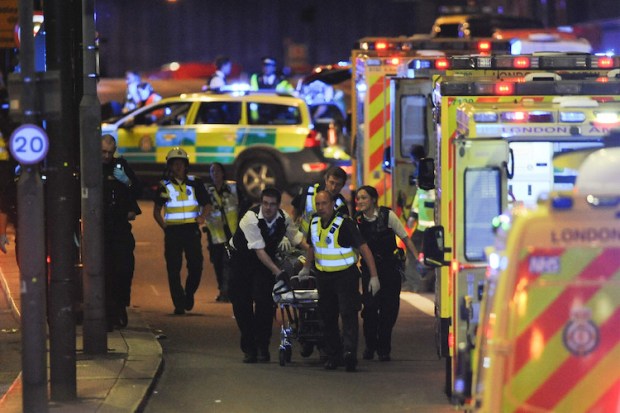


a repost: 3 Questions You’re Never Supposed to Ask After a Terrorist Attack

Article posted on Waking Times (click link for original)


terror-london-bridge


In a world where defense budgets are astronomical and wars of occupation and destabilization never end, political leaders in the UK and in Europe want you accept street level terror as the new everyday normal. The attacks are unstoppable, they say, and the world must embrace this hopelessness with faith that the government is doing all it can to create a better, safer world. Run, hide, and call the authorities, for you are helpless in this reality, so they say. But who creates and sustains this reality?

Terrorism is defined as the use of violence in the pursuit of political aims, and as politicians respond to terrorism by holding news conferences, posing, grandstanding, eulogizing, weeping for the cameras, applauding first responders and proposing legislation, so many of the important questions which can help guide us out of such a gloomy future are going unasked and unanswered. And these questions are always the same for any of these attacks, be it the London attacks, Manchester, Orlando, the Boston marathon, 7/7 or 9/11.

Here are three things we should be always ask about when Islamic terror , all of which are fair questions for any of the major terror attacks happening in Western nations.

1. In what ways do Western governments contribute to the problem of Islamic terror?

The media wants you to believe that this type of terror is unrelated to government policies and actions, thus attempting to divorce them from the greater context of geopolitics and the decades long push toward globalist world government. But how do Western governments contribute to the problem of terrorism?

Do never-ending occupations of Middle Eastern conditions and the wrecking of stable nations contribute to terrorism? Does supplying arms and financial support to known terrorist organizations make attacks in Western nations more likely? Does bombing infrastructure, hospitals and civilians in foreign nations play a role? Does promoting and supporting the massive influx of Middle Eastern and African migrants into Western nations have an effect? Does permitting known radicals and others on terror watch lists to operate freely in the West make it more likely that events like the London Bridge attack will occur? Does preventing and punishing people for speaking out in defense of their own nations and customs contribute to the situation?

2. How does government benefit from the reaction to the problem?

Terror creates fear, insecurity, panic, uncertainty, chaos, anger, hate and irrationality, and none are more easily lorded over than those living in terror. Historically, governments make exceptional gains in power and authority when their citizens are psychologically abused.

3. What is the pre-packaged government solution to the problem?

In the case of the London Bridge attacks, the very next day, UK Prime Minister Theresa May called for government regulation of the internet, a demand which is now being echoed by wise politicians and pundits. But this measure was already being floated, it just a dramatic push for it to gain popularity.

Whether it is the Patriot Act, the pre-planned invasion of Afghanistan, calls to restrict the 2nd Amendment, greater government surveillance, increased spending on war and police state security measures, the detainment of innocent people or torture of detainees, the government always has a solution in place before an attack happens.

Final Thoughts

Accepting terror as the norm is absolutely unacceptable and must be totally rejected by people who wish to live in peace and prosperity, which will forever remain impossible while government is allowed to contribute and benefit from terror.

A repost: Whites Cheer Black Athletes and Loathe Them At the Same Time – We Ask Why? – Atlanta Black Star

Article posted on Atlanta Blackstar (click link for original)

Baltimore Orioles’ outfielder Adam Jones was allegedly subjected to racial abuse while facing the Boston Red Sox on May 1.

By: Gus T. Renegade

In 2016, USA Today asked Baltimore Orioles’ center fielder Adam Jones why no Black baseball players mimicked football player Colin Kaepernick’s protest of the national anthem. Jones declared that Black players “already have two strikes against us.” Compared to basketball and football, Black Major League Baseball players constitute a miniscule number. “They don’t need us,” the Baltimore outfielder said. “Baseball is a white man’s sport.”

One year later and 70 years after World War II veteran Jackie Robinson broke the color barrier in Major League Baseball, Boston, Mass., spectators confirmed Jones’ assessment and wasted a bag of peanuts in the process. During a May 1 contest between the Orioles and the Red Sox, Jones reported being “called the n-word a handful of times” and having a bag of nuts thrown at him.

An assortment of athletes, including Jason Heyward of the Chicago Cubs and Golden State Warriors teammates Draymond Green and Stephen Curry, immediately disclosed that they’ve endured similar abuse from racist sports fans. The fact that the Cubs and Warriors have each hoisted recent championships in their respective leagues suggests the pinnacle of athletic achievement fails to shield Black athletes from anti-Black racism.

During the 1950s and ’60s, Bill Russell secured 11 titles for the Boston Celtics while describing the town as “a flea market of racism.” Chris Yuscavage writes that the hoops legend was conflicted about “how he was supposed to feel when he was routinely cheered by some of those same” white New Englanders who expressed unadulterated contempt for Black life before and after Celtics victories.

It’s likely that Jones’s verbal assailants badgered him while simultaneously reveling in the current playoff run of the overwhelmingly Black Celtics team.

University of Texas professor John Hoberman authored “Darwin’s Athletes: How Sport Has Damaged Black America and Preserved the Myth of Race” in part to explore the contradiction of racist sports fans patronage of Black-dominated athletics. He reminds readers that historically, white culture declared white women and men intellectually and athletically supreme. Hoberman explains how the “emotional stake” in maintaining the lie of white superiority demanded that generations of Jackie Robinsons be barred from competing with white students or athletes.

What began with “Black firsts” like boxing champion Jack Johnson and tennis prodigy Althea Gibson, has, according to Hoberman, swelled to the point that, “A lot of whites, if they’re sports fans, they are going to have to consume a lot of sports entertainment that is going to feature people who do not look like them, who do not have white skins.”

The billion-dollar global sports conglomerate verifies the insatiable appetite — and market — for Black athletes. Hoberman submits that stale racial stereotypes helped a number of whites digest the never ending serving of Black athletic triumph. He writes, “The myth of Black hardiness and supernormal vitality has been the crucible of our thinking about” Black bodies and often a leading justification for their enslavement. The antebellum delusions about Black endurance and pain tolerance that made people with melanin ideal candidates to be shackled conveniently explained the athletic brilliance of Black people. Laboring in white-owned fields with a ball or bail of cotton is our genetically predetermined destiny and limited range of expertise.

However, for multitudes of white sport fans, thinking of Black athletes as mutli-million-dollar slaves has made it no easier to stomach a sports world where Black ballers reign. In “The History of White People Hating LeBron James,” Chris Osterndorf writes that whites “are able to appreciate [Black athletes], to rely on them, but we’re not necessarily able to separate that from the belief that they work for us.” Black athletes aren’t role models or human beings, they’re white folks’ servants. Osterndorf says this mentality explains how racists hail the accomplishments of Black players on their favorite sporting teams, “all while calling him a ‘n—-r’ in the same conversation.”

During a NPR 2014 interview, U.S. Congressman James Clyburn used his daughter’s college homecoming football game to explain how devotion to the system of white supremacy is compartmentalized during heated sporting events. Representative Clyburn’s daughter, Mignon Clyburn, observed a white motorist with a bumper sticker promoting University of South Carolina football player George Rogers’ Heisman trophy campaign. She doubted the driver would sport a bumper sticker endorsing her father for Congress. Ms. Clyburn recalled that during the ballgame, the white fans who jeered and heckled the Black homecoming queen loudest were the most vocal in praising every yard gained by Rogers. She synthesized those events into a succinct conclusion: “It’s all right for us to entertain, but they don’t want us to represent them.”

Many Black people, including athletes like Hall of Fame football player Kellen Winslow, erroneously assumed white consumption of Black sports figures signified the wane of racism and the power of interracial athletics to lessen racial hostilities. Winslow has since publicly acknowledged his error.

When he was a physically gifted star on the gridiron, he was “treated and viewed differently than most African-American men in this country.” His Black life mattered. Racism was not a problem. “Then, reality came calling,” writes Winslow in the forward for the 1996 book In Black and White: Race and Sports in America by Kenneth L. Shropshire “After a nine-year career in the National Football League filled with honors and praises, I stepped into the real world and realized, in the words of Muhammad Ali, that I was ‘just another n—-r.’”

Gus T. Renegade hosts “The Context of White Supremacy” radio program, a platform designed to dissect and counter racism. For nearly a decade, he has interviewed and studied authors, filmmakers and scholars from around the globe.

a repost: Afro-Colombians Face Genocidal Attacks from United States-Backed Death Squads

Article posted on Atlanta Blackstar (click link for original)

By D. Amari Jackson

On December 20, 1996, in the Colombian riverside village of Riosucio, the mass killings of Afro-Colombians began. At the time, though the country’s relentless civil war between the government and rebel groups had raged for decades, much of the violence had spared the rural, mineral-rich region of Choco where 85 percent of residents are Afro-Latino. That would brutally change as paramilitary death squads—backed by powerful government and commercial interests both in Colombia and the United States—murdered hundreds and displaced thousands in response to the establishment of residential land rights by Afro-Colombians in Riosucio and nearby towns. The violence would continue and, despite a November 2016 treaty officially ending the five-decade conflict, consume the region while substantially contributing to the current displacement of 2 million Afro-Colombians.

The killing has not stopped. On April 28—prompted by the “increasing number of murders, death threats and attacks against social leaders and human rights defenders”—congressmen Keith Ellison and Georgia’s Hank Johnson penned an urgent letter to Colombian President Juan Manuel Santos encouraging “the Colombian government to investigate and bring to justice the persons responsible for the murders of ethnic activists, leaders and community members. It is imperative that Colombia’s armed forces and police understand it is their responsibility to protect civilians, particularly in areas like the Choco and Tumaco, where reports indicate that paramilitary groups operate in zones where the armed forces are present. Cases of alleged collusion or omission of duty by government forces also demand investigation.”

The genocide—or what some have labeled “ethnocide”—has much to do with both race and land. While constituting a quarter of the country’s population, Afro-Colombians have little to no voice or representation in government, media or industry. Close to 80 percent of Afro-Colombians live below the poverty line despite the coca, gold and other minerals beneath their feet. Their Pacific Basin region is one of the most bio-diverse in the world, yet this natural abundance of resources and beauty has prompted multinational corporations and paramilitaries to force them from their land with campaigns of blood and terror.

“The leaders of these communities have been particularly targeted by these paramilitary groups because they see them as opposing their economic projects and seeking justice in cases where they have illegally appropriated land,” says Gimena Sánchez, a leading Colombia human rights advocate at the Washington Office on Latin America. “And, unfortunately, the situation just does not get visibility.” The Colombian government doesn’t help, continues Sanchez, since they are “denying there are paramilitaries” that still exist.

Unfortunately, Columbia is not alone. In numerous Latin American countries, Afro-Latinos have been subject to disproportionate violence, government neglect and discrimination. In Brazil, the Latin American country with the largest Black population, an estimated 65 percent of Afro-Brazilians live in dire poverty while violence is the leading cause of death for Black men. In a number of countries with smaller Afro-Latino populations, entrenched poverty, racism and a lack of representation commonly plague their group plight.

Still, in Colombia, the level of violence has been historic with civil war death toll estimates as high as a quarter of a million people. Since the 1960s, the US-backed government and powerful commercial interests have battled rebel groups—primarily the Revolutionary Armed Forces of Colombia (FARC), and the National Liberation Army (ELN)—over land, resources, representation and control of the country’s lucrative drug trade. In the mid-1990s, after Law 70 was passed to establish Afro-Colombians’ rights to their own ancestral lands, well-armed paramilitaries began their brutal assault on the region’s dark inhabitants by murdering those involved in passing the law.

As international outrage over the ongoing war and human rights crisis grew, Alvaro Uribe was elected president in 2002 upon his promise to stabilize the country and reduce the violence. Ostensibly, Uribe performed the task by doubling the military, cracking down on rebel groups, promoting a new national image, and claiming to have disarmed paramilitary groups. But while much of the violence ceased in affluent urban areas, mining and agricultural companies continued to employ paramilitaries in the areas dominated by Colombia’s African descendants.

In September 2012, current president Juan Manuel Santos began peace talks with FARC in Havana, Cuba. Four years later, on August 24, 2016, an initial peace agreement was announced. However, a month and a half later, a referendum to ratify the deal was rejected by voters. Instead of holding a second referendum, on November 24, the Colombian government and the FARC signed a revised deal and sent it to Congress where it was ratified a week later. As a result of promoting the Afro-Colombian cause in the US along with similarly-minded advocacy groups in both countries, Marino Cordoba—leader of the Association for Internally Displaced Afro-Colombians (AFRODES)—traveled to Havana and secured text in the final accord aimed at improving the plight of his people. The chapter acknowledges the persecution of Afro-Colombians “as a product of colonialism, slavery, marginalization and dispossession from their land, territory and resources” while confirming their land titles and “their human and collective rights.”

Tragically, this significant feat has yet to stop the violence or the ongoing land grab. Numerous Afro-Colombian leaders have been assassinated during and since the peace agreement including Cordoba’s son and two other family members. And last week’s letter from congressmen Ellison and Johnson identifies ongoing actions by the Santos regime that bring “into question the government’s commitment to protecting the rights of ethnic minorities in the country.”

Sanchez notes, “There’s been a peace process, however there’s been a rise in the targeting and killing of minorities in the past year.”

The US needs to get serious, insists Sanchez, about pressuring Colombia through the enforcement of “human rights conditions on their military aid.” She points out the two countries actually have a “Racial Action Plan” in place aimed at improving the plight of Afro-Colombians, and that a resolution is being developed by the Congressional Black Caucus to push State Department policy to have a more constructive impact upon Afro-descendants in the Diaspora, including Latin America.

Sanchez adds the US should “take the lead” on pushing such initiatives forward to make “a major difference for Latin American countries and signal to them the importance of these issues.”

a repost: To Create True, Lasting Wealth and Power, Black People Must Adopt a ‘Cooperative’ Mindset – Atlanta Black Star

Article posted on Atlanta Blackstar (click link for original)
By : ABS Staff

One of the mistakes the Black “conscious community” keeps making is promoting the concept that we all need to be entrepreneurs and that Black people shouldn’t be relying on government jobs and weekly paychecks.

We are advised by these well-meaning people that we all should be starting businesses instead. While this is a noble aspiration, it is only partly true. Black people are too far behind in the global economic game  — and that is precisely what it is, a ruthless game — to simply have each Black person start a business and have that individualistic act alone solve our collective political-economic problems.

In fact, most of the people in successful ethno-nationalist or racial groups do not own a business at all. Moreover, many of the Black people on the African continent counted as being in business for themselves are simply selling small perishable items such as fruits and vegetables or inconsequential cultural artifacts like wristbands and handicrafts. Often, culturally or politically active Black people promote the aforementioned mindset to encourage and uplift, but rather than alleviating the perceived problems, they quickly become tautologies. The full meanings of these slogans are rarely explained to the degree that widespread understanding accompanies the slogan itself. Examples of such slogans are, “We need unity” or “You can’t pass on a paycheck to your children” and, most notably for the purposes of this article, “We need to start our own businesses!”

Most businesses owned and operated by Black people in the USA are service oriented. We have few to no resource-delivery businesses such as markets, grocery stores, utility services (gas, water, electricity), textiles and manufacturing plants that can control the distribution of goods that ALL people need, want and can’t do without on a daily basis. There is no essential good or product that Black people as a group own and control. No essential resource, good or product that can only be obtained by non-Blacks through dealing with a Black man or woman.

The Chinese control much of the global manufacturing business and the infrastructure development industry in Africa. Koreans and the Japanese control large portions of the electronics industry and have a significant presence in the auto manufacturing industry. Asians generally control the Black hair care business in Africa and the diaspora. White religious minority groups have outsized influence in banking, academia and media. Other white ethnic groups control financial services, shipping, military and government. East Indians have a large representation in hotel management, technology and medicine.

However, there is no major industry that is under the complete control of Black people, and by extension, Black families with whom other races must deal to receive the necessary goods for their survival and life enjoyment. Many people think sports and entertainment are the exceptions to this, but they’re not. Black people don’t control either. Despite all the multimillion-dollar contracts and endorsement deals, when it’s all said and done, we are still just the hired help. If they’re paying us millions, that just means we’re making them billions.

Like so many other sectors of the economy, we look for jobs with other races and ethnicities instead of owning the means of production and primarily employing ourselves.

Solutions can be seen in how others have organized their socio-economic situations. Therefore, I’d like to submit one word for your consideration: “Corporations.” Actually, I would rather submit a variation of the word: “Cooperations!” Yes, Black people need businesses, but what we need more are corporate collectives — cooperations! These business structures would give us the group power to achieve the goals that are often outlined by the Black consciousness movements and they can have ancillary effects that could solve some of the sociopolitical problems we constantly bemoan.

As a thought experiment, I would like to use how Euro-Americans have organized their economy as a model to consider. We can observe that it is not every white person who has a corporation, or business for that matter, but indeed most have a job with white-owned-and-operated corporations. In these corporations, European culture is enforced and promoted. In fact, all people working in these corporations (including Blacks) must conform to the standards, dress, practices and language of European culture in order to not only receive a salary but advance in the corporate structure. If people in the Black Consciousness Movement truly are about the renaissance and revitalization of an authentic African-centered culture, one of the most successful examples of doing so in recent history is to form a corporation.

A corporation is essentially a controlled economy. It is set apart from the larger society, it is protected by laws and it functions through ethical codes and generally accepted practices. This is how economic practices and institutions practically promote and sustain a culture as well as influence and guide behavior. In addition, only those who have the requisite skills are allowed to participate in the daily activities of the corporation. This is otherwise known as having a job. This increases the efficiency of the corporation to attain its goals and limits the direct responsibility that the corporation has within the surrounding community. In order to correct for this lack of responsibility, the corporate officers engage in lobbying political officials so as to bring about the socio-political arrangements it seeks. Think about Bill Gates starting the Gates Foundation in order to promote vaccination in Africa. We may have differing opinions about his foundation’s stated goals, but he is undertaking the mission nonetheless, and the main structure he is using to achieve this aim is the corporation.

As I stated before, we often proclaim the mantra, “We need unity!” However, I think this is an incompletely stated desire. What we need is Functional Unity. This means we have to come to terms with the internal Black class divisions. Now, I don’t mean in the Marxist sense, I mean in the functional sense. Not everyone who is Black has the same skill set, level of understanding and commitment. This is not to admonish people but to state a simple fact. I also don’t intend to promote a classist or elitist view but just to suggest the idea of using our own most talented people instead of having them drained off to other cultures and corporate collectives. Therefore, we must compete by offering compensation, status and privileges that other groups cannot meet. This will serve two purposes: It will give us access to our most promising talent to use for our collective benefit and it will help us build loyalty within our culture and race.

To give an example of what I am proposing, I spent considerable time in several African countries, many of which have tourism as their main industry. The problem with this is that there are many small, independently run tour companies with no interaction or coordination with one another. Hence, they simply survive season to season and are all dependent on European and Asian tourists coming back each year to deposit large fees into their coffers. They don’t coordinate to use their profits collectively and diversify their investments, so in the case of an economic downturn in Western (or Eastern) countries, which would reduce the number of tourists visiting Africa on safari each year, they would still have large revenue streams coming from their other investments, such as private equity funds.

Furthermore, they could employ more of their countrymen and women in sectors besides the menial jobs that are available to a rarity of nationals performing tasks such as being a driver, porter or cook. Not organizing their capital in this manner leaves them open to assault and eventual takeover by corporate interests with larger capital reserves. These larger corporations can use their resources to create a mammoth-sized tour company and then lobby the government to change the laws dictating the operation of tour companies to favor the large one and disadvantage the small, independently owned companies. This happened in the USA in the oil industry, which gave rise to the Rockefeller dynasty and the “Seven Sisters” oil cartel.

So, my proposal is for Black people to create cooperatives. Cooperatives are a variation of the corporation but designed specifically for the interests of Black people who participate in our cooperative business culture. Cooperatives establish the African-centered economic model that we need to fulfill the social, political and educational goals we have as a people. One such model cooperative is Us Lifting Us (ULU). ULU is a fully Black-owned-and-operated cooperative that seeks membership from like-minded Blacks both in the USA and globally. The goal of ULU is to organize the resources of the Black community — human, financial and material — to reengineer a New Black Economy. With a viable and lucrative economic base, Black people can act as a collective with accountability from our leadership to achieve our strategic aims and goals.

ULU has the following 10-point Plan and Appeal to accomplish such. If we attract an initial membership of 1000-3000 member-owners, we can be well on the way to achieving our flagship venture, The ULU Mart. Profits earned from this wholly owned and controlled marketplace can be used to compete for investments and development projects on the African continent. Currently, the Chinese are outperforming Black people in the diaspora in this area. It is incumbent for us, the children of Africa, to shake off the dust of centuries of oppression and marginalization and get into the global economic game to win.


Aaron James is a writer and educator. He has primarily written on the topic of education, but he has interests in both the political-economy and history. Born in the United States, he has been fortunate enough to travel to several countries around the world. Currently, he enjoys a quiet life at home with his family.

a repost: #BlackLivesMatter Introduces a New Visa Debit Card, and Revives the Toxic Old Myths of Black Capitalism

By BAR managing editor Bruce A. Dixon

There’s a box of odious and discredited myths which hold that African Americans have less wealth and higher rates of poverty, joblessness and other negative social indicators because we ain’t thrifty, because we don’t save and invest like some other folks, because we don’t spend our cash with black businesses, and we just do not properly manage our collective wealth. Quite simply, these propositions are fake economics, zombie fake economics, killed and disproven many times but still walking among us. Now these disreputable myths have been embraced by portions of the #BlackLivesMatter movement.

During this year’s Black History Month, the #BlackLivesMatter folks rolled out, in partnership with OneUnited Bank, their officially branded #BlackLivesMatter debit card, which features the striking portrait of “Amir,” an African boy flanked by the iconic images of 1968 Olympians Tommie John and John Carlos, fists in the air. The accompanying mini-blizzard of press releases, stories and statements, some accompanied by the hashtag #BlackMoneyMatters, double down again and again on the pernicious nonsense that black banks and the marshaling of black spending power are solutions to the economic distress of black families and communities.

Morgan State University’s Dr. Jared Ball, a former collaborator of ours at Black Agenda Report and a prolific scholar whose current work can be found at imixwhatilike.org, has done more to document and explain the bogus economics of “black spending power” and similar contraptions than anybody alive. Ball wrote a long and thoughtful Facebook post this morning on the news that #BlackLivesMatter is leveraging its brand for this Visa card and claiming the whole thing is about black economic empowerment.

Here’s how Dr. Ball begins his deconstruction of this hard to kill myth at imixwhatilike.org

  1. Buying Power” is a marketing phrase that refers only to the “power” of consumers to purchase what are strictly available goods and as their own report admits has nothing to do with income or wealth which are the genuine markers of economic condition. “Power” here has nothing to do with actual economic strength. Nearly all reports/stories related to these numbers refer back to flawed, misleading and misinterpreted research from the Selig Center for Economic Growth at the Terry College of Business housed in the Bank of America Financial Center in Athens, GA.
  2. The claim that African America has roughly $1 trillion in “buying power” is an entirely phony myth, like unicorns, democracy or freedom. As explained in detail below, the number is fraudulent, itself derived from equally fraudulent surveys, absurdly interpreted sociological data and – at best – misinterpreted data regarding spending which mostly just ignores the far more sound data regarding wealth and income.
  3. The myth of “buying power” works to deny the reality of structural, intentional and necessary economic inequality required to maintain society as it is, one that benefits an increasingly decreasing number of people. To do this the myth functions to falsely blame the poor for being poor. Poverty, the myth encourages, is the result of the poor having little to no “financial literacy,” or as resulting from their bad spending habits, when in reality poverty is an intended result of an economic and social system.

Ball’s entire treatise, titled “the Myth of Black Buying Power” is not only worth reading in its entirety, it’s a thoughtfully maintained and frequently updated resource on the topic. Among much else, Dr. Ball reveals that “black buying power” phrase originated as the sales slogan of black marketers a generation ago who wanted to convince clients they had a lock on the black market. Ball points out that in the real world black America spends 44% of its income on rent alone. When you add utilities, transportation, food, clothing, student and consumer debt there’s next to nothing left to invest.

Patronizing black banks and other businesses simply will not create the mythical black owned entities that will somehow hire millions of now jobless black workers to manufacture the cars, computers, cell phones, fuel, electricity clothing health care and other services and goods made by somebody else which African Americans now consume. Nobody has ever boycotted and shopped their way to freedom. Lazy demagogues touting this nonsense never explain just how this “buying power” might somehow be intelligently re-directed from utilities, transportation, rent, and whatnot into the coffers of some entity that will “re-invest” in black communities, because they simply cannot.

Black capitalism won’t cure black unemployment either. Karl Marx wrote 170 years ago that capitalist economies always require a large reserve of unemployed workers to depress the wages of those currently employed. That has not changed. So black unemployment is not a bug in capitalism, it is a core feature. There’s nothing in the fantastical black capitalist universe to prevent the gentrification of black and brown communities either, because under this economic system the only value a stable poor or working class neighborhood possesses is the value which might be realized by flipping it, by expelling the current residents and moving in hotels, stadiums and richer, usually whiter inhabitants. This particular feature of capitalism explains why the black political class has never been able to offer any alternative model of urban economic development to its low and moderate income constituents. Advocates of black capitalism want us to live in a fantasy world which defines collective effort as shopping black and using the #BlackLivesMatter debit card at OneUnited Bank.

What would real world collective black economic effort look like?

We’ve always wondered here at Black Agenda Report why none of the pro-capitalist advocates of black collective economic effort have noticed the black agricultural cooperatives of the Federation For Southern Cooperatives which has been around for 50 years, the more recent groundbreaking work of Cooperation Jackson in Jackson Mississippi or discuss the whys and wherefores of worker owned cooperative businesses. An even greater omission that speaks plainly to the class and gender biases of the of those touting black capitalist remedies as solutions to the dire economic situation of black America is their failure to EVER mention labor unions, just about the only real world engines for collective economic empowerment ever invented.

The NYC transit workers strike of 2005, when 30,000 mostly black and brown workers brought metro NY to a halt defending their health care, pensions and the wages of future workers is a priceless example of collective action for economic uplift in the real world. That single strike probably bolstered the fortunes of more black families than all the careers of Oprah and all the other black billionaires in the US. Organizers know well that black women are the most likely to join unions too, followed in order by black men, then Latino women and Latino men, Asian women and Asian men, then white women and finally white men. You’d think the responsible heads of #BlackLivesMatter, who claim they are second to nobody when it comes to enabling and boosting the work of women organizers and organized women, would be all over this, training women to be union organizers across the country, and agitating for the repeal and creative violation of laws which make it difficult and almost impossible to organize unions and strike in large swaths of the US. But they’re not.

Somehow it makes more sense to #BlackLivesMatter to lend their brand to a black bank for their Visa debit card rollout, and peddle the tired old fake economics about how buying and banking black will save us, instead of empowering ordinary women to save each other and all the rest of us. The hashtage #BlackMoneyMatters says it all.

The portion of  #BlackLivesMatter leadership which promotes these fake economic nostrums instead of real world collective actions like cooperatives and unions can only roll this way because they are unaccountable to anyone but themselves and their funders.  Who are these funders?  A web page that seems to have been taken down from the Borealis Philanthropy web site explained that Borealis, in cooperation with the Ford Foundation and other players, aims to raise $100 million to train the next generation of #BlackLivesMatter leaders. Unlike the one percenters writing checks, the tens of thousands of rank and file activists flying the #BlackLivesMatter banner around the country possess no structural way to bend BLM’s national leaders to their will, or even to express that will.

The BLM contraption isn’t made for that. But it works just fine for reviving the old and discredited myths of black capitalism, tales which blame the black poor for poverty and tell us we can and should be saving and shopping our way to freedom.

Bruce A. Dixon is managing editor at Black Agenda Report, and a member of the state committee of the Georgia Green Party. He lives and works near Marietta GA and can be reached via email at bruce.dixon(at)blackagendareport.com.

a repost: AFRICOM’s Oily Skin: Why the U.S. Still Wants Its Military In Africa

Article posted on Atlanta Blackstar (click link for original)


With the recent United Nations Security Council’s adoption of resolution 2349 condemning terrorism and encouraging military cooperation in Africa’s Lake Chad Basin, an international spotlight will once again be cast upon the contested region near Nigeria’s northeast border. While much attention was justifiably given to the kidnapping of 276 school girls by the militant group Boko Haram in 2014, little attention has been paid to the increasing role of AFRICOM— a U.S.-led military entity officially labeled the United States Africa Command— and its claims in its professed mission to protect and stabilize the region.

Even less attention has been given to why AFRICOM was created in the first place. The organization touts its “core mission of assisting African states and regional organizations to strengthen their defense capabilities better enables Africans to address their security threats and reduces threats to U.S. interests.” However, given Africans did not ask for their assistance — AFRICOM was forced to set up headquarters in Germany in 2008 because they were not welcome on the continent — some question both its presence and its very existence as an organization.

“There are those of us who believe there are ulterior motives and other agendas in play,” says Mark P. Fancher, an attorney and blogger who has followed AFRICOM since its inception.

Fancher acknowledges the eight-year Boko Haram insurgency against the Nigerian government and how most of the news coming out of the region is concentrated on acts of terrorism and human rights atrocities. But, he clarifies the incomplete nature of such accounts.

“The other thing that has been going on there for about 30 years is exploration for oil,” says Fancher, explaining “they believe they’re getting closer to being able to actually extract deposits and make it a new source of oil.”

As far back as 2008, years before the international community had even heard of the imposed moniker Boko Haram, the militant group had successfully run Chinese oil interests out of the potentially lucrative region. Recent estimates from the Nigerian government and related industry experts have hovered around two billion barrels of oil with roughly 14.65 trillion standard cubic feet of natural gas in the Chad Basin.

Within the past few months, Fancher says, AFRICOM “has taken it upon itself to assemble representatives for military forces in the region, along with a few European military forces, to chart out a plan for stabilizing the region specifically with respect to Boko Haram.” Well prior to the recent UN Security Council Resolution, he notes, AFRICOM had targeted April for “plotting out a military offensive against Boko Haram.”

It’s certainly not the first time AFRICOM has plotted such an offensive on African soil. In fact, its rapid expansion on the continent can mostly be credited to the dramatic events of October 2011 as Western air strikes lit up the skies of the Libyan capital, Tripoli. The Obama-backed NATO coalition had targeted longtime leader Muammar Gaddafi — considered for years to be the most powerful man in Africa, given his former chairmanship of the African Union and the stable, oil-rich nation he led for 42 years — for regime change ostensibly to implement United Nations Security Council Resolution 1973 and “an immediate ceasefire” in Libya, including an end to “current attacks against civilians.”

However, ulterior Western motives were apparent from the beginning of the mission. One that moved from protecting “citizens” to facilitating “regime change” to break Gaddafi’s powerful influence on the continent. As founder, primary funder and a former chair of the African Union who’d committed billions to establishing the continent’s independence from foreign manipulation—he worked toward a continental gold standard and the creation of an African Union Development Bank—Gaddafi posed a serious roadblock to foreign business interests in Africa and was a vocal critic at times of western intervention in Africa. Consistently, AFRICOM’s 2008 establishment of its headquarters in Stuttgart, Germany, rather than in Africa itself was largely a result of the Libyan leader’s cash and investment offerings to African nations who rejected U.S. requests for continental military bases. With Gaddafi eliminated, AFRICOM now has a presence by way of projects, operations or engagements in almost every country on the continent.

Such motives are far from unprecedented. The Berlin Conference, initiated in 1884, systematized Europe’s imperial desires and ushered in an era of brutal colonial activity that squashed existing forms of African self-governance for land grabs and the extraction of the continent’s natural resources. Such repression was abetted by numerous Western oil companies in the 20th century which, despite mid-century independence movements, still maintained a considerable influence over Africa’s economic and political activities. Fast forward to 2008 and one could question how much has changed given the creation of AFRICOM amidst a steadily increasing Chinese footprint on the continent and an American desire to reestablish itself through the threat or use of military might. The 2011 NATO coalition that both stoked and capitalized upon Libyan civil unrest represents a 21st-century continuum of the imperial policies established in Berlin long ago.

The emergence of armed insurgents like Boko Haram, in Nigeria has recently over-shadowed its recognition as Africa’s most populous nation, its largest economy and biggest oil producer. Given ongoing corruption and the foreign extraction of much-needed resources and revenues, large parts of the country lack basic infrastructure while disparities in wealth and education are substantial. Such inequity and instability provide a breeding ground for reaction and ideological fervor.

And once the terror spreads, what better way to capitalize upon such instability then to wage conflicts by proxy where Western business interests can appear as if their hands are clean while extracting oil revenues to the tune of billions? Or, as Dan Glazebrook stated in his May 2012 article for Counterpunch, “The invasions of Iraq and Afghanistan showed the West that wars in which their own citizens get killed are not popular. … AFRICOM is designed to ensure that in the coming colonial wars against Africa, it will be Africans who do the fighting and dying, not Westerners.”

But in person or by proxy, “AFRICOM has no business in Africa in the first place,” Fancher says. “To the extent there are military needs, Africa has its own armies and those are the military forces most appropriate for addressing the security concerns within their own countries.”

What they don’t need, Fancher continues, is “the United States jumping into these situations.”

But, he adds, “the U.S. does it because it has its own agenda.”

a repost- Long Overdue: Rikers Island, America’s Most Notorious Prison, Is Closing at Last

Article posted on Atlanta Blackstar (click link for original)


By David Love

Rikers Island is closing. Although it will not happen overnight and will likely take years to accomplish, the behemoth complex of jails known for its brutality, torture and other human rights abuses will be shut down. Over the years, Rikers has earned the reputation as America’s most notorious prison.

In a March 31 press conference with New York City Council Speaker Melissa Mark-Viverito, Mayor Bill de Blasio announced the 10-year plan to close Rikers.

“New York City has always been better than Rikers Island. I am proud to chart a course for our city that lives up to this reality,” de Blasio said. “Our success in reducing crime and reforming our criminal justice system has paved a path off Rikers Island and toward community-based facilities capable of meeting our criminal justice goals.”

Noting that Rikers Island is part of a national problem, the mayor said that, while the mass-incarceration problem did not begin in New York, it will end there. Since the facility opened in 1932, this marks the first time the city has made closing Rikers its official policy.

Mayor de Blasio tweeted about the significance of this decision:

Although the jail has been around for 85 years, Rikers Island has an older history fittingly steeped in the enslavement of Black people. As Vice reported, the Rikers (the Anglicized version of Rycken) were a wealthy Dutch family that settled the island in the 1660s at a time when New York was still known as New Amsterdam. From 1815 to 1838, the family patriarch, Richard Riker, oversaw the city’s criminal court. Part of his responsibilities included deeming free Black children, women and men as “fugitive slaves,” allowing for their kidnapping to the South by bounty hunters without a trial. Riker received kickbacks from slave catchers, and he and two slave-catching police officers were known as the “Kidnapping Club” by abolitionists.

Sadly, this sordid history of Rikers Island has continued to plague the facility, which is the second-largest in America after Los Angeles County Jail. The conglomeration of 10 jails sitting on the 400-acre island houses mostly men (93 percent), but also women and juveniles. Throughout a given year, 77,000 people go through Rikers, with 10,000 inmates detained on a given day. In the 1980s and 1990s, the jail population was double current numbers. The prison population is 89 percent Black and Latino (56 percent African-American and 33 percent Latino) — from New York’s low-income communities — and only 7.5 percent white.

Eighty-five percent of Rikers inmates have not been convicted of a crime and are pretrial detainees, with the rest serving short sentences of a year or less, as The New York Times reports. Around 40 percent of detainees have a mental illness, according to the Urban Institute.

The decision to close Rikers comes in the midst of longstanding problems of violence, brutality and inhumane living conditions for those detained there. For example, mentally ill detainees have died in custody. Rikers continues to place inmates in solitary confinement, an internationally condemned form of physical and psychological torture, with Black and Latino inmates subjected to the punishment at a much higher rate than whites.

According to a report from the federal monitor overseeing Rikers since 2015, the abuse continues, with guards using excessive force at an “alarming rate.” For example, it is common for correction officers to place inmates in chokeholds, punch them in the head while handcuffed, slam them into walls and douse them with pepper spray. The jails also are an environmental disaster, with regular flooding, crumbling infrastructure with dilapidated facilities, a putrid landfill and pollution-belching power plant, and overheated conditions that have given Rikers the nickname “The Oven,” as Grist reported. With no central air conditioning in the summer months, some prisoners have suffered from cardiovascular conditions, heat stroke, rashes and asthma, and some have attempted suicide. One homeless veteran was baked to death in his hot cell that overheated to at least 100 degrees from faulty equipment.

Things came to a head with the story of Kalief Browder, who was arrested and sent to Rikers at age 16 for allegedly stealing a backpack. He was never charged. While there, in a story revealed by The New Yorker, Browder endured three years of torture at Rikers, including beatings by guards from his first day behind bars, and starvation. After his release, Browder committed suicide in June 2015 at age 22, using an air conditioning cord to hang himself. This was a consequence of depression from the abuse he had suffered. The Marshall Project interviewed his mother, Venida Browder, for a video series called We Are Witnesses.

New York City Public Advocate Letitia James wants to rename the island after Browder, given the planned shuttering of the infamous jail.

Although de Blasio has invested hundreds of millions of dollars to improving conditions at Rikers, the time has come to phase out America’s most notorious jail. A report unveiled by the Independent Commission on NYC Criminal Justice and Incarceration Reform maps out a plan to shut down the jail. Condemning the facility as a “19th-century solution to a 21st-century problem,” the commission calls for reducing the jail population by half to 5,000 and placing the remaining inmates in new facilities around the city.

The report makes a number of other recommendations, including reforming arrests by diverting tens of thousands of low-level offenders from traditional prosecution and reducing the number of people in pretrial detention so that people do not have to wait months or years in jail for the resolution of their cases.

“Finally, we recommend an approach to punishment that prioritizes meaningful sentences and a judicious use of incarceration for all types of cases,” the report said.

Rikers Island has been used as a torture chamber for Black people for far too long. Its end will come, though not soon enough.

a repost: Could This Be the Beginning of the End of the American Project?

Originally posted on Atlanta Blackstar (click link for original)
By: Kamau Franklin
America’s dominant position is changing as both a world power and as a Western propaganda model for constructing a liberal democratic society. The question to ponder is, are we at the precipice of a fundamental shift away from an American-led world order and, if so, what will be the cause behind it? Will it be because the U.S. concedes its international dominance or because the U.S. implodes from internal conflicts that remove it from its hegemonic position?

Over the past 20 years, there have been clear signs that a realignment of the U.S. post-World War II order is at hand: The targeted and successful terrorist attacks in September 2001, followed by two unresolved wars that were not clear U.S. victories; the emergence of China as the soon to be largest economy in the world; the 2008 financial meltdown that was the greatest economic upheaval since the Great Depression; the decades-long steady accumulation of resources to a small uncaring corporate elite; incredible demographic shifts in the United States that have left whites feeling a loss of complete control that crystallized itself in the election of Barack Obama winning the Presidency, twice.

These dizzying events have brought us to a point where tectonic plates are shifting and history is being reshaped. A history that is leading to a less-powerful, inward-looking America that in the next 20 years may cause a civil-war-type rupture that could literally divide the country.

Many think the unilateral position of the U.S. will be most affected by its pulling back from international trade, economic and political ties, thereby reshaping the international order and undoing the U.S. “leadership” position. As the Trump administration seeks to implement its “America First” rhetoric, it is doing so with some caution that is meant more for a U.S. audience than a larger shift in policy. Using less “soft” power diplomacy through a reduced State Department coupled with less international aid (the relatively meager amount it gives), less support for international organizations like the U.N., the International Monetary Fund and the World Bank is not a full withdrawal from international leadership.

America influence will still be extensive with the threat of sanctions and its return toward limited but “hard” power. The U.S. military will be given more leeway to act in American interest, as its ramped up involvement in Yemen and Syria indicate. A bolstered military budget and increase in bombastic “get tough” language on so-called “rogue nations” will take the place of real diplomacy. Western nations will be inclined to support such risky actions because keeping a Western-supported world order is still in their interest.

Even the eventual disengagement (whether formal or not) from the Paris Accords will be met with more rhetoric of displeasure than policy shift away from America. Over the next four years, most of western Europe and allied Asian countries will look to ride out the Trump presidency, hoping for a more stable leader in the next election for president.

The real unraveling of America as we know it will be based on domestic strife. At the core will be the irreversible shift in demographics that is driving a resurgence of open white nationalism as part of mainstream body politic. The idea of white racial control has never gone dormant, as some would like to believe. Instead, it has been kept in check by liberal control of U.S. social, civil and media institutions that have the capacity to modify behavior. Whatever the shortcoming of liberal ideological thinking, the idea that open racial hostility would have a cost on one’s liberty, career or reputation helped mollify the public behavior of political and economic elites as well as the white working class. Media, business, unions, schools, et al., were careful to preach a racial-tolerance rhetoric that made the harshest forms of racial bigotry a thing to be hidden or to be ashamed of.

Right-leaning politicians would work around this politically correct mandate with “dog whistle” politics to the “silent majority.” The chastising of “welfare queens” and promotion of Black faces to represent criminality and drug taking was enough to get the message across without actual name-calling. More liberal politicians would look to prove to potential white voters that they would stand strong against the always suspected “bad behavior” of the “indolent” Black populace. Making sure each election run for national office would include at least one speech directing Black people to “stop complaining,” “get jobs,” “pull up their pants.” All in a cynical attempt to show how to be tough on Blacks as to offer comfort to whites.

After 40 years, these devices have run their course and the liberal order has come apart. Conservative think tanks and media have reawakened a noncompliant racial temperament among a critical mass, if not outright majority, of whites to shake off accusations of racism and to stop hiding behind euphemisms. It is back in vogue for whites to describe their dislike of Black people and anything that is non-Christian and non-European in origin, while openly expressing their own so-called grievances.

For the majority of the white electorate, it’s clear that the idea of “losing America” is the driving force for this new grievance. Unlike Black people who have been limited in responses to racial oppression by the lack of sheer numbers and resources, white people have not had those constraints. The sense of a collective cultural ownership whites have developed through a partially false but uplifting historical narrative of controlling one’s individual fate makes being “led” or outnumbered by others an inconceivable outcome for the majority of white Americans.

Their solution? Let’s take the county back a few decades. The 1950s is not far enough. Instead, we seem to be entering a period reminiscent of the 1920s, a time when the Klan marched openly in D.C with over 40,000 participants, according to the New York Times, their biggest demonstration ever, with over 200,000 onlookers. The reason for the march was to show support for a proposed law to restrict immigration based on origin and race.

At the time, the Klan was three million strong and buoyed by the recent “The Birth of a Nation” film that portrayed them as the saviors of the American project, one that keeps whites on top and everyone else in their place.

Although mainstream pundits like to suggest that Trump voters are not driven by race, it seems preposterous to suggest otherwise. At the center of American history has always been a promise that whites will keep the best for themselves and control “their” destiny. The two most important establishing events of the nation are wars fought to achieve it (the Revolutionary War) and to keep it that way (the Civil War).

Whites will eventually lose their clear majority in the next 25 years or so, from 63 percent of the total population to under 50 percent, although they will still make up the largest minority in the country. This will continue to lead to a consolidation of white voting trends over time, from the 58 percent that voted for Trump to growing percentages for those politicians who promise to keep whites on top. When these promises can’t be met at the ballet box because the population trends won’t allow it, the white working class and its elite conservative backers will look for other means to keep power. There is no civilian population in the world better armed than white Americans. History in the United States has shown us that retaining power does not just stop at voting, there is a willingness to use other means. From laws and codes restricting the votes of others to riots upon other communities to festive lynchings to war.

The idea that America will reach another moment of racial reckoning seems unlikely to some, particularly liberal elites who have the most to preserve. They’re probably the same people who could not see Donald Trump wining the White House. Once the unthinkable happened, those same pundits boiled it all down to economic anxiety, an anxiety that still has unemployment for the white working class at a historically low point and that still has white wealth far above other racial groups. The white body politic is destined to move away from liberal ideas of equality. Even if those ideas were always more for public consumption than actual implementation, the real drive will be for the retention of power and the keeping of country and resources. Those not prepared to contemplate the dramatic changes this era of American history can bring are shielding their eyes away from the origins of the American project and the desire to return to them.

a repost: The First Weaponized Hurricane Caused Widespread Destruction in 1947

Article posted on Waking Times (click link for original)

Terence Newton, Staff Writer

In the wake of Hurricane Katrina in 2005, some speculated the storm had been intensified and steered by a clandestine government weather modification program, ultimately leading to the massive devastation which followed. For most people, a notion as this falls in the category of conspiracy theory, yet, since the 1940’s the government has been experimenting with weather modification with the aim of weaponizing the skies above.

Pioneered by scientists at General Electric (GE), and supported by the military, weather modification began 1940’s, when post WWII research efforts towards the skies. In 1947 a joint program with US Government and GE seeded the first hurricane with dry ice, causing it to sharply change course, turning back toward land and causing significant destruction and at least one confirmed death in Savannah, Georgia and the coast of South Carolina.

This story is not theory, and has been told before, namely in The Brothers Vonnegut – Science and Fiction in the House of Magic, by Ginger Strand.

Weather scientists working for GE had figured out that dispersing particles of dry ice into super-cooled clouds will cause water crystals to form, serving as nuclei for rain drops, thereby causing rain to unnaturally fall. Part of Project Cirrus, the experiment involved GE employees Bernie Vonnegut, brother of the acclaimed American author Kurt Vonnegut, along with Nobel Prize winner Irving Langmuir and his assistant Vincent Schaefer, who were corroborating with top U.S. military brass in an effort to perfect the technique of cloud seeding.

After several successful experiments producing rain, snow and fog in the northeastern United States, the team targeted a small hurricane in October of 1947 which had just passed over the southern tip of Florida heading eastward into the Atlantic Ocean. The team flew two military B-17’s and one B-29 bomber into the storm carrying meteorological equipment, photographers, and airborne dry ice dispensing equipment, reporting, “pronounced modification of the cloud deck seeded.”

According to Strand:

“The seeding plane dropped about eighty pounds of dry ice along a 110-mile-long track parallel to the squall line and another hundred pounds into the top of a large cumulus cloud boiling up from the storm…. as the planes circled to take more photographs, observers saw a new line of rain falling parallel to where they had seeded. It looked like a trench shoveled out of the hurricane’s spiral of clouds.” ~Ginger Strand


Initially uncertain of the results of this experiment, the following day the team again flew into the storm and were surprised to find major turbulence in their path, later realizing just how dramatically effective their initial test was. The seeding had worked, and the storm had made a sharp turn eastward.
Again, as noted by Strand:

“Later, they found out the reason for the rough skies. Immediately after they had seeded it, the hurricane, made a dramatic dogleg turn. Inscribing a huge 7 over the Atlantic Ocean, it turned westward and plowed back to the mainland. It was battering Savannah with eighty-to-one-hundred-mile-an-hour winds when they flew over.” ~Ginger Strand

To Langmuir and his colleagues, this meant the experiment worked, although triggering severe weather in Savannah, Georgia, and while the scientists watched from their bombers, a path of destruction was laid below.

“As the unknowing scientists clutched their armrests in the sky above, a thousand people were taking shelter in Savannah’s city hall. Windows were smashed, boats were tossed ashore, sugarcane fields were flattened, a downtown bank lost its roof, and several parked planes were destroyed. Charleston took a hit too, with waves topping its seawall, parts of the city flooded, and a lumberjack killed by a falling tree. All in all, damage from the storm’s second landfall was estimated at $23 million.”~Ginger Strand

The mission was declared a success for GE and the war department, and while initially, GE had attempted to deflect any blame for affecting the hurricane, a number of lawsuits were filed, aiming to hold GE accountable for the damage on the ground.

“Cirrus was canceled, and lawsuits were threatened. Only the fact that a system in the 1906 season had taken a similar path, as well as evidence showing that the storm had already begun to turn when seeding began, ended the litigation.” [Source]

The Age of Scientific Destruction Began

Weather modification and cloud seeding began shortly after the atomic bombing of Hiroshima and Nagasaki, while the world was wondering if scientific advancement would seed the demise of the planet. With the dual forces of human nature and scientific rationality, so began the era of science trumping life.

The truth is, now we live in an era of much more severe government secrecy, of black budgets, and of utterly insane defense spending, and in this climate, the public has no idea what the military is capable of or what it is really doing. For those who still have doubts that weaponized weather is part of the basket of horrors being employed to control and dominate our world today, a quick trip down the memory hole should serve as a wake up call.

If corporations and the government were capable of redirecting and intensifying a hurricane some 60 years ago, is it that hard to imagine this happening today?