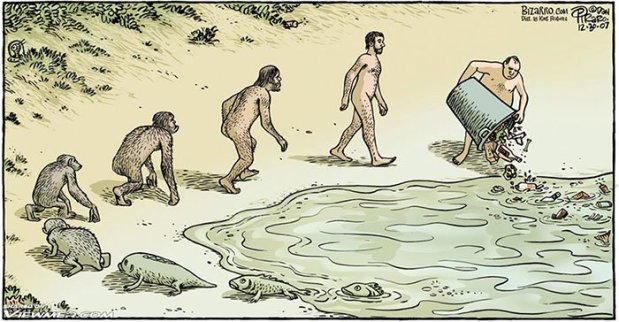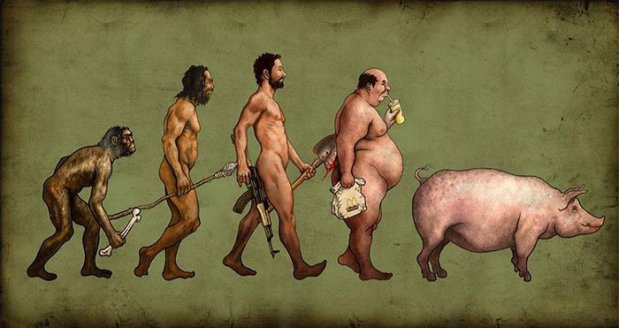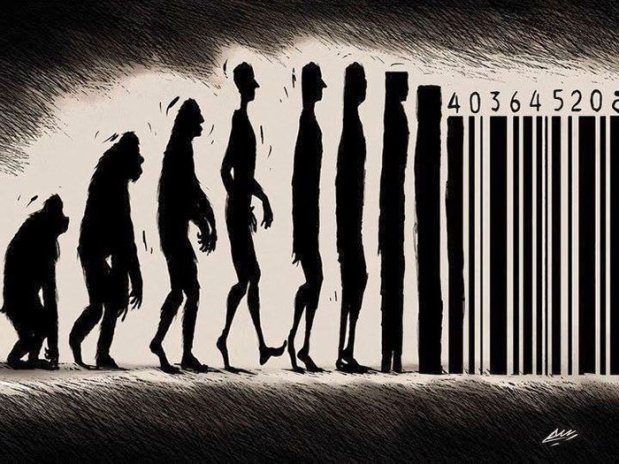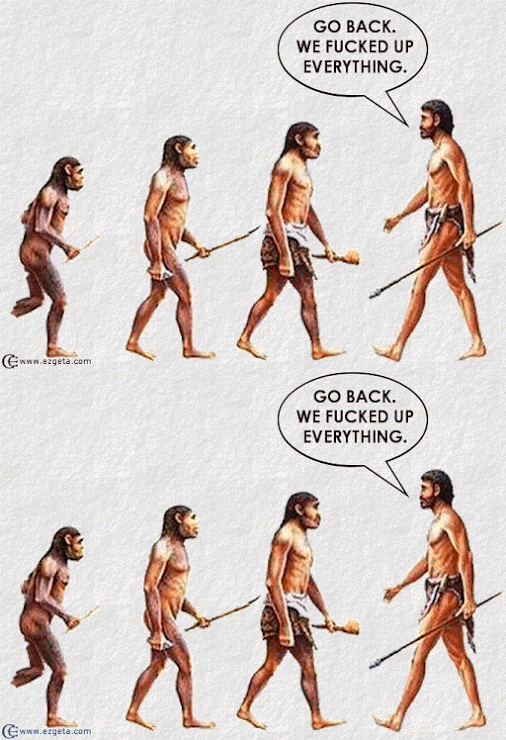
a repost: 15 Satirical Illustrations That Will Make You Question Human Evolution

Article posted on Collective-Evolution (click link for original)


I found this pretty hilarious!


Alexa Erickson-February 2, 2017

The study of evolution is filled with controversies. Some scientists believe that mankind continues to move forward and this will always be the case, while others believe humanity has reached its final stage of evolution, and is now currently in an era of stagnation.

“I think that we’ve stopped evolving,” said English broadcaster and naturalist Sir David Attenborough.

Because if natural selection, as proposed by Darwin, is the main mechanism of evolution – there may be other things, but it does look as though that’s the case – then we’ve stopped natural selection.

We stopped natural selection as soon as we started being able to rear 95–99 per cent of our babies that are born.

We are the only species to have put a halt to natural selection, of its own free will, as it were.

But John Hawks, an Associate Professor of Anthropology at the University of Wisconsin–Madison, disagrees:

We have evolved in our recent past, and we will continue to do so as long as we are around. If we take the more than seven million years since humans split from our last common ancestor with chimpanzees and convert it to a 24-hour day, the past 30,000 years would take about a mere six minutes. Yet much has unfolded during this last chapter of our evolution: vast migrations into new environments, dramatic changes in diet and a more than 1,000-fold increase in global population. All those new people added many unique mutations to the total population. The result was a pulse of rapid natural selection. Human evolution is not stopping. If anything, it is accelerating.

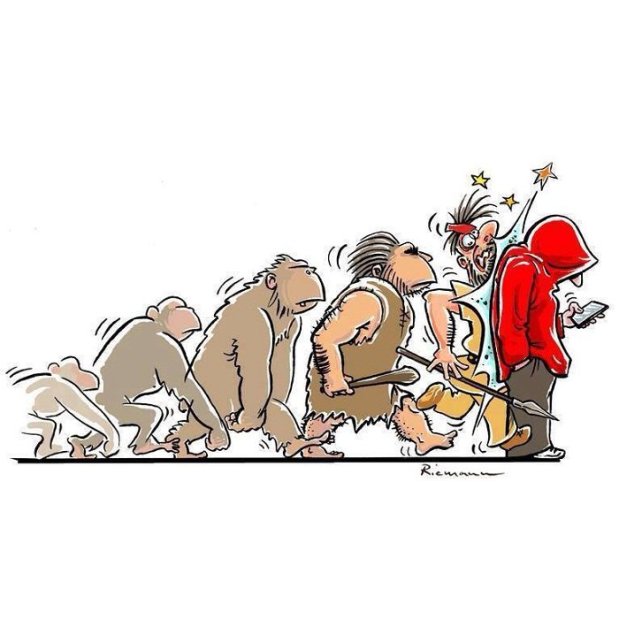
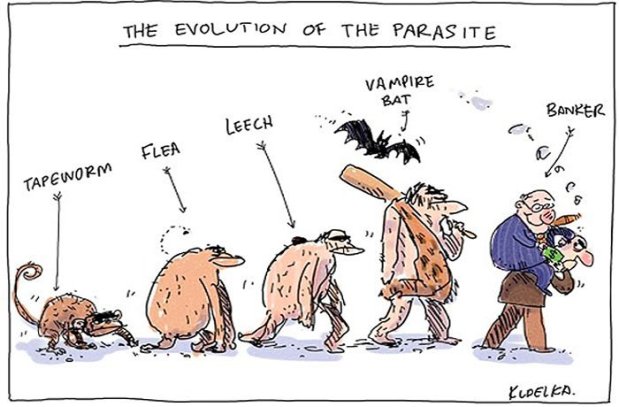
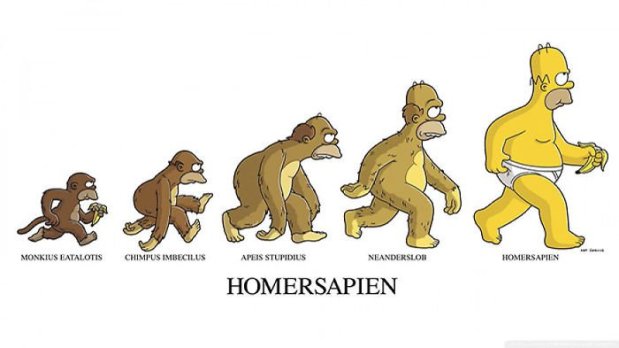
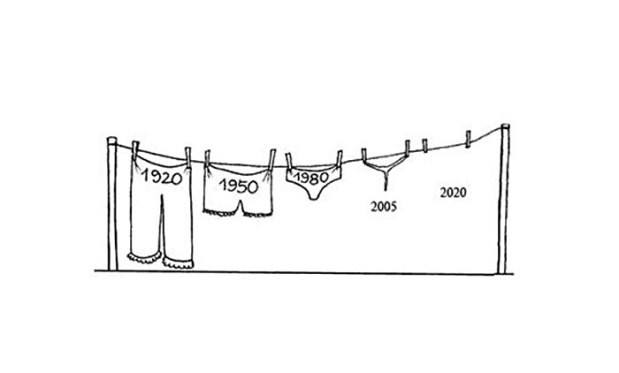
Thinking about evolution — whether it’s accelerating or stagnating — is both fascinating and mind boggling at the same time. But the controversy of it has led modern illustrators to present the subject at hand in a much different way than arguments on paper or in person. In fact, these illustrators are putting their imaginations to work to show these two opposing scientific assumptions in a satirical way, and honestly, it’s just as thought-provoking as the lengthy arguments on either side of the scientific table.

The following images will make you wonder: Have we gotten better or worse? Have we advanced technology, or has it simply overtaken us? Think of sitting down with your grandparents, and how your discussions on the world, and where we are, and who we are, differ. Many of us might find ourselves in a common argument. Grandparents believe younger generations have become mere robots, forgetting what hard work looks like and what the outdoors smells like. The younger generations may believe we have created so many advancements to better the world we live in that it’s a fair tradeoff. Of course, this is merely an example and cannot speak for everyone, but it’s interesting to see how generations apart can vary on outlook, such as scientists do.

Take a look at the following 15 illustrations and decide for yourself where you stand on the topic, or even just see what the images provoke your brain to think!

evolution1__700funny-satirical-evolution-charles-darwin-day__700funny-satirical-evolution-charles-darwin-day-18__700funny-satirical-evolution-charles-darwin-day-22__700funny-satirical-evolution-charles-darwin-day-23__700funny-satirical-evolution-charles-darwin-day-24__700funny-satirical-evolution-charles-darwin-day-26__700funny-satirical-evolution-charles-darwin-day-29__700funny-satirical-evolution-charles-darwin-day-30__700funny-satirical-evolution-charles-darwin-day-32__700funny-satirical-evolution-charles-darwin-day-33__700funny-satirical-evolution-charles-darwin-day-38__700funny-satirical-evolution-charles-darwin-day-111__700funny-satirical-evolution-charles-darwin-day-211__700image__700


a repost: 11 Good News Stories You Probably Didn’t Hear About

Article posted on Collective-Evolution (click link for original)

panda-759x500

By Alexa Erickson-February 2, 2017

People tend to get wrapped up in the negatives of life. We find reasons to complain, we find reasons to be sad, we relish in the fact that misery loves company. It can be hard, as a journalist, to get stuck reporting on just the bad stuff, because there is a lot of work that must be done to improve the world we live in, and the bad news is valuable in prompting people to wake up and make a change for the better.

But to be collectively evolved for the better, we have to pave a path of light, and journalists have the wonderful opportunity to help create that journey.

Just like one story can disturb you, others can lift you up. Scrolling through social media you might suddenly be warmed by the simple sight of a puppy, and it reminds you how important it is to surround yourself with things that warm your soul, while also learning how the bad news has prompted good news to happen.

A general theme of 2016 was just how bad the year was. We harped on war, lost celebrities, deaths, political scandals, and more. But what about all of the amazing things that happened?

Last year may have had its downfalls, but so many wonderful things worth acknowledging happened, too. Here are 11 of those stories to put a dose of positivity in your life, and to remember that it’s not all bad. In fact, there’s so much beauty, and so much goodness too.

A zero-fuel plane completed a trip around the world

André Borschberg and Bertrand Piccard were told by the aviation industry that flying day and night without any fuel was impossible, but the pilots proved them wrong, becoming the first of their kind to circumnavigate the globe in a solar-powered plane. Such news gives hope for a clean and sustainable future.

U.S. carbon dioxide emissions have drastically dropped

They are so low in fact, that they dropped to their lowest level since 1991, thanks to natural gas and hydro power gaining a greater share of the U.S. electricity mix.

For the first time since 1054, Leaders of the Roman Catholic and Russian Orthodox churches have met with each other

Pope Francis became the first pontiff to ever meet a patriarch of the Russian Orthodox Church. The Christian leaders let go of centuries of division for the historic event that was held in a room at the Havana airport.

The plastic crisis could be over in the foreseeable future

With five trillion pieces of plastic currently in the ocean, it’s nice to hear that the Ocean Cleanup Project is working to remove 40 percent of it over the next 10 years by emulating a coastline. The operation runs on power generated from ocean currents.

Giant pandas are no longer endangered

The news was announced this past September by the International Union for Conservation. Currently, 67 reserves exist in China spanning 5,400 square miles for the pandas.

China put an end to the ivory trade

By the end of 2017, the country plans to have completely ended the ivory trade, ending a controversial business steeped in greed for a simple status symbol. The market being restricted in China will save about 20,000 elephants annually.

105 tons of ivory and 1 ton of rhino horn burn in Nairobi National Park on 30th April 2016. They were set ablaze by President Uhuru Kenyatta in the largest ivory burn in hisory.

Twenty countries made a commitment to protect marine environments

Protected marine parks have now been implemented in various countries, including the U.S., who created the largest of them all just off the coast of Hawaii, spanning 1,140,000 square kilometers.

The manatee has been taken off the endangered species list

Though it is now considered “threatened,” which is still unfortunate, news that the species has flourished in recent years is certainly worthy of attention. In Florida alone, there has been a 500 percent increase in the manatee population.

World hunger reached a 25-year low

In 2010, there were 821 malnourished people in the world. Today, however, there are now 795 million. Though that number is still devastatingly too high, the extreme drop of 26 million people no longer being starving provides hope, and proof we are moving in the right direction to correct the problem.

kids-1024x683

After 100 years, tiger populations are finally coming back

One hundred years ago, tigers were endangered, but they are finally starting to see a slight increase once again. A global survey from the WWF revealed that the wild tiger population has increased to 3,890. Since 2010, an increase of 690 tigers have boosted the population. The rise is largely in part due to conservation successes in India, Russia, and Nepal.

Costa Rica’s electrical grid can now power on renewable energy

Thanks to its small size, and utilizing low-energy industries, Costa Rica was able to run on 100 percent renewable energy for 76 days straight, making it the second time it’s done so in a row. The news proves that drawing on multiple energy sources both at a regional and local level can permit for major cut downs on fossil fuels.

Also, there is a shift in overall global consciousness that is helping to raise our awareness and see the truth of what’s going on in our world so we can make real, lasting and drastic change that will allow us to thrive on earth together. It’s a time to be optimistic and centre ourselves in love. You can watch our latest feature documentary all about it here.


a repost: Modern-Day Slavery? In Italy, the Government and Mafia Seek to Exploit African Migrant Labor

Posted on AtlantaBlackstar (click link for original)


The Italian government is considering a new policy that may force African migrants to perform free labor as a condition for asylum, underscoring the harsh reality — even modern-day enslavement — facing Black people in the European country.

Under a proposal introduced by Marco Minniti, Italy’s Interior Minister, thousands of Black migrants will be required to engage in “socially useful” work as their asylum claims are processed, The Times reported. The plan also would expedite the expulsions of economic migrants.

Last year, a record 181,000 migrants arrived in Italy via the Mediterranean Sea, and between January and October of last year, nearly 100,000 Black people, mostly from sub-Saharan Africa, applied for asylum. They live in crowded migrant centers and are allowed to work while they wait for their applications to process, typically for pennies in the fields. Italy has attracted migrants from all over, Eastern Europeans as well, due to the agriculture industry and the conditions they face at home. For Africans, Southern Italy has been a popular destination due to its proximity to the North African coast.

Some towns already ask refugees to perform “community service” in the form of street sweeping and cleaning parks and gardens, according to The Telegraph. “It allows people to get to know the foreigners and understand they are not just people you see on street corners,” said Luca Menesini, the mayor of Capannori in Tuscany. Up until now, those efforts have been voluntary. However, under the new government plan to be proposed by Minniti, labor would be mandatory, possibly as a requirement to receive a weekly living allowance.

According to a 2012 report from Amnesty International, Italy’s agricultural sector is highly reliant on migrant labor, which accounts for a quarter of the days worked and probably amounts to even more. Amnesty has criticized Italy for its criminalization of undocumented migrants, which it says allows this labor exploitation to thrive. The report also found that exploitation of migrant labor is widespread, particularly in Southern Italy. As was reported by the American Sociological Association.

Southern Italian agriculture is known for low wages, where farm workers who harvest tomatoes are made to live in ghettos, shantytowns and abandoned houses. According to Amnesty, these migrants, who are paid as little as €25 a day, ($27) “live in derelict buildings and makeshift shelters without running water, electricity or heating.” Further, 86 percent of workers do not have an employment contract and are paid under the table, according to the Italian aid group Doctors for Human Rights. “We were working from 6 in the morning to 6 in the evening, every day of the week, for 20 euros a day,” ($21) said Kojo, a migrant worker from Togo, in the Amnesty report. “We could not take breaks, not even for eating. We used to eat the oranges on the trees.”

The exploitation is not limited to agriculture but extends also to construction, where gangs and mafia-type criminal organizations maintain an oppressive contract-labor system that has become known as caporalato. Though illegal, the practice is common. Italian trade unions estimate that between 300,000 and 400,000 mostly African laborers are subjected to caporalato conditions, according to AFP. Further, Amnesty notes that nonpayment of wages is common, and the Italian justice system has failed to protect the victims of these labor abuses.

The abuse of African migrants also extends to children. The UN refugee agency found that nearly 26,000 unaccompanied minors came to Italy last year, more than twice the number from 2015, The Telegraph reported. Most were from Eritrea, Nigeria, Gambia and Egypt, and are especially susceptible to abuse and exploitation. Many are forced into prostitution.

In addition, African asylum seekers are subjected to deplorable living conditions in the detention facilities. According to The Local, protests broke out in the Cona migrant center in the Veneto region of Italy following the death of a 25-year-old woman named Sandrine Bakayoko, an Ivory Coast native, from a blood clot on January 4. Workers at the facility reportedly waited several hours before calling an ambulance. Asylum seekers reportedly cut the electricity to the facility and set fire to furniture and other items. Meanwhile, 25 staff members barricaded themselves inside a room overnight, according to The Local.

Members of parliament who visited the center last November denounced the “serious structural deficiencies” they witnessed. One MP condemned the poor living conditions, including lack of water and light, calling the facility a “ticking time bomb.” More than 1,400 people were housed in an area meant for only 15 people.

Italy is now using the revolt as grounds to speed up the deportations of Africans. “We have saved many lives, but we cannot accept rule-breaking. We need to speed up deportations,” Italian Foreign Minister Angelino Alfano said in an interview with La Stampa daily.

“When I’m in government, there will be mass expulsions, center closures and the Navy ships will send people back after saving them,” far-right leader Matteo Salvini of the Northern League wrote on Facebook. “Enough! 2017 will be the year of sending them back.”

Why do the Africans come in the first place? Thousands are crossing the Mediterranean to Europe through Libya, often risking their lives, in order to find a better life. The toppling of Libyan leader Muammar Gaddafi created a power vacuum, rendering the country’s 1,100-mile coastline an open border and allowing gangs to smuggle migrants in overcrowded sea vessels, as MSNBC reported. Unlike Syrian refugees who are fleeing a catastrophic civil war, those who arrive in Italy from sub-Saharan Africa are leaving due to extreme economic deprivation, oppressive governments and terrorist groups.

Eritrea, for example, accounted for the largest number of migrants at 40,000 in 2015. The country is not at war but rather is known for having one of the worst human rights records in the world. It was included in the 12 “Worst of the Worst” nations for civil liberties and political rights by the 2015 Freedom House report. For those living in these countries, stories on social media of family members making it to Europe and even sending remittances back home create a sense of hope and encourage people to continue to make the treacherous journey that has cost thousands of lives.

For those living in these countries, stories on social media of family members making it to Europe and even sending remittances back home create a sense of hope and encourage people to continue to make the treacherous journey that has cost thousands of lives.

Meanwhile, these types of deplorable conditions and attitudes against African migrants and asylum seekers are increasing across Europe, causing Africans to face a bitter new wave of exploitation, criminalization and modern-day enslavement in a country that does not want them.

Sharing “Another Part of Me”

From the Melanated Man:

I promised one of my followers I would share some of my sketches and I don’t disappoint lol. This is a hobby that keeps me at peace from the illusions of this Matrix. Something I need to venture back into more deeply, spurning that retched idiot box watching old reruns of “The Bernie Mac Show” on Netflix (can’t help I love that show!). Here’s another part of me, folks. Enjoy!

**Note: Criticism is NOT WELCOMED AT ALL!!!**


new-doc-2017-01-25_4

“Me and the Wifey”


new-doc-2017-01-25_5

“Mommy Dearest”


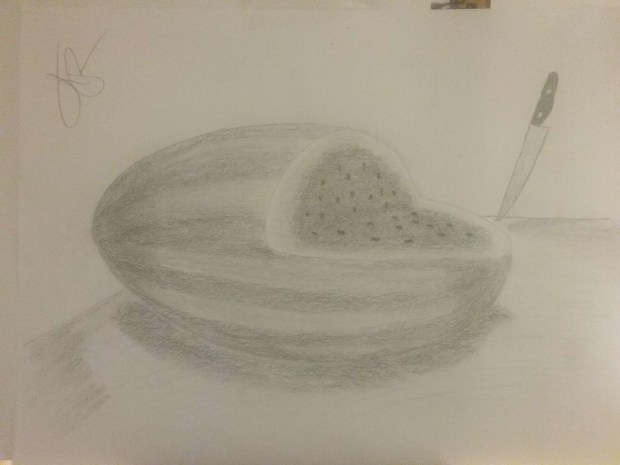
The rest is just some small random sketches to keep me in form.


apple-picwatermelon-picrose-pic


Might be coming out of hibernation sooner that expected…in the meantime be encouraged fam!


Peace and Love to my melanated family,

The Melanated Man

a repost: Does Tipping Have Racist Origins? This Seasoned Restaurateur Says Yes

Article posted on Atlanta Blackstar (click link for original post)


tipping


Most restaurant goers see tipping as a courteous practice to thank waiters for their service. But what many may not know is that the practice of giving your server a few extra bucks is actually rooted in racism.

During a recent interview on food-lovers podcast “The Sporkful with Dan Pashman,” Shake Shack founder and restaurateur Danny Meyer spoke about the racist history of tipping and why he finally decided to ban the practice in his restaurants back in 2015.

“Tipping is actually one of the biggest hoaxes ever pulled on an entire culture,” Meyer said.

He went on to explain that the age-old custom came about after the abolition of slavery, as restaurant owners and the railroad industry, which mainly employed formerly enslaved Black Americans, used abolition as an excuse to make them work for tips rather than paying them actual wages.

“It wasn’t considered slavery because we [the restaurant industry] would ask our customers to pay tips, and therefore, no one could say they were being enslaved,” Meyer explained.

“That’s the history of how it started in this country,” he added. “You don’t see it in Asia. You don’t see it primarily in most European countries. But that’s what it was — and it created a completely false economy.”

The Shake Shack founder also pointed out that tipping is essentially a “multiplier of menu prices.” As menu prices have increased over the past three decades, so have tip amounts, with tip-eligible employees, who usually work the front of restaurants, enjoying an income increase of 300 percent. However, tip-ineligible employees, such as cooks and dishwashers, have seen their incomes increase only 20 percent in the same time period. Meyer said that was ultimately what moved him to eliminate tipping from a number of his restaurants.

Podcast host Dan Pashman also highlighted the racial dynamic of many restaurants, noting that as you walk from the front of a restaurant to the back, the complexions of the people tend to get darker. He noted the income disparity between restaurant workers of different races, as well.

“In a tip-based system, studies have shown that nonwhite servers make less than their white peers for equal work,” Pashman said. A similar study published in the scientific journal Sociological Inquiry in 2014, also found that white servers are tipped better than nonwhite servers.

“There’s just nothing good about that,” Meyer said.

So how has the anti-tipping restaurateur managed to succeed after eliminating the common practice from his eateries? Attn: reported that Meyer has since increased menu prices marginally and started paying his employees a higher hourly wage.

“As with anything in life, if you want to make change, you have to make change in that,” Meyer said.

A Couple of Random Thoughts to End the Year 2016  

finalthoughts


From the Melanated Man:

I hope everyone has enjoyed their holidays so far. If you don’t observe the holidays, have enjoyed some well-deserved time off anyways. I’m doing my best thus far, got through Christmas, which may be the last one I officially observe for myself. I can’t speak for my wife, my kids who have already been brainwashed by the propaganda and Santa Claus and the fairy tale of Jesus Christ (at some point I WILL do a post on that one!), nor my other loved ones who have been caught up in the madness since before I came into existence.

Since I gotten over the “give-me, gift-me, eat-yourself-to-death” phase of Christmas of my adolescence, there has been one, only one, constant about the holidays that I have adored.

Being around my family. Seeing loved ones that I don’t see often is always a treat for me. I’m very BIG on family.

And that is the only thing about the holidays that I can tolerate at this time in my life. Besides that, the overindulgence of overcooked, dead food and  material consumption is played out for me, they can have that! I hate to separate myself from the others, but at the end of the day, I have to do what’s best for the Melanated Man, for me lol.


Enough of that, you get that picture. Moving on

I have a couple of random thoughts that I have on my mind that wanted to share that had intended to turn into posts but decided against it for reasons I’ll explain later.

__________________________________________________________________

Thought #1: Who is Jill Stein?

I read this article (click link for original) a little over a week ago about Jill Stein (the Green Party’s presidential candidate), who she is and questioning what her true intentions could be concerning her attempt to demand a voter recount of the recent presidential election. There were some nuggets that I was not aware of, such as she has a Jewish background. Most of us know the role Jews have played in the media/entertainment and behind the political scenes, to the detriment of Melanin-Dominant people. I’m not saying everyone who is a Jew is a devil or whatnot.But you always have to be wary of individuals who have a high-profile platform, especially in this paradigm, to influence the masses. What bothers me is the website Black Agenda Report, which I truly admire for their honesty and tenacity, was pushing the Jill Stein and Green Party very hard. Especially since a frequent writer of theirs Ajamu Baraka, Melanin-Dominant male, was her running mate. I always felt funny about that entire ordeal, because of my thought process concerning our participation in the game of politics in the first place! And the article on Jill Stein only intensified that flame for me.

We, Melanin-Dominant family, did not create this system, thus we should not even be trying to fit into it. It’s not for us!

Was Jill Stein’s choice of Ajamu Baraka as her running mate a play to draw us back in?

With the way Black Agenda Report backed the Green Party, is it a sign that the a good bit of us who claim to be conscious on the Black struggle, may not be aware of who and what we’re dealing with concerning that struggle?

When are we going to wake up and break away from this Matrix?

___________________________________________________________________

Thought # 2: If you don’t use it, you lose it??

The other day, I decided to accompany my mom to see one of her home health clients. She’s a nurse. We had a conversation concerning church and singing in the choir. My mom mentioned that I could sing and that I used to sing in the church choir and male chorus. Her client asked me if I still sung in the choir and of course I said NO. I haven’t stepped in a church in maybe a year and some change, and that was for a visit. They both smirked and said a line that I have heard a million times in my thirty years on this earth…

“If you don’t use, you will lose it. God will take it away from you.”

I could only chuckle inside to myself.

Now, with the things I know, read about, seen. and have experienced for myself thus far, that statement is not true. In my mind, it should be rephrased as such…

“If you abuse it, you will lose it. The God in you will depart from you.”

God is in you, my Melanin-Dominant family, not outside of you. Your melanated body, your temple, is the dwelling place for the God in you. IF YOU ABUSE IT WITH DEAD PROCESSED ARTIFICIAL FOOD, DRUGS (LEGAL AND ILLEGAL), AND ANYTHING ELSE UNNATURAL TO IT, YOU WILL LOSE THOSE GIFTS THAT WERE BESTOWED UPON YOU THROUGH THAT TEMPLE!

That’s my line of thinking on that topic.

___________________________________________________________________

Thought #3:  Live the life you want to live!

A remember a long while back, I may have been in college or just graduated from college, but anyway, my cousin’s wife, who I love dearly and look up to, told me that I had not lived enough or experienced enough in my life. Admittedly, I was sort of shy and I really didn’t do alot of things or go out on the town, so to speak. Wasn’t a big party-hearty guy at all. I did like to  travel as a youth up until young adulthood, and I looked forward to doing even more as I gotten more established.

At the time I was kind of offended, maybe because it did have some truth to it that I was not willing to accept of myself.  I did not go by the standard “things to do before I grow old and die” list like everyone else. I kept to myself and did my own thing for the most part. I wanted the simple things in life: a satisfying well-paid career, a wife and some kids,  and a decent house to call home. Indeed I was/am a simple man. Maybe  I was embarrassed and insecure about that fact at the time.

That’s certainly not the case now. I accept that fact wholeheartedly. There is nothing wrong with simplicity. Minus the satisfying well-paid career part, which I’m working on at the moment (to be a entrepreneur!), I have achieved my goals and look to achieve even more as I move forward in my life.

I said all of that to say that there is nothing wrong with being you. If you desire the simple life, there’s nothing wrong with that. Once you understand and know who you are, as long as you respect and acknowledge the Laws of Nature (Ma’at), you do you. When the entire world tries its damnedest to let you know that being you is not good enough, you be you my Melanin-Dominant man/woman. In this day and age, that’s a risk in itself.

But it’s a risk worth taking. Whether you take it or not, either way, you life depends on it.


That’s all of the thoughts I have brewing ladies and gents!

___________________________________________________________________


I just want to say thank you to everyone who had followed and read my blog thus far this  year. It has been an experience and revelation sharing my thoughts with you all. It’s hard to meet people who share a smidgen of the same thoughts you may have in person just because of the volatility of the times. I’m truly grateful that there are others out there like myself who only wish  for all of us to experience this life, as the Melanin-Dominant people we are, in a better dynamic than we are currently in collectively as a group. I know and believe that is our ultimate goal at the end of day. I have much love and respect for all of you.

I’m taking a semi-hiatus from the madness for a couple of months, to catch up some things i.e. like finishing my memoir, reading, writing some poems, getting back to sketching, etc. I may post some of my sketches and/or poems every now and then just to stay fresh. Keeping it light, nothing more than that. That’s why I’m calling it a semi-hiatus. I  don’t want to completely fall off the face of WordPress, you know?!

Although we go by an imaginary business calendar and not Mother Nature’s own natural calendar, I’m gonna say Happy New Year anyway and wish you all the very best moving forward.

Keep up the good fight and be encouraged definitely!

I’m signing off…


Peace and Love to my melanated family,

The Melanated Man

a repost: Study: Junk Food Companies Disproportionately Target African-American Children

Article posted on Atlanta Blackstar (click link for original)

A new report examining TV food advertising viewed by preschoolers, children and teens found that African-American youths are disproportionately exposed to junk food ads, viewing almost 50 percent more ads for unhealthy snacks than their white counterparts.

The study, conducted by the Rudd Center for Food Policy & Obesity, attributed the concerning disparities to increased television watching time among Black children. But that fact by itself still didn’t explain why Black children were seeing ads for fast food and other unhealthy food options at much higher rates.

According to the report, junk food companies have increasingly advertised on networks with particularly high African-American and adolescent viewerships such as Fuse, BET, Vh1 and Nick-at-Nite. Jumps in food-ads-per-hour also contributed to increased exposure to junk food ads for youths of all ages between 2008 and 2012.

“Higher rates of food advertising on youth-targeted networks explained greater adolescent exposure,” the study read. “However, greater television viewing and higher rates of advertising on youth- and black-targeted networks both contributed to black youths’ greater exposure.”

In 2012, the report found that Black youths viewed considerably more food ads compared with white youths of the same age. For instance, Black children aged 2 to 5 viewed 64 percent more food ads, while Black youths aged 6 to 11 saw 49 percent more ads than their white counterparts. Moreover, the younger African-American children viewed approximately two more junk-food ads per day than even the older white kids.

Researchers noted that this increased exposure to low-nutrition food ads also made Black children more vulnerable to becoming obese and developing other diet-related health issues. Data from 2011 to 2012 revealed a stark gap in child obesity rates between Black and white youths: Eleven percent of Black children aged 2 to 5 were obese during this time, while just 3.5 percent of white children were. The disparity got larger as the kids grew older, with 23.8 percent of African-American children aged 6 to 11 being obese compared to 13.1 percent of their white peers.

The report pointed to a greater number of billboards advertising unhealthy food options in predominately Black neighborhoods as another possible culprit behind these concerning health figures.

“Understanding the relative contribution of factors leading to greater TV [and billboard] food advertising exposure for adolescents and Black youths is necessary to identify effective solutions to counter its harmful effects,” the study read. “Understanding the reasons for their greater TV viewing and identifying opportunities to reduce viewing would help address [these] health disparities affecting Black youths.”

Frances Fleming-Milici, a marketing researcher and the lead author of the Rudd study, said it’s no coincidence that junk-food companies have increasingly advertised on Black-targeted networks but admitted that it is sometimes difficult to determine the intentions of the food companies the Rudd Center challenges.

“[Rudd] uses the same data that companies use to place their ads,” Fleming-Milici told The Washington Post. “Ads are placed to reach a certain demographic.”

a repost: A Community Under Attack: How the Gullah/Geechee Nations Are Fighting Against Culture Vultures Keen on Destroying Them

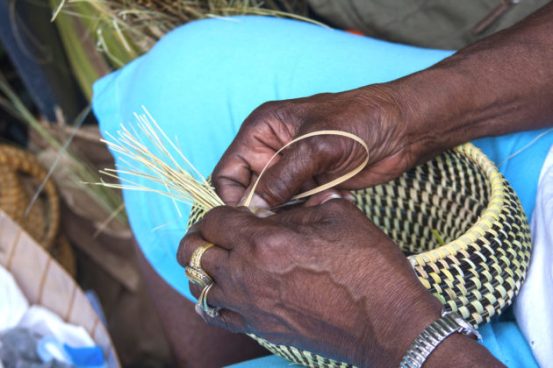
The Gullah/Geechee Nation, whose population spans the southern Atlantic coastline in rural communities, is the only group of African-Americans that have retained West African culture as it was when Africans were first brought to the United States as slaves.

Unfortunately for people of Gullah/Geechee descent, however, the deep satisfaction of holding on to their rich heritage and direct African connection has come with twice as much despair.


In the past few decades, both the Gullah/Geechee’s culture and their land have become a bull’s-eye target for gentrifiers, real estate developers, large corporate entities and culture vultures alike. To make matters worse, Gullah/Geechee coastline communities also are being adversely affected by climate-change issues such as hurricanes and rising sea levels. Community leaders have been working tirelessly to safeguard what remains of their land and culture from these disasters — both natural and man-made — but it is proving to be an uphill battle on all fronts.

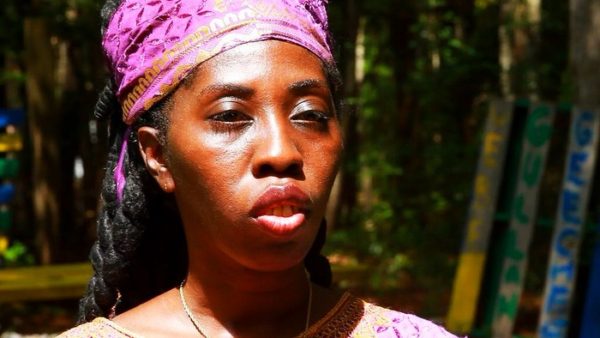
I had the opportunity to speak with the nation’s Matriarch, Marquetta Goodwine — also known as “Queen Quet”  — on how the Gullah/Geechee are being impacted by all of these issues, as well as the fallout from the recent Revelry Brewing Co. scandal.

First, Queen Quet made it clear that when referencing the nation, always cite it as “Gullah/Geechee.” She said using only “Gullah” or “Geechee” or using “Gullah Geechee” without the slash negates the solidarity of the group as a whole. This is one of the reasons members of the Gullah/Geechee community consider the Gullah Geechee Cultural Heritage Corridor a “mock” organization of academics and politicians, many of whom have no blood ties to the Gullah/Geechee. There also is empirical evidence that this organization has been the catalyst for some troubles that the Gullah/Geechee face, such as the Revelry Brewing Co. scandal.

In late September of this year, a Charleston, S.C., company, Revelry Brewing Co., came under fire from the Gullah/Geechee nation for its “Gullah Creme Ale” beer. Unbeknownst to nation, the Gullah Geechee Cultural Heritage Corridor had given the company permission to use the name in exchange for passing out their brochures.

Dr. J. Herman Blake, executive director of the Gullah Geechee Cultural Heritage Corridor, had this to say in response to criticism of the group’s actions: “The word ‘Gullah’ is not owned by anybody.”

Blake met with Revelry Brew Co. before the product was finalized and claimed the company had good intentions, according to CBS News Charleston.

Though he is the executive director of the GGCHC, Blake is originally from Mount Vernon, New York, and, according to many academic sources, only began studying the Gullah/Geechee in college. He also has no Gullah/Geechee ancestry. This holds true for other executive members of the organization, as well. Most of them are transplants and not of Gullah/Geechee descent, according to the website. That fact confirms at least some of the claims and suspicions about the organization made by Gullah/Geechee community members.

Revelry’s website says that proceeds from Gullah Creme Ale will go toward the Gullah Geechee Cultural Heritage Corridor and other awareness initiatives, but, according to Gullah/Geechee members, the initiative has not benefited their particular community in any way.

Queen Quet said Revelry Brewing Co. officials wrote her a letter in which they apologized and expressed regret for working with the GGCHC. However, they did not rebrand the beer, as Queen Quet and the Gullah/Geechee nation’s Wisdom Circle Council of Elders had advised.

Heirs’ Property and Heritage Loss

The beer scandal, however, pales in comparison to the ongoing deluge of legal battles the Gullah/Geechee have faced concerning what is known as “heirs’ property,” which is mostly rural land that was bought during the Civil War and passed down through the years, often with no formal documentation like a will or deed.

South Carolina lawmakers claim that heirs’ property owners were given 10 years to resolve the issues and further their ownership, but most of the Gullah/Geechee were either uninformed, unable to financially afford the legal counsel or just flat-out distrustful of the legal system itself. Although Gullah/Geechee descendants without documentation can buy their land, it must go up for auction first and when it does, a third party can step in and buy the heirs’ interest. This is known as a “land grab” and many of the Gullah/Geechee have lost acres of heirs’ property for less than $1,000 through this process.

In lieu of this heirs’ property issue, many bandits have been able to take advantage of the forever-expanding loopholes of heirs’ property ownership, according to the Center for Heirs’ Property.

Hilton Head Island real estate developer Adolf D. Brown is the founder of Heirsproperty.com, which purports to help people with heirs’ property matters “realize its full potential,” according to the website. According to VICE, his dealings in the Gullah/Geechee communities aren’t living up to those promises. Brown moved to South Carolina from New York City after finding out that he had inherited heirs’ property from his mother’s side of the family. Since then, he has helped to make way for gentrification and development in the area.

In his defense, Brown told VICE News,“The world changes. You have to be progressive or you will get run over.” He also told VICE that he felt the only real solution for the Gullah/Geechee communities was for them to develop the land.

Larger entities also have used heirs’ property loopholes to force individual heirs to sell their shares, since each family member usually has a share and an heirs’ property could be divided into tens or hundreds of shares, based upon family size. According to the Center for Heirs’ Property, many of the Gullah/Geechee rely too much on legal morality and goodwill and come into the center believing they are the rightful owners of the property when, in reality, they’re not. Resolving these legal issues can take months, sometimes years, to accomplish, according to the center.

The Closing of Gullah/Geechee Waterways

Khetnu Nefer, a Johns Island, S.C., native, has witnessed firsthand the slow but relentless destruction of her community. Her grandmother was the community herbalist, which inspired Nefer to start her own wellness practice, A Soulful Touch.

“We were solely reliant upon the land,” she recalled. She admitted she often reminisces about her youth, when her Gullah/Geechee family had full access to the waterways that are now being used as resorts. She says they were able to feed their entire community for months at a time with the food they caught.

According to Nefer, the gentrification and development of South Carolina’s Sea Island region is so devastating that people are now forced to travel more than 5 miles to the nearest supermarket. She lamented that many of the fishing areas are now gated waterfront properties or golf courses.

Nefer despaired that so very many people have been displaced and that real estate developers have knowingly built properties over graveyards that contain both enslaved people and their Gullah/Geechee descendants.

How the Gullah/Geechee Are Planning to Move Forward

The Gullah/Geechee Sea Island Coalition has been working tirelessly for over 20 years to preserve its West African heritage by any means necessary. The coalition’s head, Queen Quet has been traveling the world to educate about Gullah/Geechee culture and has attended many United Nations conferences addressing their concerns, as well. She recently attended a Human Rights UN conference in Marrakech, Morocco, that addressed the climate change issues in South Carolina’s Low Country.

In the meantime, she encourages everyone to support authentic communities, tours and activities to know the true wonder that is the Gullah/Geechee experience. (Community members have expressed outrage that the GGCHC and other similar organizations hire Black Americans who aren’t a part of the Gullah/Geechee nation to perform as if they are members when they host events and tourism campaigns.)

Queen Quet: “We da binya an ain da gwine nowhey!”

The Origins of Santa Claus(Satan Claws) — Kushite Kingdom

This grotesque-looking creature is the real spirit of Santa Claus unmasked, and he is a demon spirit known in Germany as “Krampus.” This demon (according to folklore), is supposed to be the evil side-kick of Santa Claus himself or his “alter ego.” Krampus’ role is to scare children into being good. All year long children are taught that if they […]

via The Origins of Santa Claus(Satan Claws) — Kushite Kingdom