a repost- After Seven Long Years, Freedom: An Interview With Marissa Alexander

Article posted on Truthout.org (click link for original)

Wearing an ankle monitor at all times was one of the many restrictions placed on Marissa Alexander during her two years of home confinement. (Photo: Courtesy of Marissa Alexander)

By Victoria Law

Wearing an ankle monitor at all times was one of the many restrictions placed on Marissa Alexander during her two years of home confinement. (Photo: Courtesy of Marissa Alexander)

As the clock struck midnight on January 26, Marissa Alexander was finally able to pull off her ankle monitor. The Florida mother of three was officially done with her two-year sentence of home confinement and electronic monitoring.

Despite the late hour, she drove to her sister’s house where she, her mother and her sister had a toast to her freedom. The next morning, she took her youngest daughter to breakfast before dropping her off at school; something that she’d never before been able to do with her six-year-old. That night, she took her 16-year-old twins to dinner. That weekend, family and friends threw a party in her honor. And finally, on Sunday, Alexander put a baseball cap on and headed to a local bar to watch the football game in anonymity. It was the first time the Jacksonville mother had been able to do so since her legal ordeal began in 2010.

No Justice When Black Women Fight Back

As reported previously on Truthout, in July 2010, Marissa Alexander gave birth to her baby girl. The previous year, she had separated from and obtained a restraining order against her then-husband Rico Gray, who had been violent toward her on more than one occasion. But when she learned that she was pregnant, she amended the order to remove the ban on contact. The two still lived in separate houses.

Nine days after the baby’s birth, Gray was in Alexander’s house and attacked her. “He assaulted me, shoving, strangling and holding me against my will, preventing me from fleeing all while I begged for him to leave,” Alexander recounted in an open letter. She escaped into the garage, but realized she had forgotten the keys to her truck. The garage door opener refused to work. She grabbed her gun, which was legally registered, and reentered her home to either leave another way or grab her phone to call for help. When Gray charged at her, she fired a warning shot. Gray left, then called the police and reported that Alexander had shot at him and his sons. She was arrested and charged with aggravated assault with a deadly weapon.

In court, Alexander tried to argue self-defense under Florida’s Stand Your Ground law. But the pretrial judge ruled that Alexander could have left her own home through the front or back doors. In a 66-page deposition, Gray admitted to abusing not only Alexander, but also the other four women with whom he had children. At trial, several witnesses, including several family members, testified that they had seen injuries that Gray had inflicted on Alexander; Gray’s sisters-in-law also testified that he had a reputation for violence in the community. Nonetheless, the judge instructed the jury that, when considering whether Alexander had acted in self-defense, she had to prove beyond a reasonable doubt that Gray was committing aggravated battery when she fired. After 12 minutes, the jury returned with a guilty verdict.

In Florida, the prosecutor has the discretion to add a 10-20-Life sentencing enhancement, which requires a 20-year minimum sentence when a firearm is discharged. The Florida Department of Corrections has noted that Black people are more than twice as likely as white or Latino people to have the enhancement added to their sentence. Alexander was no exception; prosecutor Angela Corey decided to add that enhancement, and Alexander was sentenced to 20 years in prison.

Three months before Alexander was sentenced, stand your ground was interpreted very differently in Sanford, Florida. On February 26, 2012, police initially refused to arrest George Zimmerman after he shot and killed Trayvon Martin, a 17-year-old unarmed Black teenager. The following year, Zimmerman successfully invoked Stand Your Ground as a defense, with the judge instructing the jury that Zimmerman had no duty to retreat. He was fully acquitted. The comparison thrust Alexander’s case into the national spotlight, garnering her support from around the country. Her story became a symbol of how domestic violence survivors, particularly women of color, are criminalized when they defend themselves.

In 2013, an appeals court overturned her conviction, remanding her for a new trial. The court also stated that, if convicted, Alexander’s sentences must be served consecutively rather than concurrently. The prosecutor once again charged Alexander with three counts of aggravated assault with a deadly weapon. If convicted, Alexander faced 20 years for each count, totaling 60 years in prison. However, the following year, Alexander agreed to a plea bargain that included time served for the 1,030 days she had already spent behind bars, another 65 days in jail and two years of house arrest.

The Cost of “Freedom”

In addition to the monitor strapped to her leg, Marissa Alexander was required to carry this GPS handheld device with her at all times during her home confinement. (Photo: Courtesy of Marissa Alexander)In addition to the monitor strapped to her leg, Marissa Alexander was required to carry this GPS handheld device with her at all times during her home confinement. (Photo: Courtesy of Marissa Alexander)

On January 27, 2015, after 1,095 days behind bars, Alexander walked out of jail. An ankle monitor was clamped to her left leg and she began her two years of home confinement.

Alexander told Truthout there was no doubt that after prison, house arrest provided some relief. “Being at home and being able to be in the privacy of your own home and turn on a light and sit on a toilet by yourself with the door shut, you just cannot compare that to prison,” she said.

Under house arrest, no one told her to sit up and recite her prison ID number, and no one regulated her schedule or her meals. “I can go to the fridge and get what I want when I want,” she said.

Still, those small freedoms came with a price tag. In Alexander’s case, it was a fairly hefty one. She had to pay not only for the ankle device and cost of monitoring, but also a monthly drug test, even though she only took one drug test during the entire 24 months. Alexander estimates that she paid slightly over $10,000 for those two years.

This number does not include the cost of electronic monitoring between November 2013, when she was released on bond awaiting her new trial, and November 2014, when she returned to jail to complete her 65-day sentence. During those 12 months, Alexander was responsible for paying $105 biweekly for electronic monitoring. Supporters raised the money covering those fees plus her living and legal expenses.

If Alexander fell behind on paying, or failed to pay the entire amount before her sentence expired, it would be a technical violation of her sentence. “It wouldn’t be a new charge,” explained Alexander. But had that happened, Alexander would have ended up back in court where a judge could decide to either extend the length of probation or end it and issue a judgment. The judge could also decide to send Alexander back to jail for violating the terms of her probation. Fortunately, Alexander’s supporters had raised enough money to cover these costs.

There were other, non-monetary costs as well. For the first six months, Alexander was granted permission to leave her house only to take her children to and from school, look for employment and attend church services. “All the other things you’re able to do, like grocery shopping or upkeep and things like that, I wasn’t able to do,” she told Truthout. Fortunately, family and friends stepped in and were able to help keep her kitchen stocked and run any other errands that Alexander and her children might need.

Six months later, Alexander filed a motion to have the terms of her confinement relaxed. The judge agreed and so, each week, Alexander turned in a schedule specifying where she planned to be at any given hour. “The idea is that you don’t deviate from your schedule,” she explained. The monitor worked via GPS, allowing the company to track her every location. The strict scheduling meant that, if the line at the grocery store was moving slowly, she would worry about getting home on time or risk getting a violation. “There’s been many a time that I’ve been cutting it close at getting home for whatever reason and I needed gas and my truck was on E [empty] and I was just like, ‘I’m going to have to have somebody else get the gas for me or wait for the next day to go back out and get the gas,'” she recalled.

Sometimes, her schedule was not entered into the company’s system correctly. “It’s human error, it happens,” acknowledged Alexander. She remembered several occasions in which she had specified on her schedule that she would be attending church, but when she walked out of her door and began making her way there her monitor began sounding an alert. On these occasions, her cell phone would promptly ring. “Hey, you’re not scheduled to be out. Why are you out?” the voice on the other line would ask. Alexander recalled, “In those instances, I’ll go back home. I wouldn’t go and do what I needed to do.”

But even when her schedule was entered correctly, the restrictions still prevented Alexander from fully participating in her children’s and family’s lives. After the first six months, she was allowed to attend parent-teacher conferences for her children, but not allowed to be at their extracurricular activities. “I missed my daughter’s entire basketball season,” Alexander said. Other family members would attend the games, but Alexander was not allowed to do so. At times, she arrived in time to see the last two or three minutes, but she was never able to sit on the bleachers and cheer for her daughter. She also missed her youngest daughter’s elementary school award ceremony. And there were many sunny days when she couldn’t take her children to the park or out for a bike ride. “Those things are always really difficult,” she recalled.

Electronic Monitoring Can Lead Back to Jail

“In the grand scheme of things, you cannot compare home confinement to prisons,” Alexander told Truthout five days after her sentence was finished. But, she continues, the ways in which home confinement and electronic monitoring are structured are more likely to lead people back to prison than allow them to succeed. “Think of the people who didn’t make the news and don’t have that kind of support,” she said in a video to supporters one year into her house arrest.

“I feel like it’s money-making. Period,” she told Truthout. For electronic monitoring to be an actual alternative to incarceration, there would need to be “some type of pathway for people to really and truly get back on their feet and have resources available to them and some type of support system.” While Alexander had family and friends who supported her throughout those two years, most people lack that kind of support.

“You are putting people in the position that they are trying to pay for something that is difficult for them to pay for,” she said of the fees that most people on monitors are required to pay. Those that can’t keep up with the fees are sent back to jail. “Whatever money you paid to the system, they got, but you’re back in jail so now the taxpayers are paying for you. It’s a mess.”

In addition, she noted that having a felony conviction is frequently a barrier to employment and failure to find work is considered a violation of probation. Nationwide, over 150 cities and counties have “banned the box,” or eliminated the question of conviction history on an initial job application. Florida’s Duval County is not one of them. Alexander, who has a bachelor’s degree in information technology and a master’s degree in business, was able to circumvent the degrading experience of checking the box and explaining her record by launching her own consulting business. Of course, she understands that not everyone has that option, and that for many people, securing a job while on home confinement is a formidable task.

“If you don’t have the support you need and the resources to get employment and somewhere to stay, then you are not going to be successful on it,” she said.

Looking to the Future

When we spoke, five days after shedding her ankle monitor and its accompanying restrictions, Alexander was still feeling the effects of the past two years. “I find myself wanting to stay in my house just like I was doing before,” she said, noting that she hasn’t become fully accustomed to the fact that she is free to go to the store or simply step outside her house when she wishes, without repercussions. She need not miss the next award ceremony or basketball game.

Alexander is also now free to advocate for changes in the system that punished her for defending herself. In February, she spoke before the Senate Rule Committee in favor of Senate Bill 128, which would shift the burden of proof from the defendant to the state in Stand Your Ground hearings. “I’m just going to give you three numbers,” she stated before the committee. “Number one. Number 12. And number 20. For me, one shot, a 12-minute verdict got me 20 years. I did go through a Stand Your Ground hearing. And in that hearing, you could tell the court and the prosecution struggled with that because it was difficult. With that said, putting a defendant in the position where they have to bear the burden of proof, in my opinion, removes your Constitutional right, the Fifth Amendment.” In early March, she flew to New York City to speak on a panel examining women, violence and incarceration at the Beyond the Bars conference at Columbia University.

During her two years of home confinement, Alexander wrote a book manuscript about her experiences. She also started the Marissa Alexander Justice Project, an organization that will work to end domestic violence, the criminalization of abuse survivors, mandatory sentencing, sentencing disparities, the school-to-prison pipeline and the adjudication of teenagers as adults, for which Florida has the highest rate in the country.

Alexander already has connections with social justice advocates and groups that have supported her through her legal ordeal. She’s planning to utilize these connections to see how the Project can fit in with and bolster existing efforts.

“I’m going to be part of what’s already out there and use my experiences and my name to bring more to it,” Alexander said. “I’m not separate from anybody. This will be my contribution in solidarity.”

a repost: Obama Awarded JFK Medal of Courage After 8 Years of Drone Bombings

Article posted on Waking Times (click link for original)

Isaac Davis, Staff Writer
Waking Times

Former U.S. President Barack Obama was just named the 2017 recipient of the John F. Kennedy Profile in Courage Award, “the most prestigious award for public servants.” Named after JFK’s 1957 book, Profile in Courage, it is awarded annually by the John F. Kennedy Library Foundation to “public servants who have made courageous decisions of conscience without regard for the personal or professional consequences.”

Obama will receive this award for his efforts in promoting democratic principles in the face of severe political opposition by members of Congress and a divided national political body.

“Faced with unrelenting political opposition, President Obama has embodied the definition of courage that my grandfather cites in the opening lines of ‘Profiles in Courage’: grace under pressure,” Schlossberg said. “Throughout his two terms in office, he represented all Americans with decency, integrity, and an unshakeable commitment to the greater good.”

Obama is being recognized for “his enduring commitment to democratic ideals and elevating the standard of political courage in a new century,” the foundation said, citing the expansion of health care options for millions, restoring diplomatic relations with Cuba and leadership on an international climate change agreement.” [Source]

Of course, Mr. Obama is humbled, as he should be, however, an award like this gives pause for those who wonder why so much of Obama’s legacy of war, military adventurism, surveillance, and indiscriminate drone bombings of Middle Eastern and African people is so under-represented in conversation about the merits of his eight year tenure as president.

Obama – 2009 Nobel Peace Prize Winner

In 2009, then President Obama was awarded the Nobel Peace Prize for his actions in the first year of his presidency including the “promotion of nuclear nonproliferation and a “new climate” in international relations fostered by Obama, especially in reaching out to the Muslim world.”

When the Nobel Prize was announced, many on both sides of the political rightfully thought it was a joke at first, and as Obama’s presidency ground on, it became absolutely clear that while although Obama was indeed a charismatic, charming, and visually appealing president, he in no way was concerned with halting U.S. imperialism or even slowing down the infamous drone bombings which have killed thousands of innocent people, including women and children.

The Nobel Peace Prize, and now the JFK Profile in Courage Award, are indeed jokes because Obama has never been a true supporter of democracy, liberty, or even peace. Not only did he fail to honor his promise to close Guantanamo bay prison, but he also ended up being the first president in U.S. history to be at war for the entire duration of his presidency, averaging a whopping 72 bombs a day dropped on foreign countries, most of which were majority Muslim nations.

“Every Tuesday — reported the New York Times — he personally selected those who would be murdered by mostly hellfire missiles fired from drones. Weddings, funerals, shepherds were attacked, along with those attempting to collect the body parts festooning the “terrorist target”. A leading Republican senator, Lindsey Graham, estimated, approvingly, that Obama’s drones killed 4,700 people. “Sometimes you hit innocent people and I hate that,” he said, but we’ve taken out some very senior members of Al Qaeda.”” ~John Pilger

Furthermore, Obama’s accomplishments as president include the destruction of Libya, the financing of political coups in other nations, launching U.S. military intervention in Africa, massive advances in domestic and international surveillance, unprecedented persecution of whistleblowers, and the material support of Islamic terrorist organizations like Al Qaeda and ISIS.

An Anti-Democratic Legacy of Imperialism 

While on the surface, awards like these are fantastic for public relations, we live in the era of half-truths, hypocrisy and ignored realities. A time when organizations which have historically promoted democracy, justice, peace and liberty openly engage in superficiality and sycophancy, choosing to remain blind in the presence of betrayal by our leaders.

It is a sign of the times, though. People no longer seem to care for substance or truth, only style and bias confirmation. War mongers don’t deserve peace prizes, and presidents who leave behind a legacy of imperialism and warfare do not deserve to be honored for their so-called courage in the service of democracy.

a repost: Time For A Movement For Free Tuition at HBCUs and Public Colleges and Universities

hbcu_presidents


Article posted on Black Agenda Report (click link for original)


Submitted by Bruce A. Dixon on Wed, 03/01/2017

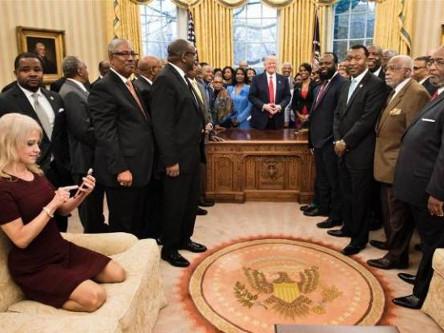
Black folks with nothing better to do were up in arms for a day about Kellyanne Conway’s feet buried in the Oval Office sofa messing with her phone while the presidents and chancellors of historically black colleges and universities crowded around Donald Trump’s desk. Some others have written about Betsy DeVos’s note on HBCUs, which revealed her stunning and self-serving ignorance of their history and origin. But pointing out how disrespectful or stupid key members of the Trump administration is partisan BS that won’t not save a single college education, let alone remedy the desperate situation of our historically black colleges and universities.

Right now, the heads of HBCUs have an historic opportunity to save their institutions by stirring up a movement from below for free tuition for HBCUs and for all public colleges and universities, for loan forgiveness for students at public universities, interest reductions for all students and for getting the federal government out of the student loan business.

Free college tuition is not an impractical pie in the sky. Germany does it. France does it. Norway and a dozen other countries do it. State universities in California and Louisiana did it for decades in the 20th century. It was a cornerstone demand of Bernie Sanders’ presidential campaign that earned him millions of votes. Free college education is what modern human societies do when they recognize that education is a public good not a private privilege. A nominal tax on Wall Street and reallocation of federal funds that now go to student lenders would easily pay for free tuition.

HBCUs were founded with white philanthropy beginning in the 1860s because the newly freed black population urgently needed teachers and other professionals, and because white colleges rarely admitted black students. Black student access was still being litigated in the US nine decades later, and to this day HBCUs produce a far greater percentage of highly competent black college grads than other institutions.

But the leaders of our HBCUs have largely failed to envision ways to fund their institutions outside of white philanthropy and occasional special government funding directed exclusively at them. The United Negro College Fund has even accepted Koch Brothers money with many nasty strings attached. It’s time to stop digging that hole deeper.

There are historic currents in motion right now. Millions of college grads, not just black ones, are crushed by unpayable student debt and lack of opportunities and they have proven receptive to the idea of free college tuition. It’s a movement waiting to be galvanized. The Trump administration won’t much like it, any more than Hillary did. But free college tuition for HBCUs and public institutions is something that can be accomplished in a decade or so of agitation and struggle. If our HBCU college presidents are truly leaders and not followers, this is the current they can tap into.

Of course the common wisdom is that nobody is more conservative than a black college president. It’s a stereotype some of them will have to violate to save their institutions, and to save the very idea of education as a public good not a private privilege. If the first black president did not save HBCUs, nothing Donald Trump is willing to give out will do the trick either. It’s time to really bargain, to demand what is not being offered. And if our historically black college presidents lack the political vision and intestinal fortitude to do it, maybe we need to start this movement without them.

a repost: Modern-Day Slavery? In Italy, the Government and Mafia Seek to Exploit African Migrant Labor

Posted on AtlantaBlackstar (click link for original)


The Italian government is considering a new policy that may force African migrants to perform free labor as a condition for asylum, underscoring the harsh reality — even modern-day enslavement — facing Black people in the European country.

Under a proposal introduced by Marco Minniti, Italy’s Interior Minister, thousands of Black migrants will be required to engage in “socially useful” work as their asylum claims are processed, The Times reported. The plan also would expedite the expulsions of economic migrants.

Last year, a record 181,000 migrants arrived in Italy via the Mediterranean Sea, and between January and October of last year, nearly 100,000 Black people, mostly from sub-Saharan Africa, applied for asylum. They live in crowded migrant centers and are allowed to work while they wait for their applications to process, typically for pennies in the fields. Italy has attracted migrants from all over, Eastern Europeans as well, due to the agriculture industry and the conditions they face at home. For Africans, Southern Italy has been a popular destination due to its proximity to the North African coast.

Some towns already ask refugees to perform “community service” in the form of street sweeping and cleaning parks and gardens, according to The Telegraph. “It allows people to get to know the foreigners and understand they are not just people you see on street corners,” said Luca Menesini, the mayor of Capannori in Tuscany. Up until now, those efforts have been voluntary. However, under the new government plan to be proposed by Minniti, labor would be mandatory, possibly as a requirement to receive a weekly living allowance.

According to a 2012 report from Amnesty International, Italy’s agricultural sector is highly reliant on migrant labor, which accounts for a quarter of the days worked and probably amounts to even more. Amnesty has criticized Italy for its criminalization of undocumented migrants, which it says allows this labor exploitation to thrive. The report also found that exploitation of migrant labor is widespread, particularly in Southern Italy. As was reported by the American Sociological Association.

Southern Italian agriculture is known for low wages, where farm workers who harvest tomatoes are made to live in ghettos, shantytowns and abandoned houses. According to Amnesty, these migrants, who are paid as little as €25 a day, ($27) “live in derelict buildings and makeshift shelters without running water, electricity or heating.” Further, 86 percent of workers do not have an employment contract and are paid under the table, according to the Italian aid group Doctors for Human Rights. “We were working from 6 in the morning to 6 in the evening, every day of the week, for 20 euros a day,” ($21) said Kojo, a migrant worker from Togo, in the Amnesty report. “We could not take breaks, not even for eating. We used to eat the oranges on the trees.”

The exploitation is not limited to agriculture but extends also to construction, where gangs and mafia-type criminal organizations maintain an oppressive contract-labor system that has become known as caporalato. Though illegal, the practice is common. Italian trade unions estimate that between 300,000 and 400,000 mostly African laborers are subjected to caporalato conditions, according to AFP. Further, Amnesty notes that nonpayment of wages is common, and the Italian justice system has failed to protect the victims of these labor abuses.

The abuse of African migrants also extends to children. The UN refugee agency found that nearly 26,000 unaccompanied minors came to Italy last year, more than twice the number from 2015, The Telegraph reported. Most were from Eritrea, Nigeria, Gambia and Egypt, and are especially susceptible to abuse and exploitation. Many are forced into prostitution.

In addition, African asylum seekers are subjected to deplorable living conditions in the detention facilities. According to The Local, protests broke out in the Cona migrant center in the Veneto region of Italy following the death of a 25-year-old woman named Sandrine Bakayoko, an Ivory Coast native, from a blood clot on January 4. Workers at the facility reportedly waited several hours before calling an ambulance. Asylum seekers reportedly cut the electricity to the facility and set fire to furniture and other items. Meanwhile, 25 staff members barricaded themselves inside a room overnight, according to The Local.

Members of parliament who visited the center last November denounced the “serious structural deficiencies” they witnessed. One MP condemned the poor living conditions, including lack of water and light, calling the facility a “ticking time bomb.” More than 1,400 people were housed in an area meant for only 15 people.

Italy is now using the revolt as grounds to speed up the deportations of Africans. “We have saved many lives, but we cannot accept rule-breaking. We need to speed up deportations,” Italian Foreign Minister Angelino Alfano said in an interview with La Stampa daily.

“When I’m in government, there will be mass expulsions, center closures and the Navy ships will send people back after saving them,” far-right leader Matteo Salvini of the Northern League wrote on Facebook. “Enough! 2017 will be the year of sending them back.”

Why do the Africans come in the first place? Thousands are crossing the Mediterranean to Europe through Libya, often risking their lives, in order to find a better life. The toppling of Libyan leader Muammar Gaddafi created a power vacuum, rendering the country’s 1,100-mile coastline an open border and allowing gangs to smuggle migrants in overcrowded sea vessels, as MSNBC reported. Unlike Syrian refugees who are fleeing a catastrophic civil war, those who arrive in Italy from sub-Saharan Africa are leaving due to extreme economic deprivation, oppressive governments and terrorist groups.

Eritrea, for example, accounted for the largest number of migrants at 40,000 in 2015. The country is not at war but rather is known for having one of the worst human rights records in the world. It was included in the 12 “Worst of the Worst” nations for civil liberties and political rights by the 2015 Freedom House report. For those living in these countries, stories on social media of family members making it to Europe and even sending remittances back home create a sense of hope and encourage people to continue to make the treacherous journey that has cost thousands of lives.

For those living in these countries, stories on social media of family members making it to Europe and even sending remittances back home create a sense of hope and encourage people to continue to make the treacherous journey that has cost thousands of lives.

Meanwhile, these types of deplorable conditions and attitudes against African migrants and asylum seekers are increasing across Europe, causing Africans to face a bitter new wave of exploitation, criminalization and modern-day enslavement in a country that does not want them.

a repost: A Community Under Attack: How the Gullah/Geechee Nations Are Fighting Against Culture Vultures Keen on Destroying Them

The Gullah/Geechee Nation, whose population spans the southern Atlantic coastline in rural communities, is the only group of African-Americans that have retained West African culture as it was when Africans were first brought to the United States as slaves.

Unfortunately for people of Gullah/Geechee descent, however, the deep satisfaction of holding on to their rich heritage and direct African connection has come with twice as much despair.


In the past few decades, both the Gullah/Geechee’s culture and their land have become a bull’s-eye target for gentrifiers, real estate developers, large corporate entities and culture vultures alike. To make matters worse, Gullah/Geechee coastline communities also are being adversely affected by climate-change issues such as hurricanes and rising sea levels. Community leaders have been working tirelessly to safeguard what remains of their land and culture from these disasters — both natural and man-made — but it is proving to be an uphill battle on all fronts.

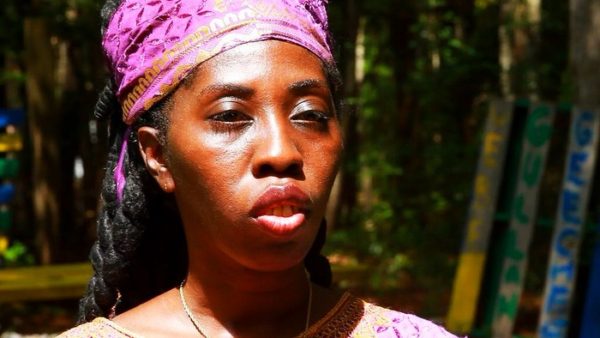
I had the opportunity to speak with the nation’s Matriarch, Marquetta Goodwine — also known as “Queen Quet”  — on how the Gullah/Geechee are being impacted by all of these issues, as well as the fallout from the recent Revelry Brewing Co. scandal.

First, Queen Quet made it clear that when referencing the nation, always cite it as “Gullah/Geechee.” She said using only “Gullah” or “Geechee” or using “Gullah Geechee” without the slash negates the solidarity of the group as a whole. This is one of the reasons members of the Gullah/Geechee community consider the Gullah Geechee Cultural Heritage Corridor a “mock” organization of academics and politicians, many of whom have no blood ties to the Gullah/Geechee. There also is empirical evidence that this organization has been the catalyst for some troubles that the Gullah/Geechee face, such as the Revelry Brewing Co. scandal.

In late September of this year, a Charleston, S.C., company, Revelry Brewing Co., came under fire from the Gullah/Geechee nation for its “Gullah Creme Ale” beer. Unbeknownst to nation, the Gullah Geechee Cultural Heritage Corridor had given the company permission to use the name in exchange for passing out their brochures.

Dr. J. Herman Blake, executive director of the Gullah Geechee Cultural Heritage Corridor, had this to say in response to criticism of the group’s actions: “The word ‘Gullah’ is not owned by anybody.”

Blake met with Revelry Brew Co. before the product was finalized and claimed the company had good intentions, according to CBS News Charleston.

Though he is the executive director of the GGCHC, Blake is originally from Mount Vernon, New York, and, according to many academic sources, only began studying the Gullah/Geechee in college. He also has no Gullah/Geechee ancestry. This holds true for other executive members of the organization, as well. Most of them are transplants and not of Gullah/Geechee descent, according to the website. That fact confirms at least some of the claims and suspicions about the organization made by Gullah/Geechee community members.

Revelry’s website says that proceeds from Gullah Creme Ale will go toward the Gullah Geechee Cultural Heritage Corridor and other awareness initiatives, but, according to Gullah/Geechee members, the initiative has not benefited their particular community in any way.

Queen Quet said Revelry Brewing Co. officials wrote her a letter in which they apologized and expressed regret for working with the GGCHC. However, they did not rebrand the beer, as Queen Quet and the Gullah/Geechee nation’s Wisdom Circle Council of Elders had advised.

Heirs’ Property and Heritage Loss

The beer scandal, however, pales in comparison to the ongoing deluge of legal battles the Gullah/Geechee have faced concerning what is known as “heirs’ property,” which is mostly rural land that was bought during the Civil War and passed down through the years, often with no formal documentation like a will or deed.

South Carolina lawmakers claim that heirs’ property owners were given 10 years to resolve the issues and further their ownership, but most of the Gullah/Geechee were either uninformed, unable to financially afford the legal counsel or just flat-out distrustful of the legal system itself. Although Gullah/Geechee descendants without documentation can buy their land, it must go up for auction first and when it does, a third party can step in and buy the heirs’ interest. This is known as a “land grab” and many of the Gullah/Geechee have lost acres of heirs’ property for less than $1,000 through this process.

In lieu of this heirs’ property issue, many bandits have been able to take advantage of the forever-expanding loopholes of heirs’ property ownership, according to the Center for Heirs’ Property.

Hilton Head Island real estate developer Adolf D. Brown is the founder of Heirsproperty.com, which purports to help people with heirs’ property matters “realize its full potential,” according to the website. According to VICE, his dealings in the Gullah/Geechee communities aren’t living up to those promises. Brown moved to South Carolina from New York City after finding out that he had inherited heirs’ property from his mother’s side of the family. Since then, he has helped to make way for gentrification and development in the area.

In his defense, Brown told VICE News,“The world changes. You have to be progressive or you will get run over.” He also told VICE that he felt the only real solution for the Gullah/Geechee communities was for them to develop the land.

Larger entities also have used heirs’ property loopholes to force individual heirs to sell their shares, since each family member usually has a share and an heirs’ property could be divided into tens or hundreds of shares, based upon family size. According to the Center for Heirs’ Property, many of the Gullah/Geechee rely too much on legal morality and goodwill and come into the center believing they are the rightful owners of the property when, in reality, they’re not. Resolving these legal issues can take months, sometimes years, to accomplish, according to the center.

The Closing of Gullah/Geechee Waterways

Khetnu Nefer, a Johns Island, S.C., native, has witnessed firsthand the slow but relentless destruction of her community. Her grandmother was the community herbalist, which inspired Nefer to start her own wellness practice, A Soulful Touch.

“We were solely reliant upon the land,” she recalled. She admitted she often reminisces about her youth, when her Gullah/Geechee family had full access to the waterways that are now being used as resorts. She says they were able to feed their entire community for months at a time with the food they caught.

According to Nefer, the gentrification and development of South Carolina’s Sea Island region is so devastating that people are now forced to travel more than 5 miles to the nearest supermarket. She lamented that many of the fishing areas are now gated waterfront properties or golf courses.

Nefer despaired that so very many people have been displaced and that real estate developers have knowingly built properties over graveyards that contain both enslaved people and their Gullah/Geechee descendants.

How the Gullah/Geechee Are Planning to Move Forward

The Gullah/Geechee Sea Island Coalition has been working tirelessly for over 20 years to preserve its West African heritage by any means necessary. The coalition’s head, Queen Quet has been traveling the world to educate about Gullah/Geechee culture and has attended many United Nations conferences addressing their concerns, as well. She recently attended a Human Rights UN conference in Marrakech, Morocco, that addressed the climate change issues in South Carolina’s Low Country.

In the meantime, she encourages everyone to support authentic communities, tours and activities to know the true wonder that is the Gullah/Geechee experience. (Community members have expressed outrage that the GGCHC and other similar organizations hire Black Americans who aren’t a part of the Gullah/Geechee nation to perform as if they are members when they host events and tourism campaigns.)

Queen Quet: “We da binya an ain da gwine nowhey!”

a repost: House Passes Bill Allowing Government to Microchip Citizens With “Mental Disabilities”

Article posted on Activist Post (click link for original)


Is this shit serious??? I may have to turn my “U.S. citizenship” verrryyy soon (I’ve been contemplating that anyways.) I be damned if I ever have a microchip placed on me. Wake up, fam!


microchip-true-activist

By Whitney Webb

Six years ago, NBC Nightly News boldly predicted that all Americans would be fitted with RFID microchips by the year 2017. Though, at the time, NBC’s prediction seemed far-fetched, the House recently passed a bill that would bring a microchipped populace closer to reality before year’s end.

Last Thursday, the House passed HR 4919, also known as Kevin and Avonte’s Law, which would allow the US attorney general to award grants to law enforcement for the creation and operation of “locative tracking technology programs.” Though the program’s mission is to find “individuals with forms of dementia or children with developmental disabilities who have wandered from safe environments,” it provides no restriction on the tracking program’s inclusion of other individuals. The bill would also require the attorney general to work with the secretary of health and human services and unnamed health organizations to establish the “best practices” for the use of tracking devices.

Those in support of the legislation maintain that such programs could prevent tragedies where those with mental or cognitive disabilities wandered into dangerous circumstances. Yet, others have called these good intentions a “Trojan horse” for the expansion of a North American police state as the bill’s language could be very broadly interpreted.

“While this initiative may have noble intentions, ‘small and temporary’ programs in the name of safety and security often evolve into permanent and enlarged bureaucracies that infringe on the American people’s freedoms. That is exactly what we have here. A safety problem exists for people with Alzheimer’s, autism and other mental health issues, so the fix, we are told, is to have the Department of Justice, start a tracking program so we can use some device or method to track these individuals 24/7,” Representative Louie Gohmert (R-TX) said in a floor speech opposing the bill.

Gohmert’s assessment is spot-on. Giving local police the authority to decide who is microchipped and who is not based on their mental soundness is a recipe for disaster. Though the bill specifically mentions those with Alzheimer’s and autism, how long before these tracking programs are extended to those with ADHD and bipolar disorder, among other officially recognized disorders.

Even the dislike of authority is considered a mental disorder known as “Oppositional Defiant Disorder,” which could also warrant microchipping in the future. If these programs expand unchecked, how long will it be before all Americans are told that mass microchipping is necessary so that law enforcement and the government can better “protect” them?

Many Americans have been content to trade their liberties for increased “security” in the post-9/11 world, particularly when the State uses these talking points. Yet, as Benjamin Franklin once said, “those who surrender freedom for security will not have, nor do they deserve, either one.”

a repost: The Psychological Dimensions of Plantation Politics

Article posted on ThyBlackman.com (click link for original)


plantation-politics


Here’s a secret the white establishment will never tell you in the public: So-called American Negroes who attack and disparage their own, in order to seek social, political or economic favor, are regarded as nothing more than tools to be wielded by their handlers. By default, Blacks who eagerly disgrace themselves, out of hunger for a perceived benefit by doing so, have automatically disqualified themselves from such benefits, both morally and ethically. Not only because they have sold their souls for so cheap a price, but also because power does not respect what it bends, Black public figures claiming leadership, at the expense of truth, will never be respected by those to whom they have submitted and compromised their principles.

It doesn’t take much of an imagination to understand the competitive nature of human beings when faced with scarcity. When access to the mechanisms for survival are at stake, and cynically regulated by external forces, the once proud and principled may now find themselves reduced to the status of a beggar, and the once faithful public servant, pimped out like a political prostitute, will ultimately find himself with neither friend nor helper.

With that said, part of white elite’s century’s long war on Black self-determination, Black liberation, and Black personhood, has been a deliberate effort to create the non-threatening and defeated Black male image as a balm to placate white fears. Today, white America’s “approved” image of the Black man continues to be the docile, obedient and emasculated caricature of a faithful retainer and longsuffering plantation loyalist.

Such unrealistic, “Gone With the Wind,” interpretations of Black personhood are not only an insult to the memory of our enslaved ancestors, but also an assault upon the legacy of the Black struggle in the United States. Should those who endured the terror of lynching, the humiliation of economic exploitation and the intentional undermining of Black progress now become deferential to the white liberal, as they once were to the white conservative? Emphatically no!

Although the end of Black enslavement allegedly came with the December 6, 1865 ratification of the 13th Amendment to the US Constitution, 151 years later, among both the Jews and the Gentiles of the white elite, a mentality of proprietorship still exists regarding the lives of Black people in American politics. While this is perhaps understandable, that the white elite prefer to not lose the power they have gained as masters over the land they conquered, what is indeed unfortunate is the eager willingness of some in Black leadership to collaborate as plantation politicians.

Trauma and the of conditioning Black leaders

Defined as a noun, trauma means: “a deeply distressing or disturbing experience.” Within this context, many examples of extreme trauma against Black Americans have been officially documented by historians and/or passed on as oral histories among Black families. As a society’s culture is subsequently shaped by geographic, social and psychological factors, the behaviors and interactions of a people among themselves and others is likewise influenced by the same.

Taking into account the 300 plus years history related to coercive motivation, or motivation by fear, on plantations, underground mines, and the slave breeding-farms of pre-Civil War America, life for millions of enslaved Black men, women and children was to toil under the systematic horrors of violence and terror on a daily basis. An environment where Blacks were legislatively reduced to the status of beasts of the field, the lash, sexual violence and the destruction of the family unit were all used as tools for control. Particularly in the wake of the Haitian Revolution between 1791 and 1804, that gave birth to the world’s first Black republic, the means and methods of suppressing Black resistance became more creative and brutal.

For enslaved American Blacks, the social contract in the United States demanded absolute obedience, recognition of the “inherent superiority of whites,” or death and other punitive measures as the consequence for refusing to comply. On the other hand, for Whites, the rule was for Blacks to obey them without question and to recognize the inherent inferiority of their “less than fully human chattel,” who had no legal or political rights whatsoever.

After the Compromise of February 26, 1877, which ended the deadlock between Samuel J. Tilden and Rutherford B. Hayes in the disputed 1876 elections for the US presidency, federal troops occupying southern states were removed and the protections previously afforded the formerly enslaved Black populations were withdrawn. Opening the doors to a second wave of terrorism, rape, lynching and murder, Blacks were driven from political office, imprisoned in large numbers and returned to the plantations as share-croppers relegated to peonage by racism and heavily weighted state’s rights legislation.

As the 19th century gave way to the 20th century, the psychology of fear continued to afflict America’s Black populace as many fled north and west seeking refuge. Only to find the cruelty of the white Southerner replaced by the exploitation and deception of the white Northerner, the new social contract of go-along-to-get-along politics and non-economic liberalism, as established and advocated by the white founders of the NAACP, other philanthropic whites and the federal government itself, began to dismantle the concept of industry, entrepreneurship, land ownership and nationhood among the Black masses.

Today, like in slavery and Jim Crow yesterday, strong and unapologetic Black leadership is once again feared, condemned and dismissed, and like the house Negro seeking to secure a more comfortable position within the established order, or Judas and his 30 pieces of silver, there is no depth to which the plantation politician will not stoop to seek nearness, favor, and recognition by his modern handlers. Instead of hoping for a good master to inherit the plantation, over a bad master that inherits the plantation, Black leadership must now recognize that day of nation building has arrived and that era of plantation politics is over.

Staff Writer; William P. Muhammad

a repost: Big Government – The Reason You Need a License to Braid Hair

Article posted on Waking Times (click link for original)


African-Braids-3.png

Isaac Davis, Staff Writer

We live in a time when big government is such an ingrained part of our lives that it’s difficult for most people to comprehend what freedom even is. Bureaucracy has inserted itself into pretty much every nook and cranny of our lives, and today’s generations find it absolutely normal to pay taxes and fees for every little experience we have.

The spider web of government control can is seen in the system of state privileges we know as regulations, licenses and permits. Our lives must conform to these rules under penalty of law, which is always backed up by state violence. It wasn’t always this way.

Award-winning author Ursula K. Le Guin recently said in a National Book Awards speech:

“We will need writers who can remember freedom. Poets, visionaries—the realists of a larger reality.”

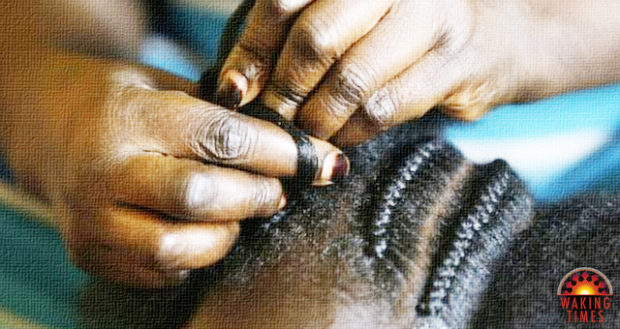
This is too true, for nowadays, even small and relatively insignificant moments of human interaction are supervised by big brother and the nanny state. Case in point, the centuries old tradition and skill of African hair braiding, which now an officially state-sanctioned activity for anyone seeking to offer their expertise in this area to someone who is willing to pay for this service.

Recently, a U.S District Court Judge in Missouri ruled that in order to offer this service to other human beings you must be a licensed cosmetologist.

To be a licensed cosmetologist in Missouri you must complete 1500 hours of costly training, in which you learn absolutely nothing about African style hair braiding, a technique which uses no chemicals and is of zero risk to the stylist or to the customer.

“In other words, the licensing requirement is an arbitrary and unnecessary obstacle that prevents would-be African-style hair-braiders from earning a living in a totally harmless occupation. By contrast, to become a licensed emergency medical technician in Missouri, a job that legitimately impacts public health and safety, it requires just 100 hours of education.” [Source]

Essentially saying that this rule makes reasonable sense by simple virtue of the fact that it already is a government regulation, Judge John M. Bodenhausen issued an opinion on this important matter:

““This case,” Judge Bodenhausen declared, “illustrates the great deference that federal courts must show to government regulations under the rational basis standard.”

The rational-basis standard, also known as the rational-basis test, has its origins in the great vogue for judicial deference that swept the courts during the Progressive and New Deal periods. … So long as “the laws passed are seen to have a reasonable relation to a proper legislative purpose,” [the test said] the courts should defer to that regulation and assume that “the requirements of due process are satisfied.” Put differently, if lawmakers and government lawyers claim to have a “rational basis” for the regulation, the courts are supposed to whip out the rubber stamp.” [Source]

Regulations Gone Wild

People, especially statists and those suffering from stockholm syndrome, love to advocate for paying taxes, yet most people have almost no idea how much of their income goes to support government and its ever-growing bureaucracy. In addition to the obvious taxes such as the income tax (which is arguably unconstitutional, and conveniently garnished from our wages before we receive paychecks), state income tax, and sales taxes, there are literally dozens, if not hundreds of licensing schemes, required permits, entrance fees and so on that serve the same purpose as a tax.

This does not even mention the greatest tax of all, the invisible inflation tax‘ which continuously erodes the value of any money we have, thus undermining the value of our labor.

list-of-taxes-1

Final Thoughts

Why should someone be required by law to attend hundreds of hours of school and pay for a certification and license to earn a living doing something as simple and natural as braiding hair?

This type of thing will only get worse as we move headlong into a cashless society, where individuals have no means of transacting with one another without involving the government and third party agencies. Who among us will be around to remember the days of true freedom?


a repost: Fuck Work: What if jobs are not the solution but the problem? — Tales from the Conspiratum

Economists believe in full employment. Americans think that work builds character. But what if jobs aren’t working anymore? Source: What if jobs are not the solution but the problem? | Aeon Essays aeon.co James Livingston Pprofessor of history at Rutgers University in New York. He is the author of many books, the latest being No More Work: […]

via Fuck Work: What if jobs are not the solution but the problem? — Tales from the Conspiratum

a repost: Obama’s Departure is One Reason to Feel Optimism for Trump’s Arrival

haiphong_byeobama

Article posted on Black Agenda Report (click here for original)

by Danny Haiphong

“Only gridlock saved Social Security and Medicare from being privatized during his Presidency.”

Thousands have taken to the streets across the country to protest Donald Trump’s victory in the 2016 elections. The protests have mainly centered on Trump’s racism, sexism, and anti-LGBTQ rhetoric spewed during his campaign. Protesters have yet to wrestle with Trump’s positions on foreign policy and trade that made him a pariah to the majority of the ruling class. The struggle against capitalism and imperialism in the US remains immature even in the midst of positive growth in the movement against police brutality and racism in recent years. While Trump’s overt bigotry gives cause for protest, there is one benefit of the Trump moment that should not be understated. That benefit is the much needed conclusion of the Obama era.

Democrats across the US are in a state of mourning over the departure of Obama. Democrats heralded Obama as the quintessential professional and consummate politician. His celebrity was peppered by the appearance of intelligence and rationality in the face of so-called Republican “obstructionism.” Obama’s rule was advertised as a victory for the Black Freedom movement. His Administration possessed a vast marketing apparatus that defended him as the lesser-evil alternative to the racist vitriol of the White Man’s Republican Party.

“Obama’s rule was advertised as a victory for the Black Freedom movement.”

Black Agenda Report was one of the few on the left that warned of the dangers of Obama in 2008. Once elected, Obama became virtually untouchable. Criticisms of his policies were condemned as racist and insensitive to the needs of Black America. The needs of Black America and the entire left for that matter suddenly became aligned with whatever Obama did. Obama moved forward to protect the banks, escalate war, and erect the largest national security state ever assembled. He instantly became the austerity President, waging a war of privatization on public education with the expressed plans to do the same to Social Security. Only gridlock saved Social Security and Medicare from being privatized during his Presidency.

The full scope of Obama’s legacy has been discussed in earlier issues and will not be analyzed here. What is important is that the left will no longer have Obama to defend its alignment with US imperialism. No longer will the left be able to fall back on the first Black President to sanitize his record. Obama’s immigration policies deported nearly 3 million undocumented immigrants with little protest. His Administration painted itself as a friend of women and LGBTQ identified people despite the fact that his policy of proxy and drone warfare murdered tens of thousands of women and children in Yemen, Syria, Libya, and Honduras.

“The left will no longer have Obama to defend its alignment with US imperialism.”

Obama was able to conduct a greater assault on oppressed people than the prior Bush Administration, making him the most effective evil Wall Street could buy. Obama took over as President in a period where the US was mired in two unpopular occupations abroad and an economic crisis at home. These conditions prompted the ruling class to choose Obama as the required form of counterinsurgency necessary to crush resistance before it started. After making a number of promises to end “dumb wars” and institute a single payer healthcare system, Obama entered office ready to the bidding of the ruling class. Eight years later, Black America is in a worse condition than before, working class people as a whole have lost ground to a low-wage economy, and the world is closer to a World War III scenario than at any point prior.

The massive protests to Trump’s victory are in part a release of popular energy brought on by the departure of Obama. Unrest began with the formation of the Occupy Wall Street and Black Lives Matter movements. However, neither of these movements articulated Obama’s role in creating the conditions for social insurgency and movement. The 2016 elections changed the landscape dramatically. The Sanders and Trump campaigns set millions into motion in protest of the two-party establishment. Obama’s departure will be another breath of fresh air into the internal rot of the imperialist system. It is thus important to ensure that the protests against Trump are not allowed to be channeled back into the Democratic Party graveyard.

“After making a number of promises to end “dumb wars” and institute a single payer healthcare system, Obama entered office ready to the bidding of the ruling class.”

Obama will leave Trump a set of conditions that he cannot possibly maintain without popular unrest. Obama departs office only inches from World War III with Russia and China. Poverty and wealth inequality worsened under his administration. Not even clever distortions of statistics could hide the large number of workers currently unemployed or underemployed in the low-wage economy. School closures, food stamp cuts, and bank bailouts have unleashed the neo-liberal wasteland that Trump spoke about in his campaign.

It appears early on that the left has rejected the viability of Trump’s calls to regulate the banks and renegotiate trade deals in favor of working people. Many have ignored Trump’s “populist” rhetoric and have focused all the energy of resistance on his white supremacist proposals to ban Muslims and deport millions of undocumented people. However, this moment is just as much about Obama’s departure as it is Trump’s arrival. The US imperialist system is facing multiple crises that relate directly back to the economic stagnation of global capitalism. It would be a mistake not to demand Trump stay true to his “populism” just as it was a mistake when the left failed to demand Obama stay true to his promises. Whatever the case, the departure of Obama is a welcome site, and the left should use the room afforded by it to wage an intensified effort to build the organizational basis for social revolution in our time.

Danny Haiphong is an Asian activist and political analyst in the Boston area. He can be reached at wakeupriseup1990@gmail.com