The Origins of Santa Claus(Satan Claws) — Kushite Kingdom

This grotesque-looking creature is the real spirit of Santa Claus unmasked, and he is a demon spirit known in Germany as “Krampus.” This demon (according to folklore), is supposed to be the evil side-kick of Santa Claus himself or his “alter ego.” Krampus’ role is to scare children into being good. All year long children are taught that if they […]

via The Origins of Santa Claus(Satan Claws) — Kushite Kingdom

a repost: The Dark Side of Christmas: The Impact on Sweatshops

Article posted on New Internationalist Blog (click link for original)

07-12-2016-xmas-590.jpg [Related Image]

By Amoge Ukaegbu

It’s not elves, but underpaid Chinese workers working around the clock that will enable you to unwrap your presents, writes Amoge Ukaegbu.

Television screens are filled with Christmas advertising, propagating the apparent need to buy something, and above all electronics, apparel, toys – the most popular Christmas gifts. The festive countdown is well underway.

Three points specifically define the ‘festive’ season: advertisements and commercialisation, shopping and spending, and increased revenue for the Western economy. Data from Capgemini and new in the UK’s industry association for e-retail, the Interactive Media in Retail Group (IMRG), reveal that in 2015, British retailers took in over £24 billion (roughly $30 billion) during the Christmas period alone, more than the entire GDP of countries like Nepal or Honduras. This spending craze is linked with advertisement and the increasing consumerism promoted by mass-, and now social media.

US discount events, hyperbolically labelled ‘Black Friday’ and Cyber Monday’, have been transposed across Europe, with the periods before Christmas and between Christmas and New Year’s Day becoming the busiest spending times in our annual calendars.

Christmas consumerism undoubtedly fuels sweatshop labour, but to place blame on consumers is misguided, landing us in the old trap of blaming individuals for a problem ultimately systemic

Over last year’s discount weekend, British consumers spent a whopping £3.3 billion ($4.16 billion). Masses took to the internet to buy, spending £968 million on Cyber Monday alone, causing the websites of large UK retailers, including Argos, Tesco and John Lewis, to crash. Struggling to cope with the surge of online purchased goods, courier firms imposed daily caps on the number of orders accepted from online retailers.

Real world elves

The imagery of cheerful elves making gifts in Santa’s workshop is far from the reality, and contributes to hide from our sight the conditions of workers in the factories that make what we so enthusiastically buy. Some 80 per cent of the world’s toys are manufactured in China, with just about every popular children’s toy bearing a ‘made in China’ label on its underbelly. The harsh reality is that long before Christmas songs are blasting from every department store in the West, these ‘elves’ who are in fact, real, living Chinese workers, are forced to work around the clock to churn out millions of products, ready for arrival in western stores for the festive season.

In the UK alone, Chinese toy factories serve a market worth of £2.8 billion ($3.53 billion) a year, yet the big brands for which these products are made – including Lego and Disney – pay factories only a fraction of the shop price, with the social and environmental costs not reflected in the price of these toys. Exploitation is the only term to adequately describe this phenomenon.

Of course, sweatshop labour is not limited to toys, also including electronics and apparel. Topping many Christmas wish-lists are Apple, Amazon and Samsung gadgets, companies all found to be complicit in worker rights violations within their supply chains, in the company of notable high street brands such as Nike and Topshop. Samsung have come under criticism for exposing their workers to toxic chemicals and for their ‘no union’ policy in Asia, and Apple for working conditions that have forced workers to suicide. Conflict minerals from the Democratic Republic of Congo end up in more than 50 per cent of all battery powered equipment.

To cope with this, workers are forced to endure inhumane treatment, working excessively long hours for unethically low wages, in unsafe conditions, facing verbal, and often physical or sexual abuse. All in complete violation of their fundamental human rights.

This is the gruelling monotonous life endured by millions of factory workers across the world, to meet the increased consumer demand of the Christmas shopping period.

A call to action

Christmas consumerism undoubtedly fuels sweatshop labour, but to place blame on consumers is misguided, landing us in the old trap of blaming individuals for a problem ultimately systemic. For many consumers facing stagnating wages and increasing product prices, the mainstream goods are the most, if not only, affordable options. Products like the Fairphone are expensive, and no such alternatives exist for the common laptop or desktop.

Arguments that sweatshops increase gender empowerment for women who work in factories, or increase the wealth of individuals previously impoverished, fail to accept one harsh reality: in some places sweatshop employment is akin to slavery. Benefiting while wronging is exploitation at its core.

On the other hand, to abandon the global industry in favour of only ‘buying local’ or accepting the existence of sweatshops as an ‘escalator out of poverty’, is to abandon workers in the Global South. Many workers have been made to work in sweatshops because they have no alternatives for making a living.

It is the structure that leaves workers with poor ‘choices’, if any, that must be questioned.

It is unacceptable that a century after 146 died perished in the 1911 Triangle Shirtwaist Factory fire in New York City, after which public outcry brought US workers basic rights and protections, we are still advocating for the same basic rights and protections

Genuine worker participation remains the key for making real progress in the fight to abolish sweatshops in supply chains. As consumers, the best approach to the injustice of sweatshops is to support the unionisation of workers, highlight the resistance from workers themselves, and provide opportunities for their voices to be heard, supporting campaigns for better wages and conditions, despite their often slow and incremental progress.

Critics argue that campaigns for higher standards often translate to factory closures, but there are two reasons to doubt this claim. Firstly, the gap in pay and conditions between the Global South and the Global North is so large that significant improvements can be made without removing the incentive for companies to remain invested in the Global South. Secondly, in fact major progress has already been made by labour activists challenging the status quo, yielding promising results.

Bangladesh is an important example. The disturbing collapse of the Rana Plaza building in 2013 killed over a thousand workers. After that, over 200 apparel brands (such as Adidas and Primark), retailers and importers (from over 20 countries across four continents) have signed up to the Accord on Fire and Building Safety in Bangladesh. A total of 1,592 factories are now covered under the Accord inspection programme.

In addition, although Bangladesh still has the lowest minimum wage in the world, this has increased significantly from $38 per month to $68. This change can be attributed to labour unrest and public protest.

Bangladesh remains very much open for business. Undoubtedly, this is a reason more and more workers around the globe are coming out in their thousands, braving unemployment, reprisals, and police brutality, to press for better pay and conditions.

Despite their courage, sweatshop labour persists. We need to show solidarity. It is unacceptable that a century after 146 workers perished in the 1911 Triangle Shirtwaist Factory fire in New York City, after which public outcry brought US workers basic rights and protections, we are still advocating for the same basic rights and protections in the Global South.

Current laws prohibiting sweatshop labour within countries are largely ineffective, inadequately enforced and are too often circumvented or ignored. The absence of effective policy action and legal frameworks to ensure worker rights, together with the lack of sanctions against these abuses, represents state complicity and neglect of the UN Declaration of Human Rights. This applies to states in which manufacturing occurs, and states that benefit from the imports. So, governments and businesses are jointly to blame. The persistence of sweatshops directly reflects the failure of the collective global responsibility to protect the human rights of the world’s most vulnerable people.

Eradicating sweatshop labour is daunting, but possible. It requires political will, pro-active multifaceted approaches at the community, national and international levels , and relentless pressure from workers, stakeholders, governments and consumers.

In a complex global economy, with supply chain webs, transparency is the first step to accountability. By supporting campaigns by groups like Maquila Solidarity Network, the Worker Rights Consortium, Electronics Watch and SweatFree communities, consumers can show solidarity with those on the frontlines fighting to ensure that the gifts under our Christmas trees are sweatshop free.



a repost: The Downsides Of Working For Bigots In Corporate America.

Article posted on ThyBlackman.com (click link for original)


This brother did a good job listing the reasons why the corporate environment is killing us spiritually and physically and of course I’ve dibbled and dabbled with it in the past myself. Fam, we need to exit stage left on this foolishness with the quickness, in huge droves. There’s no legacy, culture, nor tradition being passed down through our continued participation in another man’s (Massa’s!)game. I’m serious on that one.

corporateblack.png


Many of us have an extreme mental illness of depending on bigots to give us jobs and opportunities because Many of us are economically vulnerable to mistreatment, discrimination, and disrespect by bigots in Corporate America. And the thought of even relying on them to take care of us and pay our bills is a very unhealthy way to live.

Too many of us are basically putting our kids in harm’s way by teaching them to be an economic slave for Corporate America instead of teaching them how to be an entrepreneur, investor, and being their own boss so that they won’t have to deal with bigots in Corporate America.

Intro: Here are the downsides of working for bigots in Corporate America.

1. Creates Tremendous Stress – It’s no secret that Corporate America is a modern day haven for bigotry, stress, and depression because the many black people that work in Corporate America have done what they were supposed to do, but they are very unhappy, stressed out, and depressed for several reasons.

1) getting up early in the morning and going to work for bigots everyday

2) coming back home after a long 12 hour day on the job and going to sleep

3) not being able to spend as much time with the people they love and care about

4) feeling that they have no other options to escape Corporate America and building their own business.

2. Bigotry – Most of us have experienced some form of bigotry during a particular period or are currently experiencing it right now. Many of us are told to endure the psychological abuse on the job because if we get out of line or even speaking truth by calling out bigotry, we get fired from Corporate America in most cases. Enduring so much bigotry from the bigots themselves on the job has caused so many of us to become stressed out, depressed, and angry to the point of always complaining whenever bigots direspect us in Corporate America and it’s really sad.

3. Unable To Spend Time With Family – One of the biggest downsides for working for bigots in Corporate America is that they don’t allow you to get much time off at all to spend with your family when they still want you to come and slave for them everyday on the economic plantation.

Example: There’s an older sister who says that her mother was dying and her corporate bosses refused to grant her time off to be with her mother at the hospital and they still wanted her to come to work despite her mother being in the hospital.

It’s a very scary feeling to know that your mom is on her hospital bed and bigots in Corporate America won’t even let you have time off to spend with her. I would’ve told those bigots “I Quit” if I was in her position so that I can not only be with my mother in the hospital, but also create different streams of income from multiple sources.

4. Various Forms Of Discrimination – There are more than several forms of discrimination that exists in Corporate America.

A) Wage Discrimination is when you get paid let’s say $7.50 an hour, but the corporate boss from the suburbs gets paid more than $15 an hour.

B) Hair discrimination is when the false standard of beauty (aka caucasoid woman) wears a certain hair style that is deemed “appropriate and professional“, but when a melanated queen wears a certain hairstyle like afros, curls, or even love, they are deemed “nappy, ugly, and unprofessional” and are often told to change their hairstyle to one that is “more appropriate” for Corporate America or they get fired for refusing to do so.

C) Hiring Only Certain Black Men – They are mostly comfortable with hiring a demasculinized black man than a intellectual strong black man because like Chris Rock said a long time ago “You’ll have a much easier time in Hollywood as a demasculinized black man than a straight black man” and this is true today because a demasculinized black man like Lee Daniels can get easy funding and opportunities for his garbage he wants to put out.

5. You Can Never Pass Down A Corporate Job To Your Kids And Grandkids – Many black people that work for Corporate America fail to truly understand that you can never pass that corporate job down to their kids and grandkids and like an O.G. once said back in the day “They’ll find a new guy next year“.

Example: I had watched a video today of a sista named Adeea Rogers revealing when she used to work at Eastern Carolina University back in the day, she remembered a sista had literally died on her job, she had died in her office and shortly after the sister died on that Monday, the university had posted the job that had died on and that is very scary.

The Conclusion – When you create your own business and bigots try to come in and move your furniture, you kick them out and that is a wonderful feeling to have your own business so that you won’t have to deal with bigots in Corporate America.

Staff Writer; Joe Davis

a repost: Homeless Activists Go Organic, Feed an Entire Shelter with Rooftop Garden


Very Inspiring.

Article posted on Waking Times (click link for original)


Steven Maxwell, Contributor
Waking Times

Every activist has read the increasing number of stories where homelessness is being criminalized, as if simply being homeless isn’t punishment enough. However, there is a rising tide among all walks of life that is beginning to view homelessness in a very different light.

As a sinking economy and the criminal actions of the banking elite are leading many middle class, stable families into abject poverty, it is becoming much easier to identify with the less fortunate the closer their plight appears to be.  Defenders of the homeless are becoming much more vocal now. We have seen some amazing examples recently of people moved to help those in need through programs such as an artist who paints and sells portraits of the homeless and gives them the profits; a former homeless man who gives back to the homeless by selling book reviews and buying food to share; or the inspiring story of a community organizer who used his own faith to connect with those from other faiths in a common cause of feeding those in need.

We are even seeing people of conscience openly defying oppressive laws to draw a line in the sand that says: if it becomes illegal to help one another on our own terms, we simply have no freedom left to celebrate.

Feeding the homeless has also gone from the concept of a “handout” of money to allow people to buy whatever meager sustenance they can find, to realizing that if people are going to have any chance of turning their financial situation around, they must be physically and mentally fit to do so. A key  cornerstone to building oneself back up again is nutrition … and if it’s “free” nutrition, then all the better!

An organization in Atlanta is calling themselves Task Force For the Homeless and should be highlighted for their message and their tactics to restore dignity and prosperity to those who have fallen on hard times. They have chosen to combine two essential approaches to reverse the conditions which afflict the homeless the most: not having access to healthy food, and not being able to connect with others who are working in structured way to engage in practical solutions.

Enter the organic community rooftop garden.

Residents of the homeless shelter are now engaged in community building while providing for themselves food that only costs what their own efforts naturally produce.

Instead of processed foods given through donation, their rooftop garden has 80 beds of the most diverse range of vegetables, fruits and herbs that can be produced on site.

Now, instead of waiting for their next meal, they have taken action to ensure that each and every day they are well fed and well nourished.

Best of all, this group of homeless has now gained something that goes beyond even the food itself – the skills required to produce, manage, distribute and plan for the future – a future which too often exists as minute-by-minute sacrifice instead of days of abundance.

Steven Maxwell writes for ActivistPost.com. This article may be shared in its entirety with author attribution and source link.

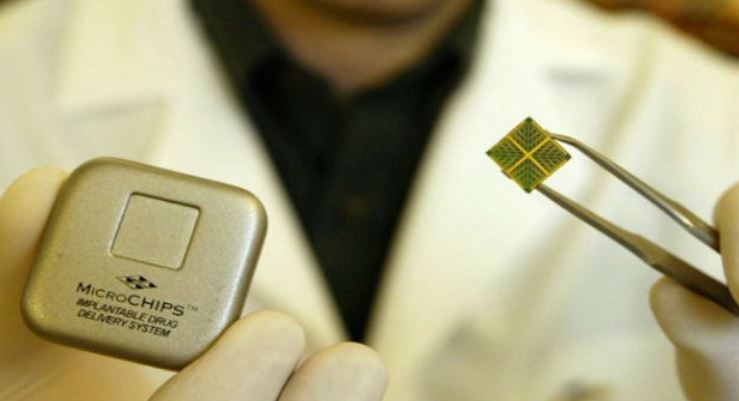
a repost: House Passes Bill Allowing Government to Microchip Citizens With “Mental Disabilities”

Article posted on Activist Post (click link for original)


Is this shit serious??? I may have to turn my “U.S. citizenship” verrryyy soon (I’ve been contemplating that anyways.) I be damned if I ever have a microchip placed on me. Wake up, fam!


microchip-true-activist

By Whitney Webb

Six years ago, NBC Nightly News boldly predicted that all Americans would be fitted with RFID microchips by the year 2017. Though, at the time, NBC’s prediction seemed far-fetched, the House recently passed a bill that would bring a microchipped populace closer to reality before year’s end.

Last Thursday, the House passed HR 4919, also known as Kevin and Avonte’s Law, which would allow the US attorney general to award grants to law enforcement for the creation and operation of “locative tracking technology programs.” Though the program’s mission is to find “individuals with forms of dementia or children with developmental disabilities who have wandered from safe environments,” it provides no restriction on the tracking program’s inclusion of other individuals. The bill would also require the attorney general to work with the secretary of health and human services and unnamed health organizations to establish the “best practices” for the use of tracking devices.

Those in support of the legislation maintain that such programs could prevent tragedies where those with mental or cognitive disabilities wandered into dangerous circumstances. Yet, others have called these good intentions a “Trojan horse” for the expansion of a North American police state as the bill’s language could be very broadly interpreted.

“While this initiative may have noble intentions, ‘small and temporary’ programs in the name of safety and security often evolve into permanent and enlarged bureaucracies that infringe on the American people’s freedoms. That is exactly what we have here. A safety problem exists for people with Alzheimer’s, autism and other mental health issues, so the fix, we are told, is to have the Department of Justice, start a tracking program so we can use some device or method to track these individuals 24/7,” Representative Louie Gohmert (R-TX) said in a floor speech opposing the bill.

Gohmert’s assessment is spot-on. Giving local police the authority to decide who is microchipped and who is not based on their mental soundness is a recipe for disaster. Though the bill specifically mentions those with Alzheimer’s and autism, how long before these tracking programs are extended to those with ADHD and bipolar disorder, among other officially recognized disorders.

Even the dislike of authority is considered a mental disorder known as “Oppositional Defiant Disorder,” which could also warrant microchipping in the future. If these programs expand unchecked, how long will it be before all Americans are told that mass microchipping is necessary so that law enforcement and the government can better “protect” them?

Many Americans have been content to trade their liberties for increased “security” in the post-9/11 world, particularly when the State uses these talking points. Yet, as Benjamin Franklin once said, “those who surrender freedom for security will not have, nor do they deserve, either one.”

a repost: The Psychological Dimensions of Plantation Politics

Article posted on ThyBlackman.com (click link for original)


plantation-politics


Here’s a secret the white establishment will never tell you in the public: So-called American Negroes who attack and disparage their own, in order to seek social, political or economic favor, are regarded as nothing more than tools to be wielded by their handlers. By default, Blacks who eagerly disgrace themselves, out of hunger for a perceived benefit by doing so, have automatically disqualified themselves from such benefits, both morally and ethically. Not only because they have sold their souls for so cheap a price, but also because power does not respect what it bends, Black public figures claiming leadership, at the expense of truth, will never be respected by those to whom they have submitted and compromised their principles.

It doesn’t take much of an imagination to understand the competitive nature of human beings when faced with scarcity. When access to the mechanisms for survival are at stake, and cynically regulated by external forces, the once proud and principled may now find themselves reduced to the status of a beggar, and the once faithful public servant, pimped out like a political prostitute, will ultimately find himself with neither friend nor helper.

With that said, part of white elite’s century’s long war on Black self-determination, Black liberation, and Black personhood, has been a deliberate effort to create the non-threatening and defeated Black male image as a balm to placate white fears. Today, white America’s “approved” image of the Black man continues to be the docile, obedient and emasculated caricature of a faithful retainer and longsuffering plantation loyalist.

Such unrealistic, “Gone With the Wind,” interpretations of Black personhood are not only an insult to the memory of our enslaved ancestors, but also an assault upon the legacy of the Black struggle in the United States. Should those who endured the terror of lynching, the humiliation of economic exploitation and the intentional undermining of Black progress now become deferential to the white liberal, as they once were to the white conservative? Emphatically no!

Although the end of Black enslavement allegedly came with the December 6, 1865 ratification of the 13th Amendment to the US Constitution, 151 years later, among both the Jews and the Gentiles of the white elite, a mentality of proprietorship still exists regarding the lives of Black people in American politics. While this is perhaps understandable, that the white elite prefer to not lose the power they have gained as masters over the land they conquered, what is indeed unfortunate is the eager willingness of some in Black leadership to collaborate as plantation politicians.

Trauma and the of conditioning Black leaders

Defined as a noun, trauma means: “a deeply distressing or disturbing experience.” Within this context, many examples of extreme trauma against Black Americans have been officially documented by historians and/or passed on as oral histories among Black families. As a society’s culture is subsequently shaped by geographic, social and psychological factors, the behaviors and interactions of a people among themselves and others is likewise influenced by the same.

Taking into account the 300 plus years history related to coercive motivation, or motivation by fear, on plantations, underground mines, and the slave breeding-farms of pre-Civil War America, life for millions of enslaved Black men, women and children was to toil under the systematic horrors of violence and terror on a daily basis. An environment where Blacks were legislatively reduced to the status of beasts of the field, the lash, sexual violence and the destruction of the family unit were all used as tools for control. Particularly in the wake of the Haitian Revolution between 1791 and 1804, that gave birth to the world’s first Black republic, the means and methods of suppressing Black resistance became more creative and brutal.

For enslaved American Blacks, the social contract in the United States demanded absolute obedience, recognition of the “inherent superiority of whites,” or death and other punitive measures as the consequence for refusing to comply. On the other hand, for Whites, the rule was for Blacks to obey them without question and to recognize the inherent inferiority of their “less than fully human chattel,” who had no legal or political rights whatsoever.

After the Compromise of February 26, 1877, which ended the deadlock between Samuel J. Tilden and Rutherford B. Hayes in the disputed 1876 elections for the US presidency, federal troops occupying southern states were removed and the protections previously afforded the formerly enslaved Black populations were withdrawn. Opening the doors to a second wave of terrorism, rape, lynching and murder, Blacks were driven from political office, imprisoned in large numbers and returned to the plantations as share-croppers relegated to peonage by racism and heavily weighted state’s rights legislation.

As the 19th century gave way to the 20th century, the psychology of fear continued to afflict America’s Black populace as many fled north and west seeking refuge. Only to find the cruelty of the white Southerner replaced by the exploitation and deception of the white Northerner, the new social contract of go-along-to-get-along politics and non-economic liberalism, as established and advocated by the white founders of the NAACP, other philanthropic whites and the federal government itself, began to dismantle the concept of industry, entrepreneurship, land ownership and nationhood among the Black masses.

Today, like in slavery and Jim Crow yesterday, strong and unapologetic Black leadership is once again feared, condemned and dismissed, and like the house Negro seeking to secure a more comfortable position within the established order, or Judas and his 30 pieces of silver, there is no depth to which the plantation politician will not stoop to seek nearness, favor, and recognition by his modern handlers. Instead of hoping for a good master to inherit the plantation, over a bad master that inherits the plantation, Black leadership must now recognize that day of nation building has arrived and that era of plantation politics is over.

Staff Writer; William P. Muhammad

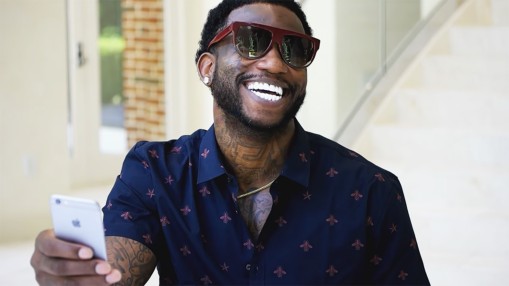
a repost: Gucci Mane 2016 was something to remember


Article posted on ThyBlackMan.com (click link for original)

I’m not a big rap fan nor do I even keep with the current state of the genre (or ANY genre for that matter in this day in age), but I found this very inspiring. I was impressed not with the change Gucci Mane made detailed by the article, but also the change the writer made himself. I can relate 1000 times over! It’s good to see others like myself, and maybe some you reading this, have struggles that mirror my very own and overcome them with huge success. 

Makes me tear up a little…


123gucci-mane-2016


In 2015, I was a 23 year old workaholic who was 274-78 pounds and quite unhealthy. I ate out at least four times a week and didn’t get any sleep because of anxiety issues. I relied on food as a coping mechanism to deal with the rigors of working 11 hours a day. While of course it tasted good, I didn’t realized the effect it was having on my body mentally and physically. A trip to the doctor on June 13th 2015 changed me, as I realized I was unhealthy and unfit. I went on a rampage that summer, working out every single day while eliminating processed foods every day but Saturday. 20 pounds slowly turned into 30, 30 into 50 and 50 into where I sit today, 211 pounds with 60 plus pounds lost altogether. I changed my life physically, which altered my dynamics mentally. Looking back, I would do it all again if I could see how I’ve impacted the lives of others.

Which is why Gucci Mane’s weight loss, a number one record in Black Beatles with rap duo Rae Sremmurd and abandonment of drug and alcohol use is a testament of how far he’s come in rehabbing his body and his mind. There was a time Gucci Mane posed as a 280 pound behemoth; frightening, scary, diluted and drugged out. He had classic records and the pop culture vultures who roam websites such as Complex, Noisey and Pitchfork were fascinated by him.

But inside, he was a wreck; relying on drugs and alcohol to stimulate his mind and spirit for 17 years. He readily admitted he was a drug addict, marijuana, alcohol, ecstasy, prescription pills and cough syrup were his drugs of a choice. It made him numb, non existent. Rap’s boogieman made a fortune not being true to himself. The drugs and his erratic behavior landed him in prison for his longest stint; two-and-a-half years starting in 2013.

Gucci Mane used prison to rehab his mind and body. The withdrawals from drugs hurt him at first, but soon, his mind would get stronger. He worked out, read and prayed, shedding the weight and getting rid of the belligerent rapper tag that preceded him previously. When he was released in May of this year, his drastically different appearance made fans question whether or not Gucci was cloned. What comes off as a insult, was taken as a testimony of the power of self-help, therapeutic resources by Gucci Mane.

The moral of this article, is that we all have the power to change ourselves if we really wanted to. It’s easy to stay in a comfort zone where our reality is filled with feel-good, easy and no challenges. It’s hard to look yourself in the mirror and say you need to change. With change comes with being uncomfortable and being uncomfortable brings over-thinking and self-doubt. But once you break through those self-imposed walls, the road to change begins. Gucci Mane could have been the rapper we loved when he was released in May; an overweight druggie whose erratic behavior was a byproduct of his addictions.

He could have still been the rapper whose insecurities were clouded by his tough-man act. Instead, he decided to change and reinforce a new identity. One who works out, eats healthy, reads and speaks English so fluent he sounds Harvard-educated. He decided he was going to change his mind to change his life. And if you’re struggling with addictions and vices you feel you can’t break, remember that Gucci Mane did it. So you can, too.

Music Editor; Brad Washington

a repost: This Traveling Blues Musician is Befriending Members of the KKK, But Not for the Reasons You Think

Article posted on Atlanta Blackstar (click link for original)

This is quite interesting…


daryl-davis-kkk-1-300x169

A photo of a Black man gladly shaking hands with a Ku Klux Klan Grand Wizard is enough to raise a few eyebrows. Critics have called him crazy for trying to befriend members of the notorious hate group, but blues musician Daryl Davis remains undeterred in his quest to change the hearts and minds of white bigots.

According to the Los Angeles Times, Davis, a traveling blues musician who’s played with the likes of Little Richard and Jerry Lee Lewis, has spent the past few decades collecting over a dozen Klan robes from members who’ve disavowed their white supremacist views. Now, a documentary chronicling his idealistic journey is set to debut in Los Angeles on Friday, Dec. 9.

The film, “Accidental Courtesy” by director Matt Ornstein, follows Davis as he travels to Confederate memorials, churches and even Klansmen’s homes to try and inform white supremacists of the history of Blacks in America, while opening their eyes to the unnecessary hatred they’ve harbored toward African-Americans for so long.

His goal? To find ways of coming together as a nation, especially during this trying time of heightened racial tensions between Black and white Americans. For the musician, fostering tough conversations about race is a major part of fighting racism.

“How can you hate me when you don’t even know me?” Davis asks in the film. “Look at me and tell me to my face why you would lynch me.”

With frustrated Americans still reeling from the recent back-to-back shootings of unarmed Black men by police and the inflammatory nationalist rhetoric that propelled Donald Trump to the U.S. presidency, many could argue that this is one of the most divisive times in our nation’s history. Over 1,000 hate crimes and acts of intimidation have happened since the election, but Davis said this isn’t history repeating itself; rather, it’s history that never went away.

“I did not vote for Donald Trump and I do not support him, but I believe that Trump is the best thing to happen to this country in a long time,” Davis said in an interview. “He’s bringing out the country’s ugliness. There’s no turning a blind eye anymore.”

Naturally, critics of Davis’ idealistic outlook on repairing race relations has ruffled a few feathers, prompting push back from the Black community. One of the robe-collecting Black man’s critics is a well-known activist out of Baltimore named Kwame Rose, who marched through the city streets following the death of Freddie Gray.

“Infiltrating the Klan ain’t freeing your people,” says Rose during a sit-down with Davis in the film. “You’re uneducated about the reality of most of the people who look like you. … Stop wasting your time going to people’s houses who don’t love you, a house where they want to throw you under the basement. White supremacists can’t change.”

Even members of the NAACP have chewed him up and spit him out.

“[He said] ‘You know, we’ve worked hard to get 10 steps forward,’” Davis recalls. “‘Here you are sitting down with the enemy having dinner. You’re putting us 20 steps back.’”

So why the fascination with getting white supremacists to change their ways?

In a sit-down with The Atlantic last year, Davis chronicled his early childhood overseas, as well as his first brush with discrimination in the U.S. He recalled having cans, bottles and rocks thrown at him during a Massachusetts Boy Scouts march in 1968, as he was the only Black scout there. Years later, the head of the American Nazi Party came in as a speaker to his 10th-grade class, telling him, “We’re going to ship you back to Africa. And all you Jews out there are going back to Israel. If they don’t leave voluntarily, they will be exterminated in the coming race war.”

And that’s when his interest in everything race related was piqued.

In the years since his journey began, Davis has joined an all-white country band, attended KKK rallies and accepted a “certificate of friendship” from the Traditionalist American Knights of the KKK, The Los Angeles Times reported. He’s even the godfather of former Klan Imperial Wizard Roger Kelly’s granddaughter.

Kelly was one of the first to extend his hand and hand over his robe to Davis when he quit the Klan. Twelve other ex-Klansmen followed suit, according to The Atlantic. The blues musician said he hopes to one day showcase all of his collected Klan memorabilia in a “Museum of the Klan.”

Davis said he didn’t originally set out to “convert” white supremacists, only to foster discussion around race issues in order to put a dent in racism. He said some of them simply changed themselves after multiple conversations with him.

“The most important thing I learned is that when you are actively learning about someone else, you are passively teaching them about yourself,” Davis said. “So if you have an adversary with an opposing point of view, give that person a platform. Allow them to air that point of view, regardless of how extreme it may be.”

a repost: Big Government – The Reason You Need a License to Braid Hair

Article posted on Waking Times (click link for original)


African-Braids-3.png

Isaac Davis, Staff Writer

We live in a time when big government is such an ingrained part of our lives that it’s difficult for most people to comprehend what freedom even is. Bureaucracy has inserted itself into pretty much every nook and cranny of our lives, and today’s generations find it absolutely normal to pay taxes and fees for every little experience we have.

The spider web of government control can is seen in the system of state privileges we know as regulations, licenses and permits. Our lives must conform to these rules under penalty of law, which is always backed up by state violence. It wasn’t always this way.

Award-winning author Ursula K. Le Guin recently said in a National Book Awards speech:

“We will need writers who can remember freedom. Poets, visionaries—the realists of a larger reality.”

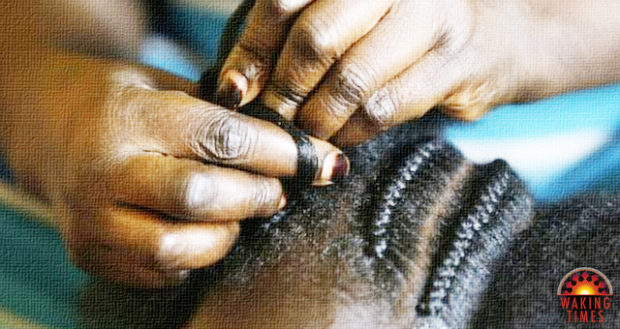
This is too true, for nowadays, even small and relatively insignificant moments of human interaction are supervised by big brother and the nanny state. Case in point, the centuries old tradition and skill of African hair braiding, which now an officially state-sanctioned activity for anyone seeking to offer their expertise in this area to someone who is willing to pay for this service.

Recently, a U.S District Court Judge in Missouri ruled that in order to offer this service to other human beings you must be a licensed cosmetologist.

To be a licensed cosmetologist in Missouri you must complete 1500 hours of costly training, in which you learn absolutely nothing about African style hair braiding, a technique which uses no chemicals and is of zero risk to the stylist or to the customer.

“In other words, the licensing requirement is an arbitrary and unnecessary obstacle that prevents would-be African-style hair-braiders from earning a living in a totally harmless occupation. By contrast, to become a licensed emergency medical technician in Missouri, a job that legitimately impacts public health and safety, it requires just 100 hours of education.” [Source]

Essentially saying that this rule makes reasonable sense by simple virtue of the fact that it already is a government regulation, Judge John M. Bodenhausen issued an opinion on this important matter:

““This case,” Judge Bodenhausen declared, “illustrates the great deference that federal courts must show to government regulations under the rational basis standard.”

The rational-basis standard, also known as the rational-basis test, has its origins in the great vogue for judicial deference that swept the courts during the Progressive and New Deal periods. … So long as “the laws passed are seen to have a reasonable relation to a proper legislative purpose,” [the test said] the courts should defer to that regulation and assume that “the requirements of due process are satisfied.” Put differently, if lawmakers and government lawyers claim to have a “rational basis” for the regulation, the courts are supposed to whip out the rubber stamp.” [Source]

Regulations Gone Wild

People, especially statists and those suffering from stockholm syndrome, love to advocate for paying taxes, yet most people have almost no idea how much of their income goes to support government and its ever-growing bureaucracy. In addition to the obvious taxes such as the income tax (which is arguably unconstitutional, and conveniently garnished from our wages before we receive paychecks), state income tax, and sales taxes, there are literally dozens, if not hundreds of licensing schemes, required permits, entrance fees and so on that serve the same purpose as a tax.

This does not even mention the greatest tax of all, the invisible inflation tax‘ which continuously erodes the value of any money we have, thus undermining the value of our labor.

list-of-taxes-1

Final Thoughts

Why should someone be required by law to attend hundreds of hours of school and pay for a certification and license to earn a living doing something as simple and natural as braiding hair?

This type of thing will only get worse as we move headlong into a cashless society, where individuals have no means of transacting with one another without involving the government and third party agencies. Who among us will be around to remember the days of true freedom?


a repost: Study: African-Americans Have Stronger Immune Systems Than Whites

Hey, they don’t have to be “politically correct” with this information.

Just tell it like it is.

The Melanin-Dominant have superior temples, baby! This is nothing new, unless you’ve been sipping the Western philosophy nonsense (which most of us have our entire lives.)

Ho-hum, Ho-hum.

The truth always makes its way back to the surface one way or another. You can only hide and suppress it for so long. 

 Spread the knowledge. Let the truth set our people free!


Originally posted on Atlanta Blackstar (click link for original)

Various scientific studies have shown that human populations respond differently to immune system challenges. But a newly published cell research study suggests that humans of African descent have a genetic advantage over their European peers.

According to findings from two studies published in the Journal Cell, people of African ancestry have a stronger immune response to infection than do people of European ancestry. The first-of-its-kind findings could lead researchers to future treatments in reducing chronic illness in African-Americans.

The first study, led by Luis Barreriro, assistant professor at the University of Montreal’s Department on Pediatrics, was conducted by extracting white blood cells from 175 Americans; 80 from African decent and 95 from European descent, DailyTech.com reports. Those cells were then injected with salmonella and listeria bacteria, as researchers monitored the response in a controlled lab environment.

Researchers found that almost 24 hours after infection, the white blood cells of Black Americans had destroyed the harmful bacteria three times faster than the white blood cells of European Americans did.

“The strength of the immune response was directly related to the percentage of genes derived from African ancestors,” Barriero said. “Basically, the more African you have in your genome, the stronger you’re going to respond to infection.”

The second study, which analyzed genetic differences in RNA sequencing between African and European genomes, found that the introduction of Neanderthal variations into the European genome resulted in decreased pro-inflammatory immune responses to infections of people of European ancestry. Researchers from the Pasteur Institute in France suspect that the genetic variations between African-Americans and whites can be traced to the fact that Neanderthals helped colonize Europe, not Africa, before they went extinct.

While both studies concluded that African-American immune systems are more effective at fighting off bacteria and infections, Barriero made sure not to label the immune systems of African descendants as “better” than ones of European descent. The downside to having a strengthened immune system is that leaves African-Americans susceptible to developing inflammatory auto-immune diseases like Lupus and Crohn’s disease, he noted.

“The genes and pathways we’ve identified constitute good candidates to explain differences we are seeing in disease between the two population groups,” Barriero stated. ” … Our results demonstrate how historical selective events continue to shape human phenotypic diversity today, including for traits that are key to controlling infection.’”

There’s been a long-held belief that African-Americans are genetically inferior to whites, highlighting the role that racial bias plays in the fields of medicine and science. Another study published earlier this year examined racism among medical professionals and its impact on disparate health outcomes between Black and white patients.

“Implicit bias and false beliefs are common — indeed, we all hold them — and it’s incumbent on us to challenge them, especially when we see them contributing to health inequities,” the report read.

Per DailyTech.com, future cell research studies will examine the influence of other factors like environment and behavior on differences in immune response. It’s hoped that future studies like the ones conducted by Barriero and French researcher Lluis Quintana-Murci of France’s Pasteur Institute will finally put these myths of Black inferiority to bed.